The Cuban leader Miguel Díaz-Canel stated this Monday that the Government will prioritize the distribution of water to the most affected sectors of the country, amid a national supply crisis that is already impacting hundreds of thousands of people.
"Who has gone 30 days without water? That person needs to be prioritized. We normalize it afterwards, and then it will be given to everyone, but first, we must provide water to those most affected," said Díaz-Canel during a follow-up meeting in Havana with high-ranking officials from the State, the Government, and the Communist Party.
According to data provided by Vice President Inés María Chapman, there are currently 156,725 people affected by water shortages in Havana, due to both failures in the distribution network and supply through tanker trucks.
Between October 3 and 6, the number of affected individuals was reduced by 111,023, following the addition of 119 tanks to the distribution, 47 more than the previously available ones.
Chapman stated that the water deficit shows a “trend towards gradual reduction,” due to repair work on the infrastructure, in the main conduits of the country and in the pumping systems, which have been significantly affected by the electricity crisis.
Five billion pesos without details
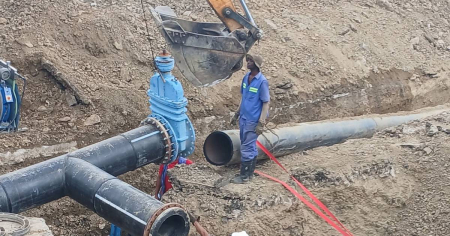
The Cuban regime claims to be executing more than 300 hydraulic infrastructure projects across the country, with an estimated investment of five billion pesos, although it has not provided details about the benefited territories or the breakdown of those investments.
In an interview with Canal Caribe, the president of the National Institute of Hydraulic Resources (INRH), engineer Antonio Rodríguez Rodríguez, acknowledged that more than 400,000 people continue to be affected by the drought, particularly in the provinces of Holguín, Ciego de Ávila, Las Tunas, and Camagüey.
Recent rains have allowed for the partial recovery of some important reservoirs, such as Gilbert and Gota Blanca (Santiago de Cuba), and Faustino Pérez and La Yaya (Guantánamo), although the impact remains insufficient to reverse the overall deterioration of the system.
Havana and Santiago, among the most affected cities
In Santiago de Cuba, authorities are working at the Quintero Water Treatment Plant of the Northwest System, which supplies 80% of the urban population. The work includes the replacement of shut-off valves, the elimination of leaks of up to 25 liters per second, and the maintenance of the Quintero-City and Micro 9 pipelines.
Meanwhile, in Havana, more than 184,000 people continue to lack stable access to water. An emergency plan seeks to alleviate the situation through truck distribution.
The engineer Leonardo Soto Romero, representative of INRH in the capital, stated that they currently operate with 11 stations and 13 dispensers, but they expect to enable up to 30 charging points to improve supply.
Breakdowns, blackouts, and alleged sabotage
Official sources attribute a significant portion of the problems to breakdowns in the pumping systems, many of which are caused by electrical discharges. Additionally, "illegal acts" against the main pipeline of the El Gato system in Mayabeque have been reported, although authorities have not specified the nature of these incidents.
Vice Prime Minister Chapman stated this weekend that the situation is complex and called for effective coordination between the hydraulic and electrical systems, as water supply relies on between 4 and 24 hours of continuous electricity to reach households.
The government claims to have a strategy to address the crisis, but it has not released specific data on the use of the allocated budget nor provided timelines for solutions, as public discontent continues to grow in the absence of clear responses.
Frequently Asked Questions about the Water Crisis in Cuba
How does the Cuban government plan to address the water crisis?
The Cuban government claims to be carrying out more than 300 hydraulic infrastructure projects with an investment of five billion pesos. However, they have not provided specific details about the areas affected or the specific use of the allocated budget, which creates distrust and frustration among the impacted population.
How many people are affected by the water shortage in Cuba?
Around three million Cubans suffer from total or partial water shortages, which represents approximately 30% of the country's population. The main causes include prolonged drought, deteriorating infrastructure, and energy issues that hinder a consistent supply.
What solutions are being implemented to improve the water supply in Santiago de Cuba?
In Santiago de Cuba, the authorities are working on the Quintero Northwest System Water Treatment Plant and have implemented measures such as the use of floating intakes and reinforcement of the supply through tanker trucks. However, the capacity of the system remains limited and the population faces long periods without access to drinking water.
What is the impact of blackouts on the water crisis in Cuba?
Blackouts significantly exacerbate the water crisis in Cuba, as the supply system relies on between 4 and 24 hours of continuous electricity to pump water to households. This situation is reflected in the lack of water in places like Havana, where more than 184,000 people lack stable access to this vital resource.
Why have the water issues in Cuba not been resolved despite the announced investments?
Despite the announced investments, the lack of transparency and details regarding the execution of the projects has raised doubts about their effectiveness. Furthermore, the accumulated deterioration of infrastructure and the lack of coordination between the hydraulic and electrical systems further complicate the resolution of the water crisis in the country.
Filed under: