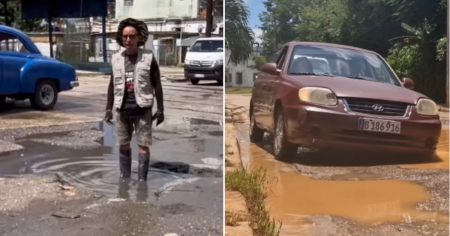
At least 27,000 residents of various neighborhoods in the Havana municipality of Marianao are facing a critical situation concerning water supply, garbage collection, and power outages, in what many describe as a prolonged humanitarian crisis.
"We have gone 36 days without water, supposedly today they will bring us a truck," a resident reported to the national television cameras, in a report by the official journalist Gisela García Rivero.
He also pointed out the accumulated problems: "It's the water, it's the garbage, it's the power... If it were just one issue, it would be fine, but they all come together".
Another neighbor pointed out that "the most serious problem is the trash, which is collected every 30 days. When they collect the trash, the illnesses will end".
In these communities, fever-related illnesses, dengue, and chikungunya are reported, exacerbated by the unsanitary conditions in the environment.
This is compounded by the lack of medications at the local polyclinic, according to testimonies gathered in the aforementioned report.
The superintendent of Marianao, Yudelsy Díaz, acknowledged that it is one of the most affected popular councils in terms of waste collection. She admitted that there has not been consistency in the service and that there is also ongoing “much social indiscipline.”
The government is promoting sanitation campaigns but complains that there is little citizen participation.
The neighbors say they are fed up after endless hours of blackouts, lack of water, and the inability to protest.
The Cuban leader Miguel Díaz-Canel referred on Monday to the lack of citizen participation in a sanitation day called by the regime.
During a meeting with senior officials, he criticized that in several municipalities in Havana, “no one went out to work on garbage collection.”
"In Diez de Octubre, Playa, La Lisa... there was no work done. Are there no delegates in those areas? Are there no political coordinators? Then let them all come to account," he said in a statement recorded by official media."
More than 35,000 cubic meters of garbage were collected as part of the operation, but still more than 1,000 districts remain uncleaned, highlighting the lack of a sustainable plan for the city's sanitation.
In light of the regime's inability to ensure waste collection, the population is often held responsible for the crisis.
Filed under: