
Related videos:
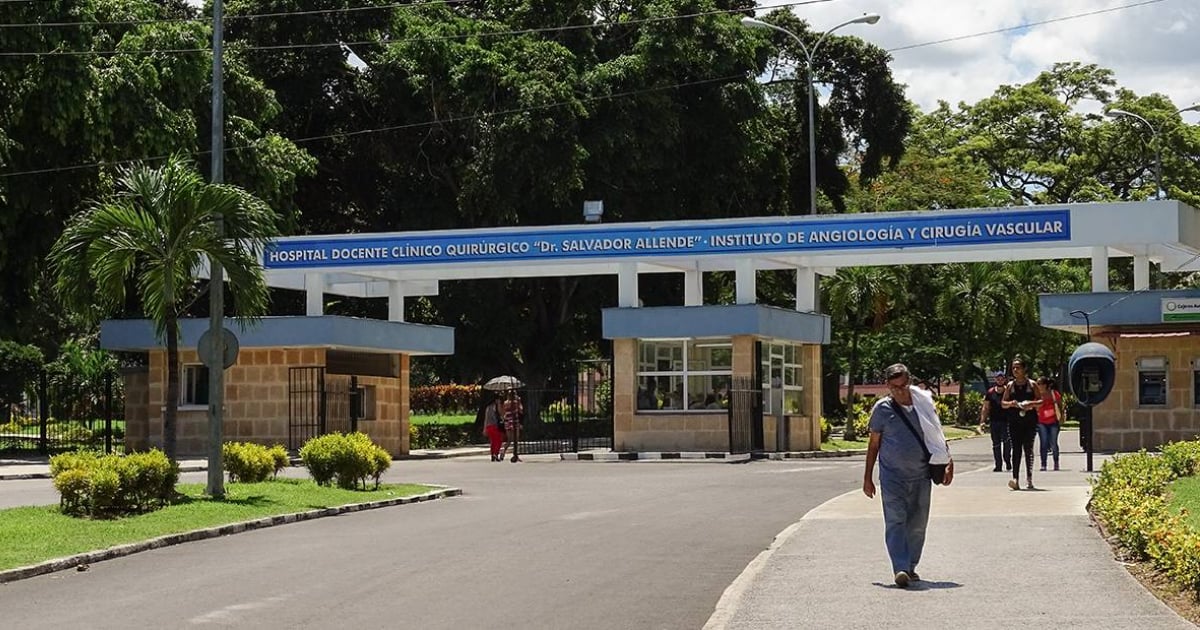
The "Salvador Allende" Clinical Surgical Hospital, commonly known as La Covadonga, may partially close its usual services due to the rise in cases of dengue and chikungunya in Havana.
Internal sources from the center confirmed to CiberCuba that a provincial commission visited the hospital on Tuesday, October 7, to assess the possibility of converting several of its rooms into admission units for patients infected with arboviruses, due to an increasingly tense epidemiological situation in the Cuban capital.
According to the information obtained, the official closure of the hospital has not yet been carried out, but a gradual suspension of services in the Internal Medicine, Ophthalmology, Urology, Orthopedics, and Geriatrics departments is anticipated. These departments are expected to be repurposed for the care of patients with dengue, chikungunya, and other mosquito-borne diseases.
The outpatient clinic, offered in the attached polyclinic, would also be suspended. For the time being, only the six operating rooms would remain open, although it is not ruled out that they may also be used if the number of patients continues to rise.
"The situation is difficult, and we have already been notified that we may have to stop offering consultations and turn everything into hospitalization. La Covadonga has been used in other health crises like COVID-19, and now the same is going to happen," a person connected to the hospital told this outlet.
Havana thus joins the group of provinces with confirmed chikungunya transmission, alongside Matanzas, Guantánamo, Santiago de Cuba, and Pinar del Río.
Recent data provided by the Ministry of Public Health (MINSAP) indicates that the disease was initially detected in the municipality of Perico, Matanzas, and has spread to several locations.
In the Cuban capital, cases have been reported in municipalities such as Arroyo Naranjo, Cerro, and Playa. Furthermore, dengue and oropouche are also present in at least 12 provinces of the country, although health authorities assure that there are no critical patients or hospital overcrowding.
The increase in diseases transmitted by the Aedes aegypti mosquito coincides with the deterioration of sanitary conditions in several areas of the country, which are affected by power outages, garbage accumulation, and persistent rains, factors that promote the proliferation of breeding grounds for the vector.
The national director of Epidemiology, Dr. Francisco Durán, explained that chikungunya can cause severe joint pain, even after the acute phase of the disease has passed, which has raised concerns among the population and healthcare personnel.
Authorities have strengthened fumigation efforts, implemented targeted treatments, and eliminated breeding sites, but cases continue to rise, particularly in areas like Matanzas, where dozens of patients have reported febrile symptoms and warning signs.
Frequently Asked Questions about the dengue and chikungunya outbreak in Havana
Why is Hospital La Covadonga in Havana about to partially close?
La Covadonga Hospital may close its regular services due to the increase in cases of dengue and chikungunya in Havana. There is an evaluation underway to convert several of its wards into admission units for patients with these diseases, which has led to a potential suspension of other medical services.
Which Cuban provinces are affected by chikungunya?
Chikungunya is being transmitted in Matanzas, Guantánamo, Santiago de Cuba, Pinar del Río, and Havana. Initially detected in Matanzas, the virus has spread to other areas, complicating the epidemiological situation in the country.
How are the Cuban authorities responding to the arbovirus outbreak?
Authorities have intensified fumigation efforts, application of targeted treatments, and elimination of mosquito breeding sites. However, these measures have not managed to curb the rise in cases, and the healthcare system faces challenges due to material limitations and lack of resources.
What symptoms do people infected with chikungunya experience?
Chikungunya causes intense joint pain that can persist after the acute phase of the disease. These symptoms significantly affect the quality of life of those affected, raising concern among both the population and healthcare professionals.
Filed under: