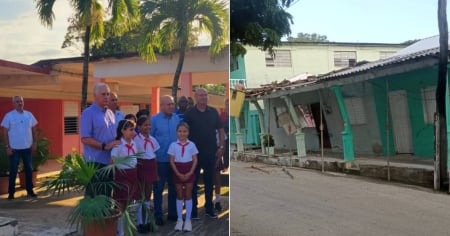
“No one is going to solve Cuba's problems for us; we have to solve them ourselves,” stated the leader Miguel Díaz-Canel at the latest Council of Ministers meeting.
He urged Cuban officials to show more "revolutionary audacity" and creativity, as he believes they are the key to addressing the serious economic situation the country is facing.
In the midst of a context marked by the collapse of the electrical system, food shortages, and a resurgence of diseases like dengue and chikungunya, the leader insisted that the only way out is through work, production, and efficiency.
"Let's move forward, and we will overcome this," he said.
The Council was also led by Prime Minister Manuel Marrero. The performance of the Economic Plan and the execution of the State Budget was assessed up to August 2025.
Díaz-Canel emphasized the urgency of boosting tourism in Cuba and meeting export targets to ensure the , which is essential for the purchase of food, raw materials, fuels, and other essential products.
He urged to diversify income through the export of services, particularly in information technology, and to improve the efficiency of the agricultural system, something the government has failed to achieve in over 60 years in power.
"If that primary sector doesn't produce more, we are very limited," he expressed.
The government acknowledges that the production of meat, eggs, and dairy products continues to plummet and blames the energy crisis, which has left all sectors paralyzed or operating at very low capacity.
Energy collapse without immediate solutions
One of the most critical points was the state of the national electrical system. Díaz-Canel acknowledged that, despite certain advances in distributed generation and the incorporation of new solar parks, the improvements are not felt in the daily lives of the population, which is subjected to prolonged daily blackouts.
The energy deficit continues to affect not only the economy but also all social sectors, with serious consequences for hospitals, schools, and potable water supply networks, many of which collapse due to lack of electricity.
Unsanitariness and resurgence of dengue
While the leader insists on "revolutionary boldness", the hygienic and sanitary conditions of the country are deteriorating.
The shortage of medications is compounded by the rise of vector-borne diseases such as the Aedes aegypti mosquito. The situation is complicated by the increase in cases of dengue and chikungunya, due to the lack of effective control of outbreaks.
Complaints about accumulated garbage, streets flooded with sewage, and the proliferation of mosquitoes are increasing in neighborhoods of Havana and other cities across the country.
Budget: There are incomes, but with unmet expenses
In relation to the implementation of the State Budget, the Minister of Finance and Prices, Vladimir Regueiro, reported that, although the fiscal deficit has been reduced thanks to the overperformance of revenues, there have been "significant under-executions" in the planned expenses, both current and capital, due to the low levels of economic activity.
The General Comptroller's Office alerted about deficiencies in the use of state funds and requested increased oversight regarding the allocation of public resources, particularly in the business sector.
Government Program, without concrete results
At the ministerial meeting, the updated version of the Government Program was presented to "correct distortions" and "revitalize the economy," which was approved by the Political Bureau on September 22. However, to date, there have been no substantial reports on the proposed objectives, beyond guidelines and timelines.
Amid calls for revolutionary creativity, budget figures, and speeches about efficiency, the Cuban crisis continues to deepen, as millions of Cubans face the daily effects of an economic model that does not provide real solutions to their everyday problems.
Frequently Asked Questions about the Crisis in Cuba and Díaz-Canel's Statements
What is the current situation of the electrical system in Cuba?
The electrical system in Cuba is in a critical state, with outdated thermoelectric plants and a lack of proper maintenance. The energy infrastructure is overwhelmed and lacks the necessary investments, resulting in prolonged and widespread blackouts across the island. The shortage of fuel and spare parts exacerbates the situation, and government efforts to improve the situation have not had a visible impact on the population.
What measures does Díaz-Canel propose to address the economic and social crisis in Cuba?
Díaz-Canel has called for "revolutionary audacity" and creativity to overcome the crisis, emphasizing the need to work, produce, and improve efficiency. Among his proposals, there is a notable emphasis on boosting tourism, diversifying income through exports, and improving the agricultural system. However, these measures have been criticized for not addressing the necessary structural reforms.
How is the shortage of food and medicine being handled in Cuba?
The production of meat, eggs, and dairy products has plummeted, and the shortage of medications has worsened. The government attributes part of the problem to the energy crisis, which affects the production and distribution of food. Furthermore, the need to improve efficiency in the agricultural sector has been recognized, but so far, no significant improvements have been seen.
What has Díaz-Canel said about the partial dollarization of the Cuban economy?
Díaz-Canel has defended the partial dollarization of the economy as a necessary measure to navigate the economic crisis. However, this decision has deepened social inequalities in the country, benefiting those who receive remittances or have resources in foreign currency. Despite acknowledging this problem, the ruler has not provided concrete solutions to mitigate these inequalities.
Filed under: