
Related videos:
The tension between the United States and Venezuela has reached a new level with the recent request from Washington to the Government of Grenada to deploy military equipment and technical personnel on the Caribbean island.
The request -which involves the installation of radars at Maurice Bishop International Airport- has raised concerns in the region and reignited alarms in Caracas, which views the deployment as a direct threat to its sovereignty.
A strategic request amidst a military campaign
The Ministry of Foreign Affairs, Trade, and Export Development of Grenada confirmed that the United States has requested the "temporary installation of radar equipment and associated technical personnel" at the country's main airport.
The request is framed within a broader context: the deployment of U.S. forces in the Caribbean Sea, officially justified as part of an offensive against drug trafficking originating from Venezuela.
According to the official statement, the Ministries of National Security, Legal Affairs, and Foreign Relations of Grenada are "carefully evaluating and reviewing the request," in coordination with the Airport Authority and other relevant agencies.
They emphasize that "any decision will be made only after all technical and legal assessments are completed."
The Granada Government has sought to allay internal and external concerns by assuring that the final decision will be governed by "sovereignty, public safety, and the national interest of Granada, including the protection of our tourism industry, travelers, and the economic well-being of the country."
Granada, between diplomatic alliances and geostrategic pressures
Granada is part of the Bolivarian Alliance for the Peoples of Our America (ALBA), a political bloc promoted by Venezuela and Cuba that has condemned the U.S. military presence in the region.
The organization denounced what it deemed an "illegal and provocative incursion" of U.S. aircraft near Venezuelan airspace, and warned of a “pattern of aggressions aimed at destabilizing the region and imposing a logic of intimidation characteristic of imperial doctrine.”
Grenada's accession to ALBA places the small island nation in a delicate position: on one hand, it is pressured by its geographical proximity to Venezuela and its membership in a bloc critical of Washington; on the other, it must confront the realities of security and cooperation with powers like the United States.
Venezuela responds: deployment of the "Plan Independence 200"
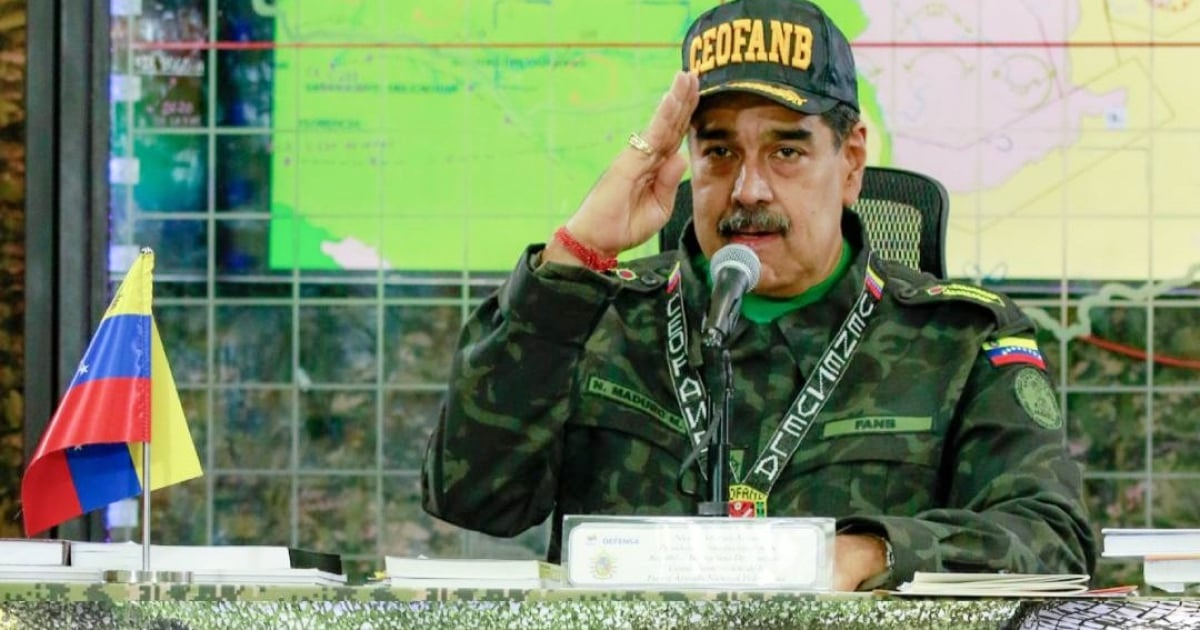
In response, the government of Nicolás Maduro has mobilized troops and activated military exercises.
This week, the Minister of the Interior, Diosdado Cabello, led the launch of the “Independence Plan 200” in the coastal states of La Guaira and Carabobo, a military deployment exercise aimed at protecting key infrastructures such as ports and airports.
Maduro, for his part, stated that the operation—which involves 27 simultaneous territorial actions—aims to "fine-tune step by step the military and civilian machinery" to defend the country against potential external aggression.
In an audio message shared on his social media, the president stated that the people and the militias "have been actively preparing to resist for as long as necessary."
Military operations in the Caribbean: Boats destroyed and 21 dead
Since early September, the United States has intensified its presence in the Caribbean.
The White House has deployed more than 4,500 soldiers, eight warships, and a nuclear attack submarine in what it has described as a major offensive against drug trafficking.
According to President Donald Trump, the destroyed vessels were transporting "massive quantities of drugs, like a subway car full," and he emphasized that each one contained enough narcotics to "kill 25,000 Americans."
U.S. officials have reported the destruction of at least five speedboats and the deaths of 21 individuals accused of being linked to drug trafficking from the Venezuelan coast.
The end of dialogue and the fear of escalation
The New York Times recently revealed that Trump ordered the cancellation of all diplomatic efforts with Venezuela, instructing his special envoy Richard Grenell to abandon any attempts at rapprochement.
This decision marked the end of a phase of intermittent negotiations in which concessions were even agreed upon, such as the exchange of prisoners and the continuation of Chevron's oil operations in Venezuelan territory.
Now, with the naval deployment, the destruction of vessels, the pressure on neighboring countries like Grenada, and the breakdown of dialogue, Caracas fears an escalation that could lead to an open military conflict.
“If the Americans attack, we will respond,” Maduro warned during a public event, asserting that the country's economy will not be halted “no matter how many threats” from the United States.
Frequently Asked Questions about Tensions between the U.S. and Venezuela
Why has the United States requested the deployment of military equipment in Grenada?
The United States has requested Grenada for the temporary installation of radar equipment and technical personnel as part of an offensive against drug trafficking from Venezuela. This measure is part of a broader deployment of U.S. forces in the Caribbean aimed at curbing the flow of drugs into the United States.
How has Venezuela reacted to the U.S. military deployment in the Caribbean?
In response to the U.S. military deployment, Venezuela has mobilized troops and activated military exercises under the "Independence Plan 200" to protect key infrastructures such as ports and airports. Nicolás Maduro has declared that the country is preparing to defend its sovereignty against possible external aggression.
What is Cuba's role in the current tension between the U.S. and Venezuela?
The Cuban regime has requested international support to prevent a war between the United States and Venezuela. Cuba accuses Washington of preparing a direct military aggression against Venezuela and of wanting to seize its natural resources. Havana has heightened its alert rhetoric regarding the possibility of a military intervention by the United States.
What actions has the United States taken in the Caribbean against drug trafficking?
United States has deployed more than 4,500 soldiers, eight warships, and a nuclear submarine in the Caribbean as part of an offensive against drug trafficking. Reports indicate the destruction of at least five speedboats and the death of 21 individuals linked to drug trafficking from the shores of Venezuela.
Filed under: