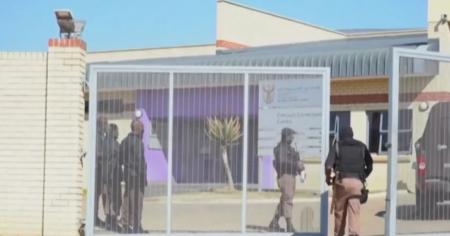
A military contingent from a base near the capital of Madagascar entered Antananarivo this Saturday and publicly called for disobeying orders to shoot at protesters, on a day marked by applause from the crowd.
According to France 24, the uniformed personnel urged the police and gendarmes to “join forces” with the people, and demanded that the soldiers deployed at the presidential palaces abandon their positions and block the airport, while taking up positions in the symbolic Plaza of May 13th.
The president of the island nation located off the southeastern coast of Africa, Andry Rajoelina is reported to have fled the country, according to various media sources. His whereabouts are currently unknown.
In videos released by the military themselves, they ordered other troops to "no longer obey their superiors" and "aim their weapons" at anyone who instructed them to shoot at comrades, amid historic days of citizen protests to demand improvements in essential basic services.
Images released by AFP showed military vehicles integrating into the protests, with Malagasy flags waving among the attendees. Several thousand people continued to demonstrate in the capital, marking the largest mobilization in recent days.
The state response was uneven: some law enforcement forces resorted to tear gas and grenades to disperse those gathered around Lake Anosy, while vehicles with armed soldiers joined the protests and were met with shouts of "Thank you!"
The new Minister of the Armed Forces, Deramasinjaka Manantsoa Rakotoarivelo, called for calm and urged to prioritize dialogue, reminding that the army "remains a mediator and the last line of defense for the nation."
The UN High Commissioner for Human Rights Office, through Volker Türk, urged to put an end to the unnecessary use of force.
According to the United Nations, at least 26 people have been killed and over a hundred have been injured since the protests began on September 25.
The political climate became tense as Rajoelina hardened his stance: after dismissing his government, on October 6 he appointed a military prime minister and designated three new ministers —Defense, Public Security, and Gendarmerie— all coming from the security forces.
The military call for disobedience happens, moreover, against the backdrop of 2009, when the same contingent led an uprising during the popular movement that brought Rajoelina to power.
The protests, which began with demands for water, electricity, healthcare, and measures against corruption, evolved to call for the president's resignation.
The May 13 Square, the epicenter of major political crises since the 1970s, has once again become the heart of mobilization, while the direction of the government and the loyalty of the armed forces remain uncertain.
Historic protests in Madagascar
The wave of protests in Madagascar marks a political and social turning point with immediate regional and governance effects.
The protests began with basic social demands and evolved into a more substantial political call.
Citizens called for better access to water and electricity and demanded improvements and an end to abusive practices.
In the face of police repression, the protesters demanded the resignation of Rajoelina.
In summary, the outbreak combines socioeconomic discontent, documented state violence, unusual military alignments, and a historical precedent that suggests the crisis may redefine the balance of power in Madagascar.
Frequently Asked Questions about the Political Crisis in Madagascar and the Cuban Context
What has happened recently in Madagascar?
In Madagascar, a military contingent rebelled and joined citizen protests in the capital, Antananarivo, calling for disobedience to orders to shoot at the demonstrators. President Andry Rajoelina has reportedly fled the country, and the situation suggests an ongoing coup d'état.
Why is the population of Madagascar protesting?
Protests in Madagascar began with basic social demands such as access to water, electricity, and healthcare, and have evolved into deeper political demands, including the resignation of the president. The population is unhappy with living conditions and corruption in the government.
What similarities exist between the protests in Madagascar and those in Cuba?
In both countries, protests originated from social discontent due to the lack of basic services and government repression. In both Madagascar and Cuba, citizens have expressed their frustration over their governments' ineffective responses to basic needs and corruption.
What has been the Cuban government's response to the recent protests?
The Cuban government has responded with repression, including arbitrary detentions and the use of propaganda to downplay the protests. It has tried to project an image of calm and control, although the reality shows a growing social discontent and critical situations, such as prolonged blackouts and food shortages.
Filed under: