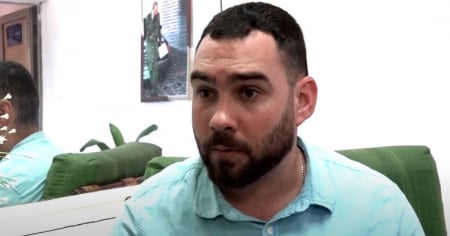
Elián González Brotons blamed the United States for being responsible for the economic and social crisis that Cuba is experiencing, during an interview given in Mexico to the Mexican television channel Canal 6, as part of the IX Continental Meeting of Solidarity with Cuba, held from October 9 to 12 in Mexico City.
"Every time we look for a solution to get out of a problem, another new measure comes our way. They seek to block access to resources and hinder our development," González stated, referring to the U.S. embargo, which he deemed the main cause of the difficulties faced by the island.
According to the deputy, “the crisis that the country is experiencing is the result of many years of blockade” and of the “campaigns aimed at hindering the development of Cuba.” He reiterated that the sanctions imposed by Washington “become extraterritorial and affect other peoples and countries.”
In statements to the Mexican newspaper La Jornada, González asserted that the “ideals and legacy of Fidel Castro remain relevant” and warned that U.S. President Donald Trump and Secretary of State Marco Rubio pose "a threat to Cuba and the region." He stated that Rubio “knows how to tighten the blockade to keep Cuba isolated.”
The former “rafters’ boy,” remembered for the diplomatic conflict between Cuba and the United States that marked his childhood, is now a deputy for Cárdenas, Matanzas, and a staunch defender of the regime's official narrative. In the same interview with the Mexican newspaper, he asserted that Cuba “is not a state sponsor of terrorism,” as claimed by the White House, and stated that “the island has been a victim of state terrorism and an economic blockade that affects the Cuban people.”
On his part, the Cuban ambassador to Mexico, Marco Rodríguez Costa, intervened in the closing of the meeting, where he expressed gratitude for international solidarity and highlighted the "brotherhood" between the two countries. "Cuba is not alone," he proclaimed, while celebrating the "unity of the peoples of Latin America and the Caribbean" in the face of Washington's policies.
The event brought together delegations from over twenty countries and individuals aligned with the Cuban regime, including Aleida Guevara March, daughter of the guerrilla fighter Ernesto “Che” Guevara, under the slogan “For solidarity, friendship, and against imperialism.”
The visit of Elián González to Mexico as part of a support event for the Cuban regime carries a significant political and symbolic weight, representing —alongside Aleida Guevara— the generational continuity of revolutionary discourse. However, his presence has reignited divisions: while the official narrative celebrates him as a symbol of loyalty to the Revolution, many both inside and outside Cuba view him as a figure manipulated by the regime's propaganda.
Frequently asked questions about Elián González's statements and the situation in Cuba
Why does Elián González blame the United States for the crisis in Cuba?
Elián González asserts that the U.S. embargo is the main cause of the economic and social difficulties experienced in Cuba. According to him, the measures from the United States block resources and hinder the development of the island. González maintains that these sanctions have extraterritorial effects that impact other countries, contributing to the prolonged crisis that Cuba is facing.
What is Elián González's role in the Cuban regime?
Elián González is currently a deputy for Cárdenas, Matanzas, and he is a supporter of the official discourse of the Cuban regime. Since his return to Cuba following the diplomatic conflict with the United States, he has maintained a close relationship with the institutions of the regime and has been portrayed as a symbol of loyalty to the Revolution and to the ideals of Fidel Castro.
How is Elián González perceived inside and outside of Cuba?
Within Cuba, Elián González is exalted by the government as a symbol of loyalty to the Revolution. However, outside of Cuba and among critical sectors of the regime, his figure is seen as manipulated by state propaganda. His presence at international events and his statements often generate divisions of opinion regarding his role as a representative of the Cuban regime.
What arguments do Cuban authorities use to blame the United States for the energy crisis on the island?
Cuban authorities, such as Foreign Minister Bruno Rodríguez, argue that the US embargo is the primary cause of the energy crisis in Cuba. They claim that this policy prevents the funding of power plant repairs, increases equipment costs, and delays access to key parts, which severely impacts the electricity supply in the country.
What is Fidel Castro's legacy according to Elián González?
Elián González asserts that the ideals and legacy of Fidel Castro remain relevant. For him, Castro is a paternal and protective figure, and he considers it a privilege to have been recognized as "Fidel's boy". This legacy is something that González defends as part of his commitment to communism and the Cuban political system.
Filed under: