
Related videos:
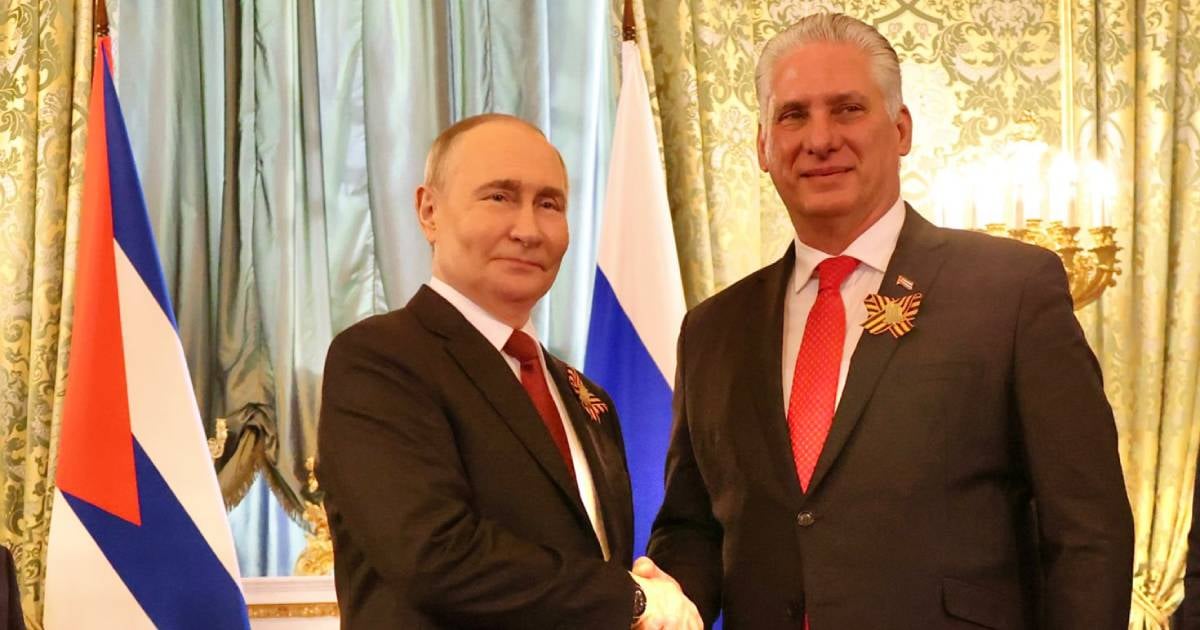
The Russian president, Vladimir Putin, officially ratified a military cooperation agreement with the Cuban regime, solidifying a strategic alliance that comes amid the ongoing war in Ukraine and as reports increase about sending Cuban citizens to fight for the Russian army.
The law, signed this Wednesday in Moscow, grants legal status to the intergovernmental agreement signed last March in Havana and in the Russian capital.
According to the official note published by the state media Russia Today (RT) —aligned with the Kremlin—, the document aims to "strengthen collaboration between both nations in the military field" and "protect the interests of Russian citizens working under Cuban jurisdiction."
The pact had previously been approved by the State Duma and the Federation Council, the lower and upper chambers of the Russian Parliament. With its ratification by Putin, the military alliance between Moscow and Havana is formally established.
An agreement amid accusations of sending Cubans to war
The official confirmation of the treaty comes as the United States and Ukraine denounce the involvement of Cubans as fighters in the service of the Kremlin.
According to a report from Ukrainian military intelligence (GUR) cited by Kyiv Independent, at least 1,076 Cubans have fought or are currently fighting in the ranks of the Russian army, and 96 are reported to have died or gone missing on the front lines.
The GUR claims that recruits receive only two weeks of training in Moscow before being sent to the battlefield, mostly in assault or infantry units. Many were recruited with false job offers posted on social media, unaware that they would end up in the war.
Despite the growing evidence, the regime of Miguel Díaz-Canel has denied its involvement in recruitment, insisting that "Cuba does not participate with military personnel in foreign conflicts."
However, reports from international media such as Forbes and EFE suggest that between 20,000 and 25,000 Cubans may have been recruited or are in the process of enlisting, some allegedly with the complicity of authorities from the island.
The return of a Cold War alliance
The ratification of the military agreement strengthens the bond between two governments that have been historically allied since the Soviet era.
Analysts point out that, although the pact has limited operational weight, it holds a significant propaganda value for both regimes: for Putin, as a gesture of support in Latin America amid his international isolation; and for Havana, as a means of political and economic backing during the worst internal crisis in three decades, characterized by shortages, inflation, and blackouts.
The Russian-Cuban military rapprochement occurs within a context of confrontational rhetoric toward the West. Moscow has hinted on several occasions at its interest in deploying weaponry or military presence in allied territories, reviving echoes of the Cold War and the missile crisis of 1962.
With this step, Putin formalizes an agreement that deepens Havana's dependence on Moscow, while thousands of Cubans —caught between poverty and despair— continue to be dragged into a war that is not theirs.
Frequently asked questions about the military alliance between Russia and Cuba and the recruitment of Cubans
What does the military alliance between Russia and Cuba consist of?
The military alliance between Russia and Cuba was formalized with the ratification of a military cooperation agreement aimed at strengthening collaboration in the military sphere and protecting the interests of Russian citizens in Cuba. This agreement, signed in March 2025, was officially endorsed by Russian President Vladimir Putin in October of the same year, thereby consolidating the strategic relationship between the two countries in the context of international tensions.
What is known about the recruitment of Cubans for the war in Ukraine?
The recruitment of Cubans for the war in Ukraine has been the subject of numerous reports. It is estimated that between 20,000 and 25,000 Cubans may have been recruited or are in the process of enlisting to fight in the Russian army, according to Ukrainian intelligence reports and international media. These recruits are often deceived with promises of high salaries and fake job offers, and are sent to the front with minimal training.
What is the Cuban government's response to these accusations?
The Cuban government has denied its involvement in the recruitment of citizens to participate in foreign conflicts. The regime insists that "Cuba does not deploy military personnel in foreign conflicts" and has attributed the phenomenon to external recruitment networks. However, reports and testimonies suggest that there may be, at the very least, a passive tolerance towards these activities, which has led to criticism and calls for greater action from the international community.
What impact does this recruitment have on the relationship between Cuba and the United States?
The recruitment of Cubans by Russia has exacerbated tensions between Cuba and the United States. The U.S. administration has used these allegations to urge its allies to vote against the UN resolution calling for an end to the embargo against Cuba, arguing that the Cuban regime supports the Russian invasion of Ukraine. This context reinforces the sanctions and diplomatic isolation of Cuba in an increasingly polarized international landscape.
Filed under: