
Related videos:
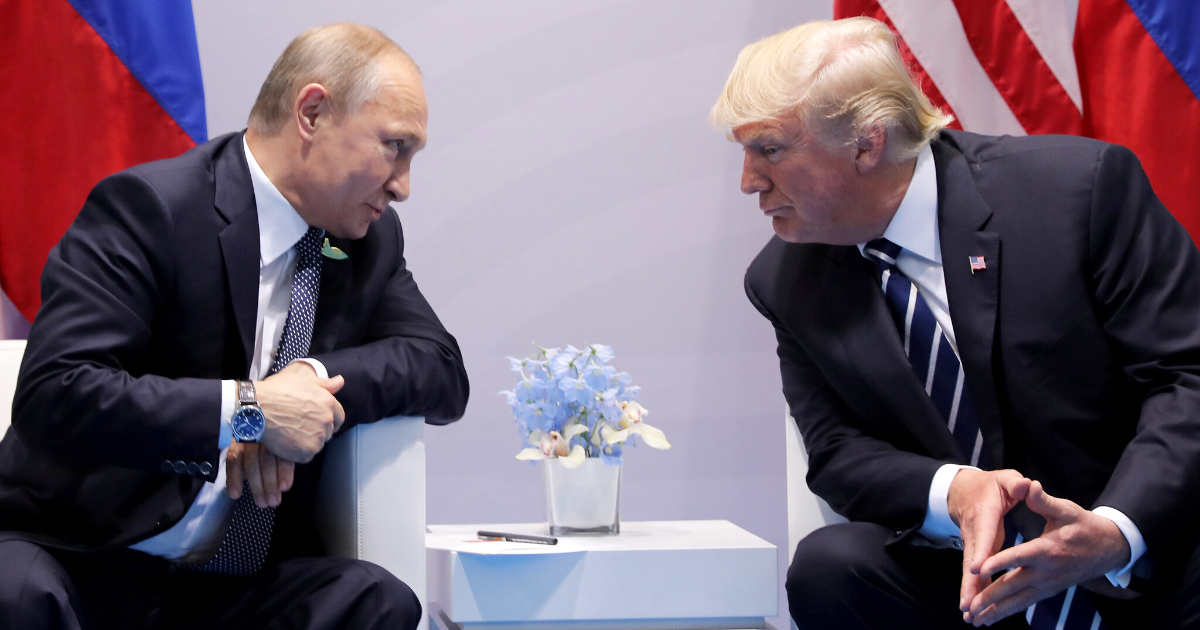
The President of the United States, Donald Trump, announced this Thursday that he will hold meetings with Vladimir Putin and Volodímir Zelenski to negotiate an end to the war in Ukraine, following a "long and productive" phone conversation with the Russian leader.
In a post on his social media platform Truth Social, Trump wrote: “I am currently speaking with President Putin. The conversation is ongoing, it is lengthy, and I will report the details once it concludes. Thank you for your attention.”
Hours later, he confirmed in another post that the call had ended and described it as "very productive." According to the U.S. president, Putin congratulated the United States on the advancements in peace in the Middle East, and both agreed that these progressions could "help in the negotiations to reach an end to the war with Russia and Ukraine."
Trump added that during the conversation, the Russian leader thanked First Lady Melania Trump for her work with children's programs, and that both took time to discuss future trade relations "when the war with Ukraine is over."
The president also confirmed that next week there will be high-level meetings between delegations from both countries, led by Secretary of State Marco Rubio, and that subsequently he and Putin will meet in Budapest, Hungary, with the aim of putting an end to what he described as an "ignoble war."
"President Putin and I will meet in an agreed location, Budapest, to see if we can bring this war to an end. Tomorrow I will meet with President Zelensky at the White House, where we will discuss my conversation with Putin and much more," wrote Trump.
The Kremlin confirms the call and warns about military escalation
According to the agency EFE, the Kremlin confirmed on Thursday the telephone conversation between the presidents of Russia and the United States, two months after their summit in Alaska.
"Right now, a conversation is taking place between the presidents of Russia and the United States," indicated presidential spokesperson Dmitry Peskov, as reported by journalist Pavel Zarubin, who is close to the Kremlin.
The call —the seventh since January, according to Moscow— took place on the eve of the scheduled meeting between Trump and Zelenski at the White House.
This week, Trump suggested the need to speak with Putin about the possible supply of American Tomahawk missiles to Ukraine, something the Kremlin considers a "red line."
Russian Foreign Minister Sergei Lavrov warned the newspaper Kommersant that such delivery would represent "a new level of escalation" in the conflict and would cause "colossal damage to the prospects for normalization between Russia and the United States."
Since the summit on August 15 in Alaska, regarded at the time as a diplomatic success for Putin, relations between the two countries have become strained.
Trump has expressed his “disappointment” with his Russian counterpart and has publicly urged him to “stop killing Ukrainians and Russians.”
Still, the announcement of new meetings and a possible summit in Budapest marks a renewed attempt by the White House to mediate directly in the conflict, in a context where Washington and Moscow have serious differences regarding the future of Ukraine and European security.
During a meeting held in Alaska, Donald Trump and Vladimir Putin unsuccessfully discussed a possible solution to the conflict in Ukraine. The encounter was brief and ended without concrete commitments, although both leaders claimed to have made "some progress."
Trump acknowledged that there is no real agreement and made it clear that the final decision would depend on NATO and the Ukrainian president, while Putin reiterated his usual narrative about threats to Russia's security.
Despite that failed diplomatic attempt, the American leader made a drastic shift in his stance by authorizing Ukrainian attacks with long-range missiles within Russia.
The measure, driven by military and diplomatic pressures, included the potential delivery of Tomahawk missiles, which would represent a significant escalation in Kiev's offensive capabilities.
From the Kremlin, the threat was downplayed, although experts warn that this move could disrupt the strategic balance of the conflict.
In parallel, Trump’s rhetoric towards Putin became openly critical. He publicly questioned the effectiveness of the Russian leader in the conflict and accused him of weakening his international image by prolonging a war that, according to him, “should have ended in a week.”
This change in tone coincided with a reaffirmation of support for Ukraine and its president, Volodymyr Zelensky, whom he described as a brave man with a strong fighting spirit.
However, days later, Trump thanked Putin for positively acknowledging his diplomatic efforts in various global scenarios.
The Russian leader praised his role as a peacemaker and criticized that he had not been awarded the Nobel Peace Prize.
Trump responded to that gesture with a brief message of thanks, showcasing a striking contrast between his recent belligerent rhetoric and the recognition he received from Moscow.
Frequently Asked Questions About Trump's Negotiations for the End of the War in Ukraine
What are Donald Trump's plans to negotiate an end to the war in Ukraine?
The President of the United States, Donald Trump, has announced meetings with the Presidents of Russia, Vladimir Putin, and Ukraine, Volodymyr Zelensky, in an effort to negotiate an end to the war in Ukraine. Trump plans to meet with Putin in Budapest, Hungary, to discuss a solution to the conflict. Prior to that, he will meet with Zelensky at the White House to discuss his conversation with Putin.
What has Trump said about the progress of peace negotiations?
Trump has described his phone conversation with Putin as "very productive" and emphasized that advancements in peace negotiations in the Middle East could help bring an end to the war in Ukraine. However, the scheduled meetings and prior discussions have not yet resulted in a concrete agreement. The context reveals that tensions between Washington and Moscow continue, and the situation in Ukraine remains critical.
What is the Kremlin's position regarding the conversations with Trump about Ukraine?
The Kremlin has confirmed discussions between Trump and Putin but has warned about a potential military escalation if the United States supplies Tomahawk missiles to Ukraine, which they consider a "red line." Russia has expressed its willingness to continue dialogue, but it maintains demands that are difficult for Ukraine and its allies to accept, such as the recognition of Russian sovereignty over Crimea.
What challenges does Trump face in his attempt to mediate in the conflict between Russia and Ukraine?
Trump faces several challenges in his attempt to mediate the conflict, including mutual distrust between the parties, unacceptable demands from the Kremlin, and international pressure for Ukraine to maintain its sovereignty. Additionally, the lack of concrete progress and the possibility that Russia may use the negotiations to buy time complicate the situation. The situation is further exacerbated by international tensions and Russia's warnings regarding the supply of weapons to Ukraine.
Filed under: