
Related videos:
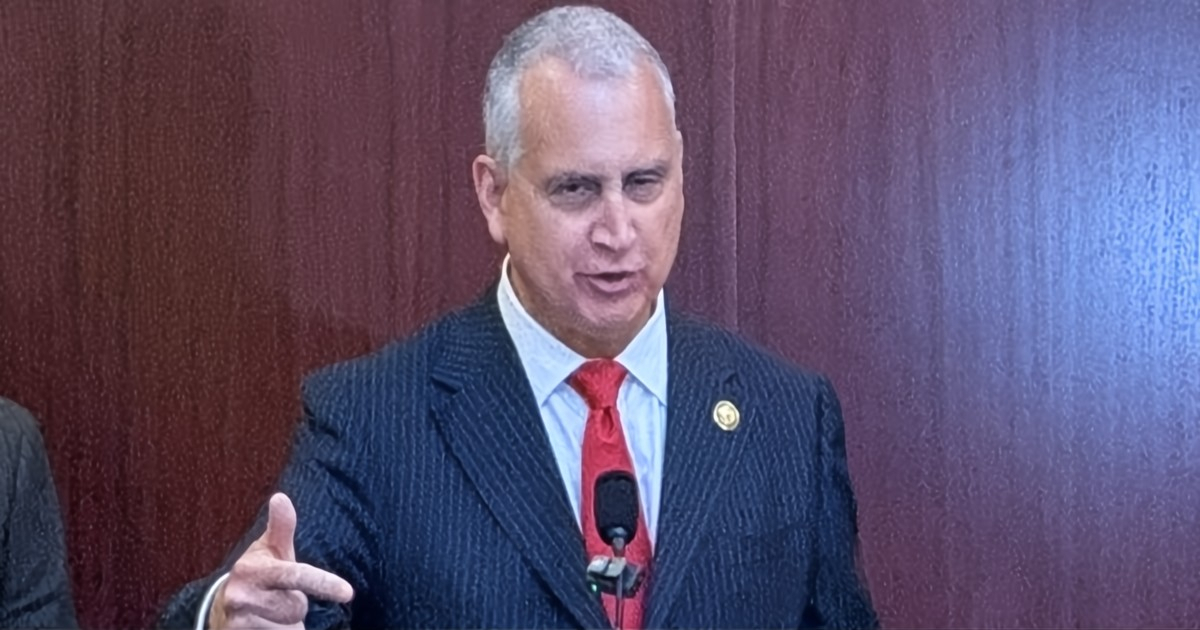
The U.S. Congressman Mario Díaz-Balart urged European governments on Thursday to stop supporting the Cuban dictatorship, which he accused of collaborating with Russia in its war against Ukraine and of expanding its authoritarian influence in the Western Hemisphere.
In a post on his official account on X, Díaz-Balart described the stance of some European countries that condemn the United States sanctions against Cuba, while providing financial aid and debt relief to the regime in Havana, as "irresponsible and counterproductive."
"It is irresponsible and counterproductive for European allies to condemn the sanctions imposed by the United States while simultaneously providing assistance and debt relief to the Cuban regime, especially when thousands of Cubans have been deployed in Russia," wrote the congressman.
Díaz-Balart added that it is time for European countries to "stop contributing to the oppressive dictatorship that brutalizes the Cuban people and supports our adversaries."
"Europe must stop financing a regime that supports Putin, oppresses the Cubans, and extends its malign influence in America and Europe," he noted.
In a previous post, the Republican legislator from Florida recalled that he recently organized a national security briefing in Congress to highlight what he described as a "serious threat": the military and strategic collaboration between the Cuban regime and Russia.
"While some European allies are seeking support from the United States against Russia, their 'ally' Cuba is actively assisting Putin. The regime must be held accountable," he wrote.
Díaz-Balart's statements come amid new evidence of Cuban military involvement in logistical support operations in Russia, which has sparked strong criticism from Washington and Cuban exile organizations.
The congressman, one of the main advocates of the hardline policy against the Havana regime, insisted that Europe cannot demand solidarity in the face of Moscow while maintaining economic ties with a government that collaborates with Putin.
U.S. Congressman Mario Díaz-Balart has reiterated his accusations against the Cuban regime, alleging that it is collaborating militarily with Russia in the war against Ukraine while repressing its own people and profiting economically through practices he describes as inhumane.
In a recent appearance, he urged European governments to stop supporting what he described as an authoritarian dictatorship that aligns with Moscow.
This complaint is set against a backdrop of increasing tension between Havana and Washington, following revelations by Congresswoman María Elvira Salazar and her colleagues Díaz-Balart and Carlos Giménez that the regime may be profiting from the dispatch of young Cubans as contracted soldiers for Russia.
Citing Ukrainian intelligence, they stated that thousands of citizens have been forcibly recruited or deceived, exposing them to certain death on the battlefield.
Cases like that of Giovani Gómez Basulto, who died in Ukraine, and other young individuals who reported abuses, fuel this serious accusation of trafficking for military purposes.
At the same time, Díaz-Balart called for an investigation into Cuban American musicians who have performed concerts on the island.
In a letter to the Department of the Treasury, he warned of possible violations of U.S. sanctions, noting that these events generate income for entities controlled by the regime.
He specifically mentioned a concert at PABEXPO attended by high-ranking officials of the repressive system, and insisted that appearing before a dictatorship is not “art,” but complicity.
In contrast, the European Commission has defended its cooperation agreement with Cuba, arguing that it provides a means of dialogue on human rights and that European funds do not directly benefit the regime, but rather NGOs and civil projects.
Kaja Kallas, the High Representative for Foreign Affairs, acknowledged that the pact has not yet produced the desired changes, but asserted that breaking the agreement will not free political prisoners nor improve the situation on the island.
Frequently Asked Questions about Europe's Support for the Cuban Regime and its Relationship with Russia
Why does Mario Díaz-Balart criticize Europe’s support for Cuba?
Mario Díaz-Balart criticizes Europe's support for Cuba because he considers it irresponsible and counterproductive for European countries to condemn U.S. sanctions while simultaneously providing financial assistance and debt relief to the Cuban regime. He argues that this support indirectly strengthens a regime that collaborates with Russia in its war against Ukraine and represses its own people.
What relationship exists between Cuba and Russia according to Díaz-Balart's statements?
Díaz-Balart points out that the Cuban regime maintains a military and strategic collaboration with Russia, supporting its efforts in the war against Ukraine. This is evidenced by the recruitment and deployment of thousands of Cubans in logistical operations in Russia, which has been condemned by both the congressman and the European Parliament.
What position has the European Union taken regarding the Cuban regime?
Although there are criticisms regarding its stance, the European Union has decided to maintain the political dialogue and cooperation agreement with Cuba, arguing that this framework allows for the discussion of sensitive issues such as the situation of political prisoners. However, this decision has been challenged by activists and politicians who believe that the EU should take a stronger position against a regime that oppresses its people and collaborates with Russia.
What is the official response of the Cuban government regarding the recruitment of Cubans in the war in Ukraine?
The Cuban government has denied having responsibility for the recruitment of Cuban citizens for the war in Ukraine, stating that it involves recruitment networks in Europe. However, multiple investigations and testimonies contradict this version, indicating that there are Cubans fighting in Russian units, some of whom were deceived with false promises of employment.
Filed under: