
Related videos:
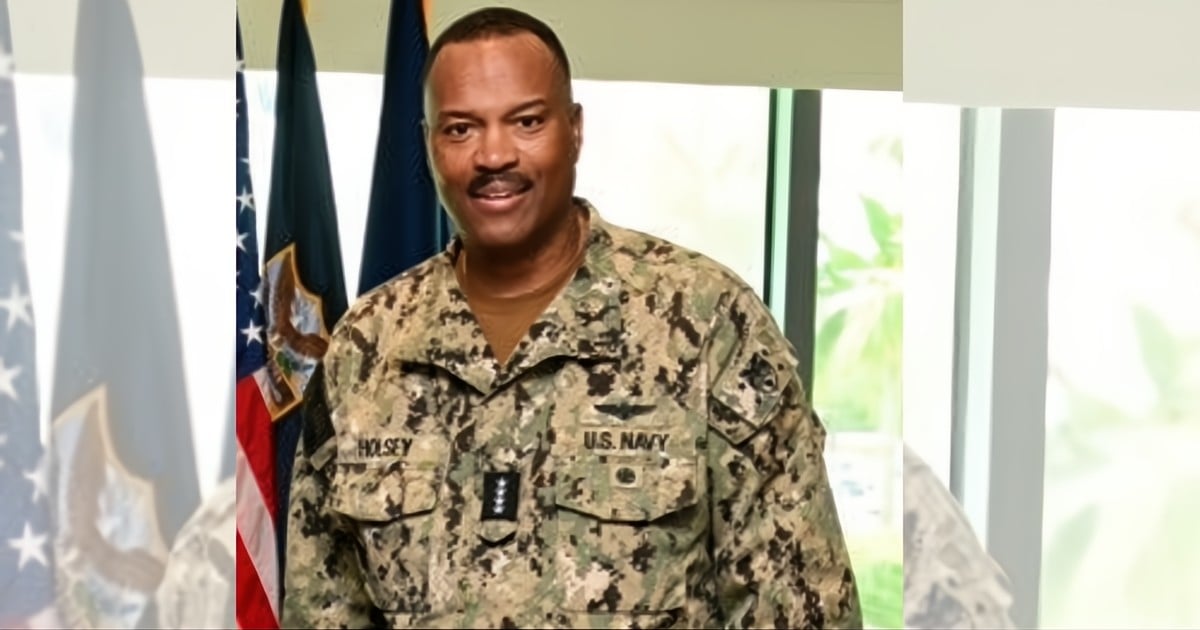
The United States Department of Defense announced this Thursday the retirement of Admiral Alvin Holsey, head of Southern Command (SOUTHCOM), after more than 37 years of military service.
The news was confirmed by Secretary Pete Hegseth in a message posted on his official X account, where he thanked the high command for their "legacy of operational excellence and strategic vision."
Holsey, originally from Fort Valley, Georgia, took command of Southern Command in 2023, from where he has directed U.S. military cooperation in Latin America and the Caribbean, based in Doral, Florida.
During his tenure, the admiral maintained a firm stance against the Cuban regime, which he considered a threat to the national security of the United States due to its ties with China, Russia, and Iran.
In April, during a hearing before Congress, Holsey warned that “Cuba's malign actions weaken our relationships in the region, encourage irregular migration, and threaten the security of the United States.” He also raised concerns about the increasing presence of foreign actors in the hemisphere, particularly the use of Chinese technological infrastructure on the island for espionage and internal control activities.
Its departure marks the end of a cycle at a time of regional tensions and increasing attention from Washington on the role of Cuba and Venezuela in the geopolitics of the Caribbean.
In his final months leading the Southern Command, Holsey held meetings with Secretary of State Marco Rubio and with the head of the U.S. Embassy in Havana, Mike Hammer, to coordinate security and human rights policies in the hemisphere.
The admiral is retiring with a distinguished career that began in 1988 when he was commissioned into the Navy through the NROTC program at Morehouse College. “His exemplary leadership leaves a lasting impact on our institution and on the defense of the nation,” Hegseth wrote when announcing his retirement.
In a message published by Southern Command itself, the admiral confirmed that his retirement will be effective December 12, 2025 and expressed his pride in having served the nation for nearly four decades.
"It has been an honor to serve our country, the American people, and to defend the Constitution for more than 37 years. The SOUTHCOM team has made lasting contributions to the defense of our nation and will continue to do so," Holsey wrote.
The admiral also expressed gratitude for "the opportunity to have served alongside the best fighters in the country" and encouraged his team to continue the mission of strengthening the United States "as a beacon of freedom around the world."
The Southern Command is the entity responsible for U.S. military operations in the Western Hemisphere and plays a key role in the regional security strategy, particularly in the fight against organized crime, irregular migration, and the influence of adversarial powers in Latin America.
Although their replacement has not been officially announced yet, the leadership change could affect the continuity of U.S. policy towards Cuba and other authoritarian governments in the region, in a context marked by strategic competition with China and Russia.
Filed under: