
Related videos:
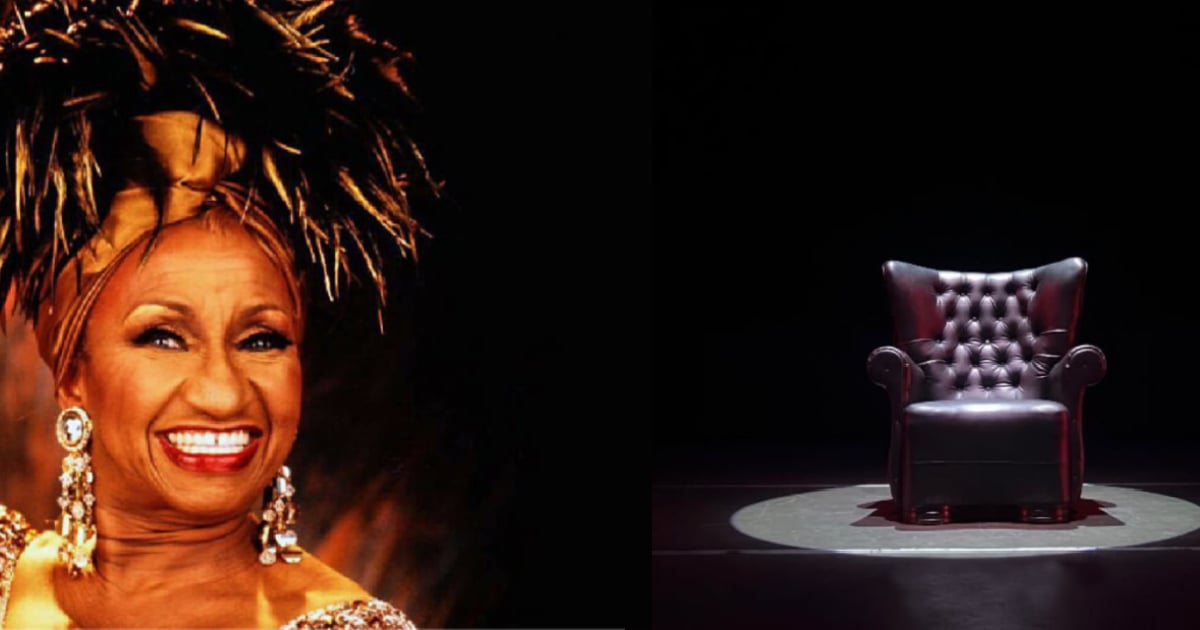
The Cuban Art Factory (FAC) responded with an empty chair, an hour of complete silence, and then a DJ playing music from the Queen of Salsa to the state censorship of a tribute to Celia Cruz.
In an unusual statement, the installation posted on Facebook an image of an empty chair illuminated with the caption "A work of art that wasn't, an armchair, silence, and the art of resistance... Celia lives", along with a reference to Cuban Culture Day on October 20.
The researcher Rosa Marquetti, biographer of Celia, explained that “at the time when the censored play Celia, by El Público theater, was supposed to take the stage, instead there was ‘an hour of absolute silence and a lit chair.’”
"Then, a DJ played music from La Reina, La Guarachera de Cuba, La Reina de la Salsa, the most universal Cuban," he explained.
Censorship
Last Thursday, it was announced that the tribute prepared by the group Teatro El Público, led by Carlos Díaz, in conjunction with FAC to commemorate the centenary of the birth of Celia Cruz (1925-2003) was canceled at the last minute by the decision of the National Center for Popular Music.
In a brief note published on its Facebook account, the organization announced that “the performance by the theater group El Público, scheduled for this Sunday the 19th, will not take place,” without providing reasons or mentioning the name of the honoree artist.
The cancellation, announced just hours before the event, surprised the organizers and participants, who had rehearsed for days to pay tribute to the Queen of Salsa.
According to researcher and critic Rosa Marquetti in a text shared on Facebook, some of those involved received personal summonses, unappealable orders, and warnings of possible consequences if they disobeyed the instruction.
Marquetti described the suspension as "a new chapter in the history of cultural censorship in Cuba" and denounced the use of "methods of political commissariat" to silence an artistic celebration.
"They have spent 60 years fearing that voice, terrified by its power to rally people," he wrote.
For the author, "they have been attacking her for 60 years, overwhelming her with the misogyny and plantation racism that have characterized many of the decisions and policies in the cultural sphere, while she stood as the greatest representation of what it means to be Cuban, the most recognized worldwide, the most beloved, the most applauded, the most honored."
He recalled that Celia Cruz "was more patriotic, more Cuban, and more significant than all her censors," while also inquiring about the possible merits, work, and contributions to Cuban culture of officials and cultural commissioners such as Abel Prieto, Alpidio Alonso, Fernando Rojas, Fernando León Jacomino, Indira Fajardo, Víctor Rodríguez “Vitico".
The reactions on social media came quickly. The director of the International Festival of Poor Cinema in Gibara, Sergio Benvenuto Solás, expressed regret that they didn't even dare to mention the Queen of Salsa: "Couldn't they even include her name? Shameful," he said.
The critic Sergio Rafael Vidal compared the measure to the totalitarian methods of the 20th century: “Stalin and Goebbels, wherever they are, take pride in having such outstanding students,” he stated.
Hundreds of users expressed their anger and sadness. "How long will the censorship and disrespect towards the greatest and most universal artist that Cuba has produced continue?" wrote Dianna Rosa.
For many, the censorship of the tribute confirms the enduring fear of the authorities towards a figure who, more than two decades after his death, remains a symbol of Cuban identity and freedom.
As Rosa Marquetti wrote, "Celia doesn’t need the permission of any government to be who she is: it is us, the people, who need her to rebuild a country that seems to be sinking irreparably."
This new act of censorship by Cuban institutions occurs just hours before October 20th, Cuban Culture Day.
Hundreds of people gathered on August 9 at the Summer Stage in Central Park, New York, to celebrate the centenary of Celia with a concert that made it clear that the voice and image of the "queen of salsa" remain alive, even though her legacy is officially ignored in Cuba.
Frequently Asked Questions about the censorship of the tribute to Celia Cruz in Cuba
Why was the tribute to Celia Cruz censored in Cuba?
The tribute to Celia Cruz was censored by decision of the National Center for Popular Music of Cuba, which suspended the event without providing reasons or mentioning the artist. This action has been perceived as an act of cultural censorship, reflecting the Cuban regime's fear of Celia Cruz's ability to mobilize people, even years after her passing.
How did the Fábrica de Arte Cubano respond to censorship?
The Cuban Art Factory (FAC) responded to censorship with an empty chair and an hour of silence, followed by the music of Celia Cruz. This symbolic action was a form of artistic resistance and a tribute to the Queen of Salsa, demonstrating solidarity in the face of the Cuban government's decision.
What impact does censorship have on Celia Cruz's legacy?
Despite the censorship in Cuba, Celia Cruz's legacy remains strong around the world. The official censorship has not diminished her influence or recognition as a symbol of Cuban identity and freedom. International events and tributes keep her memory alive and celebrate her contribution to Latin music.
How has the artistic community and the public reacted to this censorship?
The artistic community and the public have expressed their outrage and sadness over the censorship of the tribute. Social media was flooded with criticisms of the Cuban regime, and figures such as Rosa Marquetti and Sergio Benvenuto Solás have denounced the use of totalitarian methods to silence the celebration of Celia Cruz's centenary.
Filed under: