
Related videos:
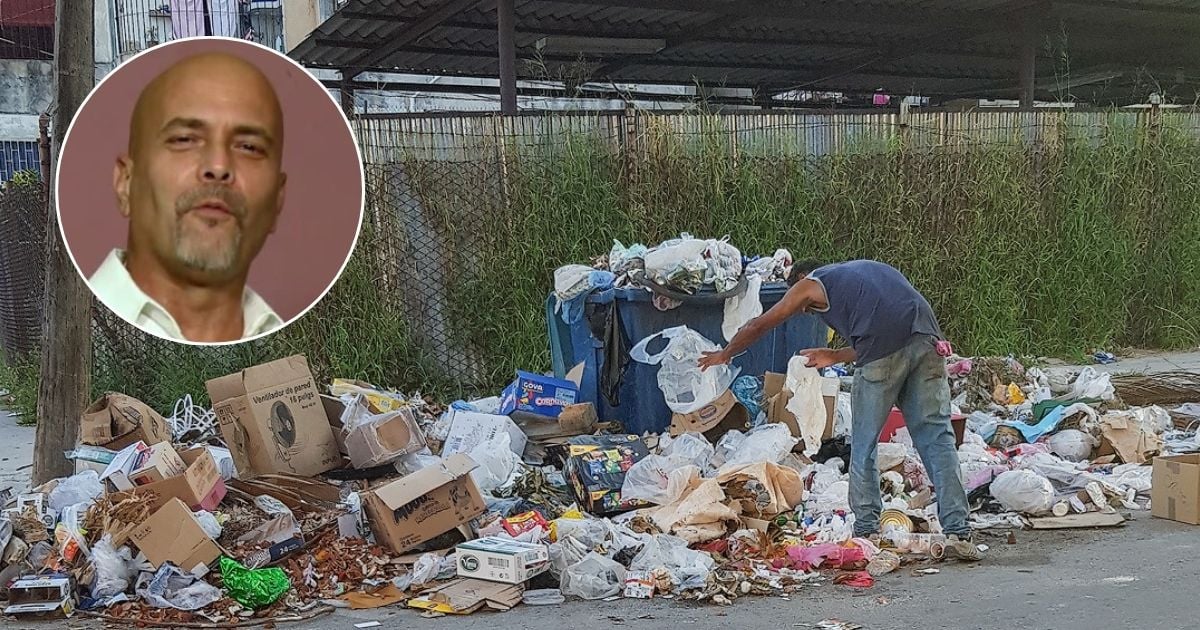
The former spy Gerardo Hernández, coordinator of the Committees for the Defense of the Revolution (CDR), has once again provoked outrage among Cubans by comparing poverty in the United States with the misery experienced by the population on the island.
His phrase —“The haters portray the Yuma as a paradise on Earth”— sparked an avalanche of responses that reveal a reality very different from the official version.
While the regime insists on highlighting the social problems of the North American country, hundreds of Cubans reminded in the comments on CiberCuba that in the U.S. there is poverty, yes, but there are also opportunities, freedom, and basic services that are privileges in Cuba.
"The Yuma is not paradise, but Cuba is indeed hell."
"Nothing in life is perfect, but if you want to work and get ahead, the United States is the closest thing to paradise," wrote Luis Sánchez, to which Clara María Valdés Fernández responded with irony: "Exactly, and because of you all, Cuba is hell."
José Aday shared that he arrived in the U.S. at 44 years old, without language or skills, and today he does not live in poverty. “That shows there are ways to succeed. In Cuba, even after working for 35 years, you can't have the basics,” pointed out Berta Díaz Ortega from the island.
Other comments noted that the country Gerardo criticizes sustains the Cuban economy through remittances, MLC stores, and dollarized telecommunications. "Without the Yuma, you wouldn't survive," summarized Barbaro Cuesta León.
"In the United States, people work, but they live as individuals."
The contrast between both countries is echoed in dozens of testimonies. “Even the poorest can sleep in a shelter and eat if they want; that’s the difference,” said Damaris Quiñones Gerpe.
“From the moment you arrive, they treat you like a person,” added Antonio Ochoa Guevara, while J. Martin Acosta recalled that “in the Yuma, you can protest without being beaten.”
Ariel Sague summarized the feelings of many: “The American dream is better than the Cuban nightmare.”
"The hell shrank down."
For those who live on the island, Gerardo's words were offensive.
“You portray Cuba as a medical power, yet here there aren't even aspirin,” remarked Osmel Domínguez.
“If Dante were to be reborn, he would write The Inferno with more circles, because Cuba is exactly that,” wrote Odalys Fraga García, while Reynolis Almenares was straightforward: “Any country is paradise compared to Cuba.”
In another comment, Luis León recalled an old anecdote: "When he was imprisoned in the U.S., Gerardo complained because he had been eating chicken for six days... can you imagine, better than a free Cuban."
"Freedom, opportunities, and dignity"
The messages revolve around a common theme: freedom and dignity. “In Cuba, there is no future; here (the U.S.), you work and have whatever you set your mind to,” wrote Yara Rodríguez Mederos.
“My paradise in Miami is better than the one they painted for me for 42 years,” confessed Aneisy Hernández Ortega, while Alvaro Hernández recalled that he arrived two years ago and finally has “freedom, medicine, and food, three things that are scarce in Cuba.”
Carmencita González summed it up this way: “In the United States, after two years of work, a couple aged 60 can afford an apartment and a car. In Cuba, you can't even buy a motorcycle in 35 years.”
Gerardo Hernández's attempt to divert attention towards American poverty had the opposite effect: Cubans reminded him that the real hell is on the island.
In a country where blackouts, hunger, and lack of freedoms are part of daily life, any comparison with the U.S. sounds more like provocation than analysis.
Filed under: