
Related videos:
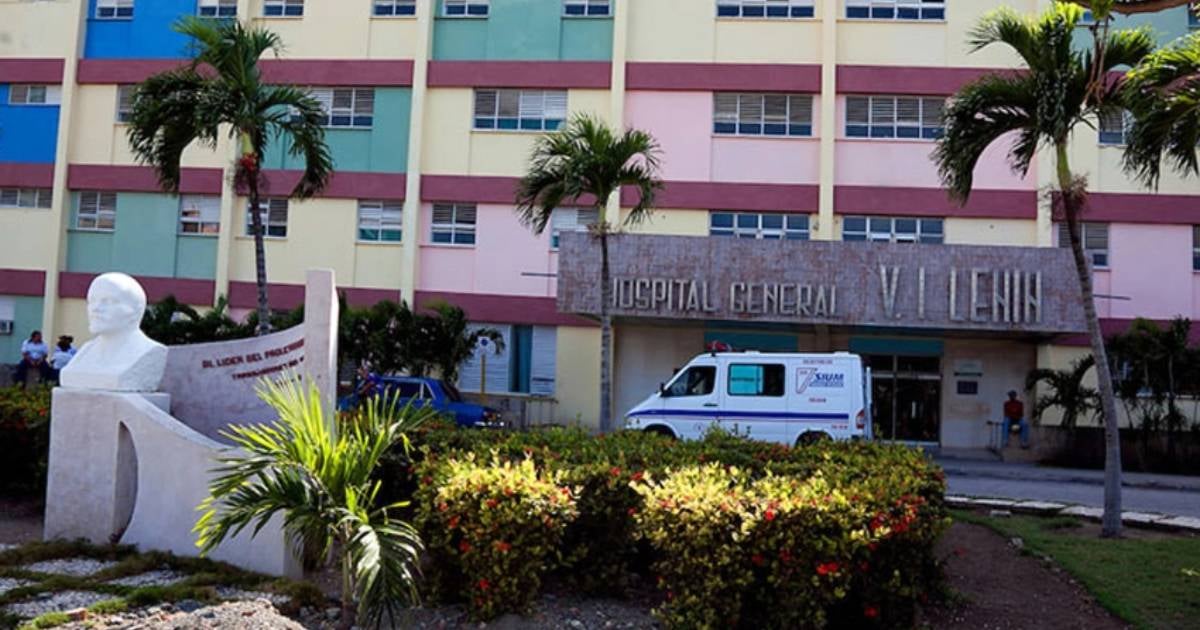
The Vladimir Ilich Lenin General Hospital in Holguín reported on Friday that there were interruptions in the hemodialysis treatment facility due to voltage fluctuations and a failure in the power plant, which impacted the operation of essential machines for this vital treatment.
“Since yesterday, the hemodialysis treatment facility at our hospital has experienced interruptions in its normal operation due to fluctuations in voltage levels and a failure in the power plant, which has impacted the operation of the machines essential for this vital treatment,” the institution noted on its Facebook profile.
The hospital center assured that technical teams from Electromedicine and specialists from the Holguín Electric Company are working to restore the service "as quickly as possible," and announced an alternative measure to ensure that patients do not miss their sessions: scheduled patients will be attended to at the Lucía Íñiguez Landín Clinical Surgical Hospital, also in Holguín, "with all necessary guarantees."
Although the statement adopts an institutional tone and calls for calm, the situation has raised concerns among family members and kidney patients, who rely on treatment that cannot be interrupted without risking their lives. Amid a prolonged energy crisis, power outages and the lack of stability in the supply directly impact medical care in Cuba, where many hospitals lack sufficient backup systems or fuel to keep their generators running continuously.
Hemodialysis is a procedure that partially replaces kidney function, and its suspension, even for a few hours, can put the lives of patients at risk.
The event also takes place in a context where the impact of Hurricane Melissa on the island is expected in just a few days, threatening to worsen the failures in the electrical system and the conditions of hospitals.
The problem adds to other recent episodes that reflect the deterioration of the Cuban healthcare system. In August of this year, Dr. Roselin Moreno, from the Celia Sánchez Manduley Hospital in Manzanillo, Granma, publicly denounced the repeated suspension of the procedure due to a lack of sodium bicarbonate, essential for treatment, and criticized the institutional neglect that puts patients at risk.
"We deserve respect," he then wrote on social media, in a testimony that highlighted the collapse of nephrology care in the country.
The shortage of supplies is compounded by the collapse of public transportation. In May, the Minister of Transport, Eduardo Rodríguez Dávila, presented as an achievement the mobilization of hemodialysis patients through state taxis and volunteer drivers, a scheme that highlights the lack of real alternatives and the precariousness of the healthcare system.
Meanwhile, thousands of kidney patients are facing a critical situation, where their lives depend on restoring the electricity or finding fuel for a taxi.
In hospitals where hemodialysis should be a guaranteed service, blackouts and shortages expose the fragility of a healthcare system that, as acknowledged by Minister José Ángel Portal Miranda himself, is experiencing an "unprecedented structural crisis."
The publication from Hospital Lenin did not provide details on whether patients will receive medical compensation for the delay in treatment, but its institutional tone contrasts sharply with the anguish of those who are literally waiting for the lights to come back on in order to continue living.
Filed under: