
Related videos:
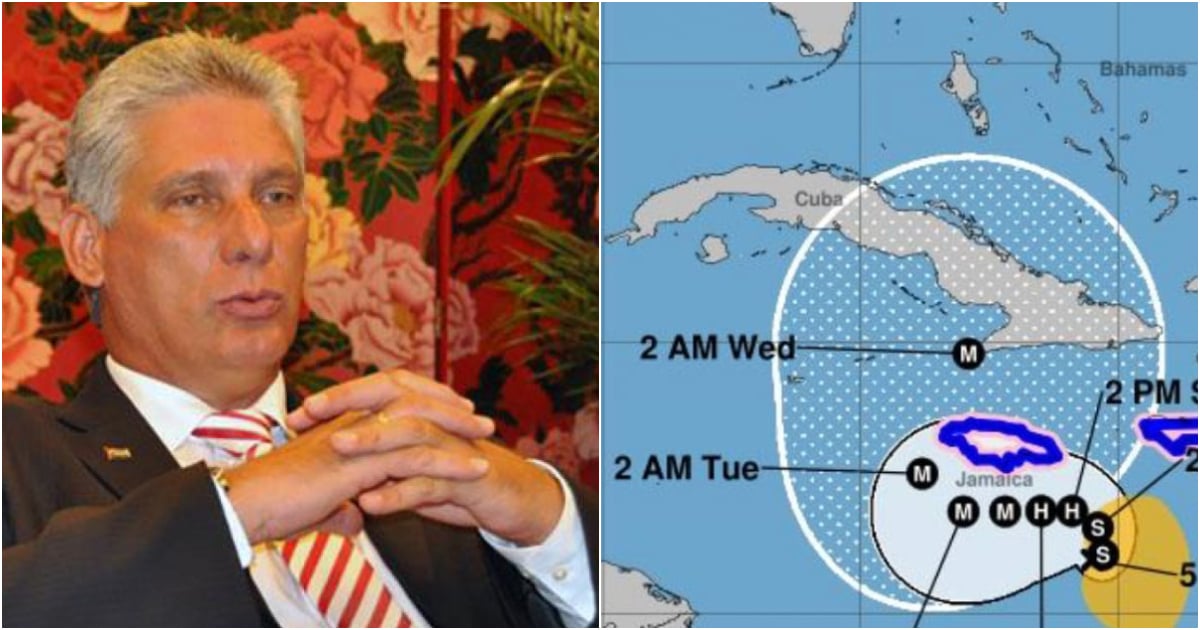
The president Miguel Díaz-Canel assured that Cuba is prepared to face Hurricane Melissa, although the country is experiencing one of its worst energy and health crises in years, with prolonged blackouts and widespread shortages.
“There is a high likelihood that Melissa will affect our country in the coming days. The provinces that could be impacted are taking measures. It is important to anticipate every detail to protect our people and implement the plans. We have extensive experience in this,” wrote the leader this Friday on the social network X.
While the leader appealed to the discourse of "foresight and experience," Cubans faced power outages of over 18 hours, shortages of food and medicine, and epidemic outbreaks that are overwhelming hospitals.
The situation worsens due to the lack of preventive measures and the deterioration of the national electrical system, which reported a deficit exceeding 1,800 MW this Friday.
Díaz-Canel's message sparked a wave of criticism on social media. "Experience in failing due to a lack of resources to confront it," wrote one user.
Others recalled that after past hurricanes “the people were left abandoned and the aid was manipulated.”
"Your impact is even worse than hurricanes," another commenter quipped. "There are no medicines or medical equipment, and the population remains without electricity and cut off while you talk about experience," added an internet user from the eastern region.
The arrival of Melissa, which could intensify into a hurricane in the next few hours, finds the country in a state of extreme vulnerability, lacking material resources and institutional strength to respond to a new national emergency.
At the beginning of September, a national survey by the Food Monitor Program (FMP) revealed that 94% of Cuban households believe that the government is not interested in reversing the food crisis affecting the country or, if it has attempted to do so, it has not achieved any results.
The report emphasized that hunger, poverty, and insecurity have spread to the majority of the population in a country where independent estimates calculate that more than 80% of Cubans live in poverty.
Filed under: