
Related videos:
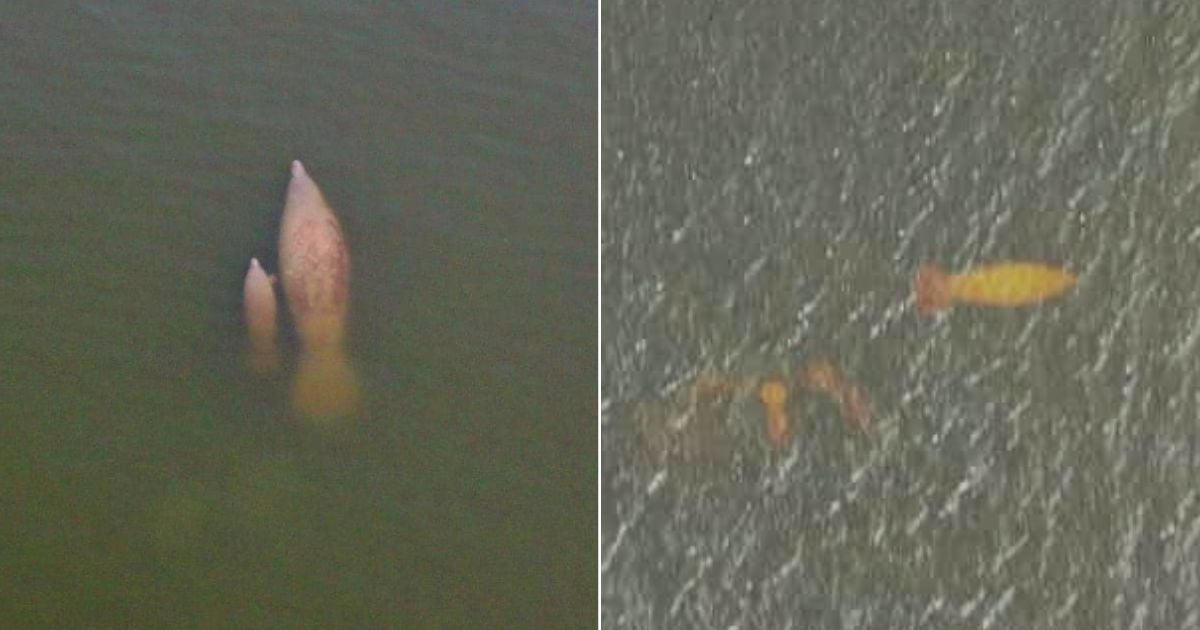
Amid the national tension due to the imminent impact of Hurricane Melissa, hopeful news arrived from Ciénaga de Zapata, Matanzas: a team of scientists confirmed the sighting of manatees in Laguna del Tesoro, a habitat where their presence had drastically declined in recent decades.
According to a report on Monday by the Minister of Science, Technology, and Environment (CITMA), Armando Rodríguez Batista, in a post on Facebook, the expedition was organized by the Ciénaga de Zapata National Park, in collaboration with the Greater Caribbean Manatee Alliance, the Clearwater Aquarium Research Institute, and Dr. Anmari Álvarez Alemán, a researcher and coordinator of the Alliance, as well as co-chair of the Sirenian group of the International Union for Conservation of Nature (IUCN).
The manatee is an endangered species, with only a few hundred individuals surviving throughout the Caribbean region, distributed among Cuba, the Dominican Republic, Haiti, Jamaica, and Puerto Rico.
In the Lesser Antilles, there are no longer any populations, while in Florida and some Central American countries, more stable communities persist.
The Zapata Swamp, including the Ensenada de la Broa, has been recognized for decades as one of the most important habitats for manatees in the Greater Caribbean.
In 1964, six specimens were moved to Laguna del Tesoro, a freshwater body of water that has no open connection to the sea, with the aim of strengthening the local population.
Years later, in the 1990s, two more individuals from Villa Clara and Varadero joined.
In the following years, it was common to see more than twenty manatees in this lagoon, a symbol of the natural wealth of the Ciénaga.
However, in recent decades, sightings became increasingly rare, to the point of almost disappearing completely.
Currently, only sporadic observations are being recorded, which has raised concerns among scientists and conservationists.
The recent expedition employed a modern and less invasive methodology: the use of drones equipped with 4K video cameras that fly over the bodies of water at an altitude of about 90 meters.
These recordings are then analyzed in a laboratory, allowing for the detection of animals without disturbing their habitat.
This method has proven to be effective, saving resources and time compared to traditional direct observation techniques.
The captured images confirmed the presence of manatees in the Treasure Lagoon, which is an encouraging development for conservation efforts on the island.
"It is good news for Cuba and the world," emphasized Rodríguez, who highlighted the importance of continuing research and protecting Caribbean sirenians, which are heavily threatened by habitat loss, pollution, and maritime traffic.
The minister assured that CITMA, along with the national system of protected areas, the Marine Research Center of the University of Havana, and other institutions, will continue to support research on this species, which is considered a key indicator of the health of coastal and marine ecosystems.
In the midst of the days of alarm and distress caused by Hurricane Melissa, the discovery in the Zapata Swamp stands as a beacon of hope and a testament that, despite adversity, life continues to find a way in the Cuban wetlands.
Manatees have started to be seen more frequently in coastal areas of Cuba, generating astonishment among residents and hope among environmental advocates.
In Santa Fe, Havana, a sighting was reported in a fishing area, where residents expressed surprise at the presence of the animal, which is quite uncommon in areas so close to the capital.
More recently, a , also in Havana, which once again highlighted the presence of this species in urban areas.
The incident raised concerns among internet users and neighbors who feared for the animal's safety in light of potential captures or attacks, especially in a context of growing food insecurity.
In Matanzas, several manatees surprised locals by appearing in the bay. The images shared on social media clearly showed the animals swimming in relatively clear waters, suggesting a possible temporary recovery of habitats in certain regions of the country.
Filed under: