
Related videos:
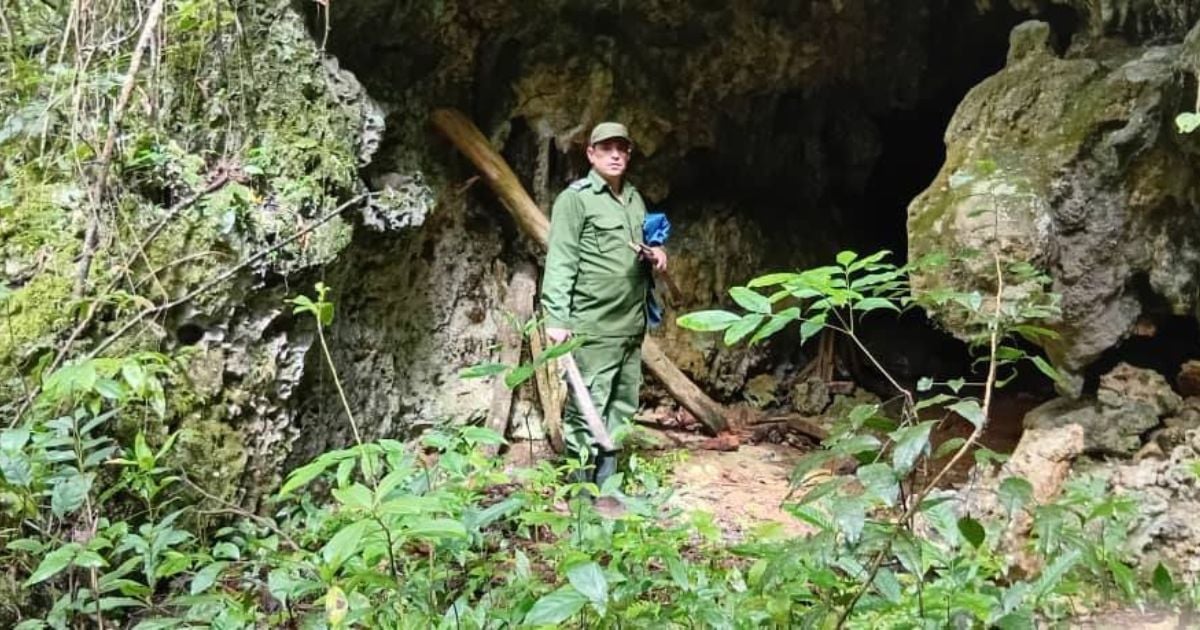
In the face of the imminent arrival of Hurricane Melissa, authorities from the municipality of Yateras, in the province of Guantánamo, reported that several natural caves are being prepared to be used as temporary shelters during the passage of the cyclone.
The president of the Municipal Assembly of People's Power in Yateras, Yulien Salina Gallardo, explained in a post on Facebook that the areas were identified as safe places to evacuate residents from remote communities that do not have sturdy buildings.
"We explore caves that, as part of experiences from previous events, were used for the evacuation of the population in intricate communities that lack other solid structures for this purpose. These are prepared in a hygienic and safe manner for protection," the official wrote in his message.
The use of these natural cavities as shelters is not new in the mountainous area of Guantánamo, where the lack of secure infrastructure or the remoteness of urban centers forces people to resort to extreme alternatives in the face of severe weather phenomena.
In other municipalities of eastern Cuba, such as Guamá in Santiago de Cuba, the Civil Defense has also set up natural shelters to evacuate families at risk.
Although the authorities assure that the caves will be equipped with hygiene and safety measures, concerns persist about the actual conditions of those spaces and the logistics to ensure the effective protection of the evacuated individuals.
With Melissa approaching the eastern region like a category five hurricane, residents of Yateras and other mountainous communities are facing a high-risk situation, characterized by a scarcity of resources, precarious housing, and a lack of safe options to protect themselves from the imminent impact of the phenomenon.
The threat of Hurricane Melissa has forced several provinces in eastern Cuba to implement unprecedented or extreme emergency measures.
In Guantánamo, authorities announced plans to evacuate around 100 thousand people, mostly from vulnerable areas, where the infrastructure does not ensure protection against an event of this magnitude.
One of the most exposed municipalities, San Antonio del Sur, has already begun to evacuate over 13 thousand people to improvised shelters and higher ground.
Operations have intensified in light of the imminent approach of the phenomenon, classified as one of the strongest in recent times.
At the same time, the Civil Defense activated protocols throughout the eastern region, designating safe areas and making last-minute decisions such as using caves, school centers, and even religious temples.
In this regard, an official list was disseminated with the main measures adopted at the national level to minimize human and material damage.
Even institutions like the Church of Santiago de Cuba have opened their doors to welcome those affected, an action coordinated with local authorities and defense councils.
These efforts highlight the urgency for protection alternatives in a region marked by structural deficiencies.
In Holguín, the shortage of resources to evacuate and organize the population has led the provincial government to request citizen assistance with motorcycles and loudspeakers, revealing the limitations of state logistics in the midst of an emergency of this scale.
Filed under: