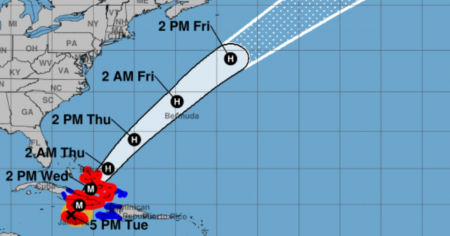
A Cuban resident in Jamaica sent reporter Yosmany Mayeta images that show the effects of the winds associated with Hurricane Melissa, as the system, now a category 4, has maximum sustained winds of 240 km/h and a central pressure of 906 mb.
The video shows the power of the wind, which strongly batters the trees, as Melissa moves very slowly northwest in the Caribbean.
According to the latest update from the National Hurricane Center, the core of Melissa is located 20 km east of Montego Bay, Jamaica, and about 325 km southeast of Guantánamo.
Although there may be fluctuations in intensity before the impact in Jamaica, the forecast keeps the system as an extremely powerful major hurricane heading towards Jamaica and southeastern Cuba, and still hurricane-strength over the Bahamas.
The wind field confirms the magnitude of the phenomenon. Strong wave activity is already impacting the southeastern coast of Cuba, where waves may reach heights between 2.5 and 4 meters, causing light to moderate flooding in low coastal areas.
Experts warned that the maritime conditions will continue to deteriorate as the hurricane approaches.
The cyclone, with a central pressure of just 899 millibars, has caused the collapse of roofs, widespread power outages, river overflows, and landslides in several regions of the country.
Local authorities urged the population not to leave their shelters as violent gusts and waves over three meters struck the southern and northern coasts.
Emergency agencies describe the situation as "catastrophic" and fear that the material damage will be extensive throughout the western region of Jamaica.
The phenomenon also causes wave heights of between 9 and 13 feet (up to 4 meters) on the south coast of Jamaica and could generate swells of 8 to 12 feet along the southeastern coast of Cuba.
The expected accumulated rainfall is also severe: between 25 and 30 inches (over 700 millimeters) in Jamaica, and from 250 to 500 millimeters for eastern Cuba, which increases the risk of catastrophic flooding and landslides.
Filed under: