
Related videos:
For the first time since 1992, the world stopped speaking with a single voice about Cuba. The vote on October 29 in the United Nations General Assembly —165 votes in favor, 7 against, and 12 abstentions— marked a historic break in diplomatic support for the regime in Havana and a clear sign of political isolation.
The Chancellor Bruno Rodríguez Parrilla celebrated it on social media as a “victory for the Cuban people against imperialist lies.” But the numbers tell a different story: Cuba lost 22 supporting votes in just a year, a drop of 12% compared to 2024, when it received 187 endorsements and only two votes against.
It is, by far, the most adverse outcome in the historical series of annual resolutions calling for the lifting of the U.S. embargo.
The contrast could not be more striking. During the peak diplomatic years—between 2004 and 2007—only four countries voted against: the United States, Israel, and the small Pacific archipelagos (Marshall Islands and Palau).
In 2016, under the thaw in relations between Barack Obama and Raúl Castro, the United States even abstained, going against the spirit of its own legislation in order to encourage an opening of the regime that would lead to the lifting of sanctions.
But in 2025 the board has changed. Among the seven votes against are countries of significant political and symbolic weight: Argentina, Hungary, Israel, the United States, North Macedonia, Paraguay, and Ukraine. The abstention of twelve nations —including several European and Latin American countries— completes the picture of a shattered consensus.
The causes of the turn
The partial decline of support for Cuba at the UN cannot be understood solely in diplomatic terms. There is a political and moral context behind it that has transformed the international perception of the regime.
The largest migration exodus in contemporary Cuban history—over 650,000 people since 2021, according to U.S. official data, and nearly two million globally, according to unofficial statistics—has revealed the magnitude of the humanitarian crisis facing the island.
Millions of citizens now live with daily power outages, hospitals lacking supplies, and inflation that erodes salaries. The narrative of the "blockade" is no longer sufficient to explain why Cuba, despite importing hundreds of millions of dollars in food annually from the United States, continues to face chronic shortages.
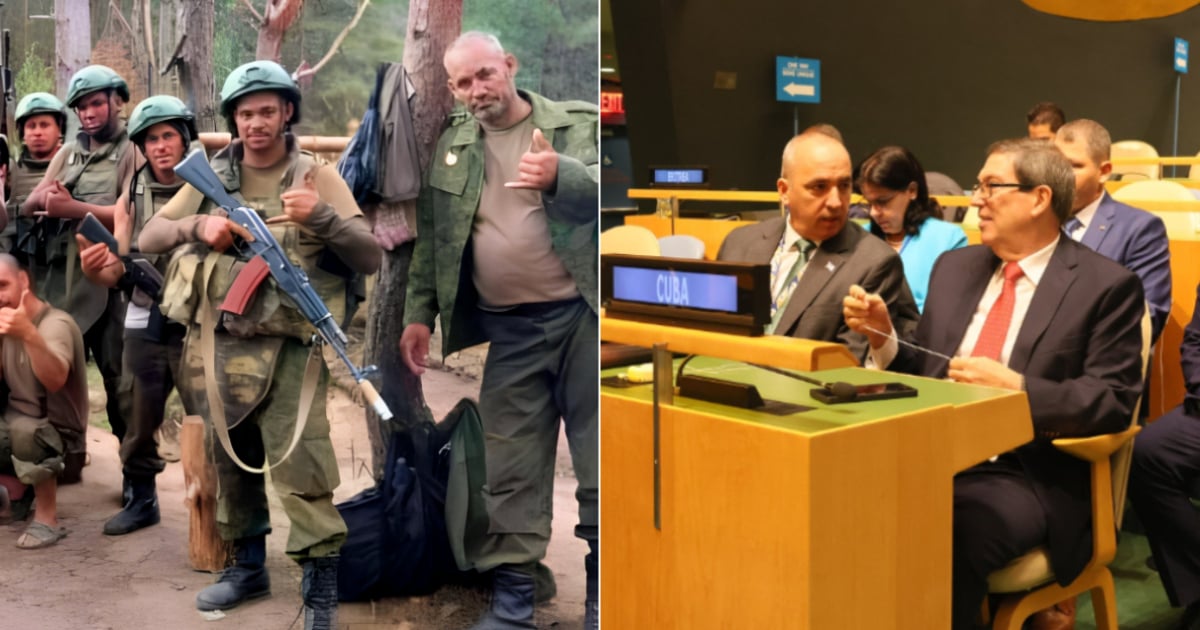
This worn narrative is further compounded by the impact of accusations regarding Cuban mercenaries in the war in Ukraine. Kiev has documented, through the humanitarian project "I Want to Live," the involvement of thousands of Cubans recruited by the Russian army.
The U.S. State Department itself supported those allegations, while the Cuban regime merely denied its involvement and blamed "international mafias."
The result is that, for the first time, a significant number of Western countries that previously supported Cuba's resolution unreservedly have abstained or voted against it, clearly reflecting political and moral distrust.
A change of discourse in Washington
The shift also reflects a new communication strategy from Washington. Since Donald Trump's return to the White House, U.S. diplomacy has focused its rhetoric not on justifying the embargo, but on dismantling the narrative of the "blockade" as the cause of Cuba's ills.
The State Department itself, through the Office of Western Hemisphere Affairs, has emphasized that Cuba can import food, medicine, machinery, and agricultural products from the United States —and in fact does— under the humanitarian exceptions of the TSREEA and CDA laws.
Between January and May 2025, Havana spent over 204 million dollars on food imports from the U.S., a figure inconsistent with the notion of a complete blockade.
At the same time, Washington has pointed to the military conglomerate GAESA, which controls over 70% of the Cuban economy and has accumulated $18 billion in liquid assets, according to an investigation by the Miami Herald.
This double standard—of international victimhood and internal accumulation of wealth—has further eroded the regime's credibility with its former allies.
The erosion of the myth
Argentina's vote was particularly symbolic. For the first time since the restoration of democracy, Buenos Aires aligned itself with Washington, indicating that "the embargo cannot be an excuse to justify a political model that denies fundamental freedoms."
Ukraine, for its part, marked a turning point by voting against Cuba after denouncing the sending of mercenaries to the war.
These gestures—combined with the abstentions from European and Latin American countries—confirm that the rhetoric of "Cuba as a victim" has lost its potency in light of the evidence of its own internal repression and its geopolitical role alongside Russia and China.
A bitter "victory"
Despite the official enthusiasm, the outcome of the vote is not a reason for celebration, but rather a cause for alarm in Havana. Never has the support been so low or so fragile.
The resolution was approved, as it is every year, but it no longer represents a universal consensus; rather, it reflects a growing diplomatic rift between the democratic world and the island's authoritarian alliances.
Cuba continues to portray the vote as a "moral victory," but the message that the UN conveys in 2025 is clear: the myth of the "genocidal blockade" begins to crumble under the weight of its own falsehood.
Filed under: