
Related videos:
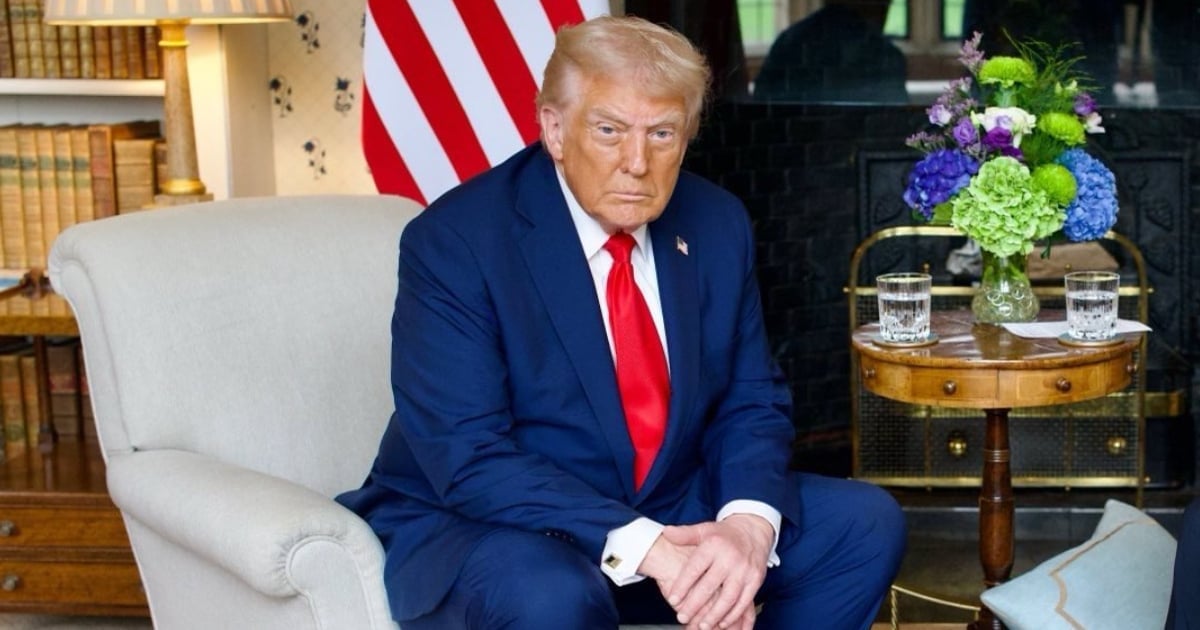
The President of the United States, Donald Trump, denied on Friday media reports about alleged plans to bomb Venezuelan military targets.
“No,” was Trump’s firm response when questioned by reporters about a supposed imminent attack against military installations in Venezuela, reported the agency Europa Press.
The denial comes just hours after U.S. media outlets such as the newspaper The Wall Street Journal claimed that the Pentagon had identified several targets linked to drug trafficking in Venezuelan territory, including fuel depots and bases used by the regime of Nicolás Maduro.
The deputy press secretary, Anna Kelly, also rejected the statement and emphasized that any announcement regarding defense or national security can only come from the president himself.
A senior U.S. official, cited by the Nuevo Herald, stated that Maduro "could find himself trapped in his own country" if the operation is carried out. "There is more than one general willing to hand him over," the source assured.
The rumor of an air offensive spread following the recent deployment to Latin America of a naval strike group led by the nuclear-powered aircraft carrier Gerald R. Ford, as part of Washington's border security strategy.
The operation had been interpreted as a possible prelude to a military escalation against Caracas.
Journalistic reports had described the alleged offensive as a “new phase” in Washington’s pressure policy, aimed at striking military and logistical structures allegedly linked to the drug trafficking of the so-called Cartel of the Suns.
However, the U.S. administration insists that there are no military actions planned "for now."
Such announcements come after a series of U.S. military operations in the Caribbean, which have included attacks on vessels allegedly linked to Tren de Aragua, a Venezuelan organization classified as a terrorist group.
The White House has intensified pressure on the regime of Nicolás Maduro, which Trump accuses of leading a drug cartel.
The leader also confirmed that he authorized covert CIA operations in Venezuela, arguing that the South American country "has released prisoners to the United States and allowed the flow of drugs through maritime routes."
Meanwhile, Democratic and Republican lawmakers have expressed concern about the legality of the operations and are pushing for a resolution to prohibit the use of armed forces in "hostilities" against Venezuela without congressional authorization.
Although the U.S. military presence has raised alarms in the region, military analysts consider a large-scale invasion unlikely.
The retired colonel Mark F. Cancian from the Center for Strategic and International Studies (CSIS) explained that the current force "is not sufficient to occupy Venezuela," but it is "sufficient to launch precision strikes or cruise missiles against strategic targets."
For his part, Elliott Abrams, former special envoy of the United States to Venezuela, told columnist Andrés Oppenheimer that Trump "is not seeking a prolonged war," but rather swift and decisive actions, similar to the attack he ordered in 2020 against Iranian general Qasem Soleimani.
Filed under: