
Related videos:
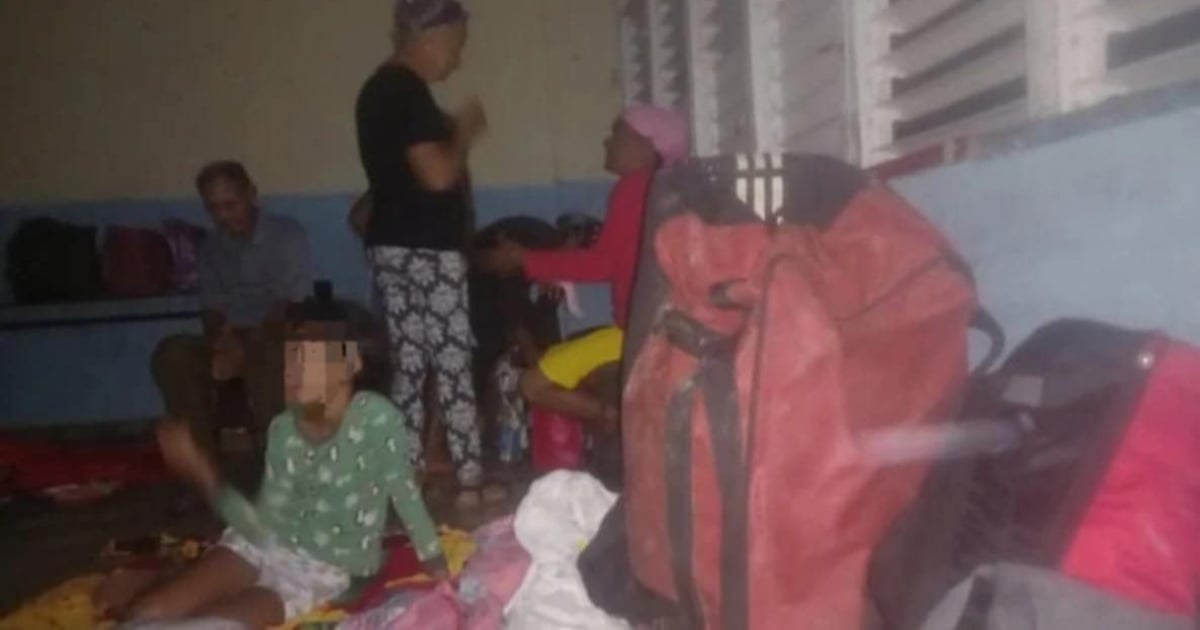
A Cuban reported online about the situation at the Orlando Lara school, which has been set up as an evacuation center to house those affected by Hurricane Melissa.
José Alberto Pérez López posted on Facebook a heartbreaking account, where he describes the conditions in which children and their families find themselves as "alarming and profoundly undignified."
According to what he said, children and adults are left on the floor without mattresses, without sheets, and exposed to dampness and cold.
"Food is practically nonexistent: there is not enough food, nor guaranteed drinking water. There is also no stable medical care or basic hygiene resources," he detailed.
"Every hour counts. Every child matters," wrote Pérez López, after demanding that the authorities urgently provide mattresses, food, water, and medicines.
The message adds to another post in which he criticized the lack of institutional will and human sensitivity towards the most vulnerable, particularly children.
"How is it possible that in the midst of tragedy, when humanity is needed the most, children are received in schools without even a glass of milk to soothe their hunger, without a mattress to protect them from the cold ground they have to sleep on?" he questioned.
"Where has compassion gone? Where is the respect for childhood, for human dignity? We are not talking about luxuries; we are talking about the basics: food, shelter, rest. And they aren't even offered that," he added.
Official discourse versus reality
While the population faces these shortages, the regime insists on a triumphalist discourse.
After Hurricane Melissa, Miguel Díaz-Canel visited shelters in Holguín, ensuring that the evacuees were receiving "good food, health and psychological care" and that families felt safe.
The contrast with reality in Río Cauto and other municipalities in eastern Cuba is evident: state shelters do not always have mattresses, food, or sufficient medical care, and thousands of families are left without basic resources to protect themselves from the storm and its consequences.
Dependence on help among neighbors
Official reports themselves acknowledge that more than 95% of those evacuated during Melissa were taken in by relatives or neighbors, not in state facilities.
Roberto Morales Ojeda, from the Central Committee of the Communist Party, praised the "solidarity" of the people on television, but that same fact highlights the State's inability to provide institutional shelter.
While the official discourse emphasizes the "discipline" and "foresight" of the system, in practice, disaster protection relies on mutual aid among Cubans, rather than on a solid state apparatus or efficient governmental logistics.
A crisis that repeats itself
Each hurricane reveals the same cracks: insufficient and poorly equipped shelters, food shortages, a lack of drinking water, and the absence of adequate medical care.
Thousands of families remain in evacuation centers for days or weeks without real support, while the leadership insists that "everything is under control."
In Río Cauto and other locations in the east, Melissa left behind destroyed roads, isolated towns, and uninhabitable homes.
However, the regime continues to present the care of the evacuees as a success, disconnected from the reality experienced by children and families, who are facing the disaster with neglect and without effective responses from the State.
Filed under: