
Related videos:
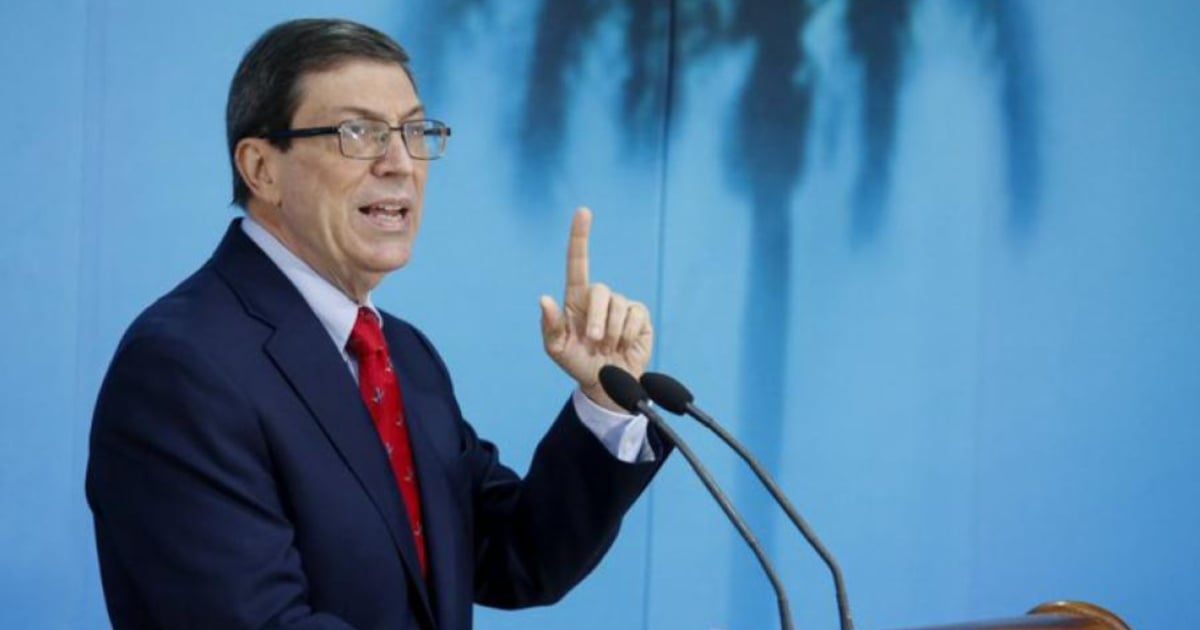
Cuban Foreign Minister Bruno Rodríguez Parrilla expressed regret this Friday over the victims of Hurricane Melissa in the Caribbean and conveyed “solidarity and support” to the governments of Haiti and Jamaica, noting that the cyclone caused 30 and 19 fatalities in those countries, respectively.
His message—spread on X—comes amidst growing criticism of the Cuban official discourse regarding the management of the emergency in the east of the island.
Bruno Rodríguez's condolence message regarding the deaths in Haiti and Jamaica also contrasted with comments from users who criticize him for prioritizing external rhetoric over internal needs and who are calling for accepting aid and transparency regarding the situation in eastern Cuba.
Critics point to the gap between the triumphant rhetoric—which champions organization and discipline—and the reality of communities that remain underwater or isolated.
"It's the only thing they do, express your rhetoric. Accept help from the USA. It is the people who need it, stop being an obstacle to their needs," condemned a Cuban on X.
One day prior, the leader Miguel Díaz-Canel stated on his X account that the survival of the eastern population after Melissa's passage “is not a miracle”, but rather the result of “preparation, organization, discipline, and solidarity” of the people.
During the National Defense Council meeting, the leader emphasized that the priority remains “preserving life” in the affected areas; however, he did not provide details about the material damage or the true extent of the disaster, which leaves thousands of families struggling with flooding, power outages, and access difficulties.
The intense rains and strong winds associated with Melissa caused severe damage in Guantánamo, Santiago de Cuba, Granma, and Holguín, resulting in flooding in multiple areas and damage to electrical and telecommunications networks, roads, and homes.
While official messages emphasize the continuity of protective actions, citizens’ reactions on social media question the lack of accurate information and the slow aid in the hardest-hit areas.
Meanwhile, the announcement by the U.S. Secretary of State, Marco Rubio, regarding Washington's readiness to provide immediate humanitarian aid to affected Cubans—provided that donations do not go through official institutions—reignited the diplomatic controversy.
Havana often interprets that channel as interference, and the debate has once again intensified between calls to accept external support without conditions and the governmental stance that demands respect for its sovereignty.
This Friday, the Cuban government stated that the United States “has not made any concrete offer of assistance” for those affected, despite the public announcement.
According to Johana Tablada, deputy director general of the United States Department at Minrex, the Cuban embassy in Washington reached out to the State Department "regarding what was published," but "so far" has not received a response to the questions raised.
The discrepancy between public statements and official confirmations adds opacity to an already complex situation for those affected.
Finally, regarding the “two victories” mentioned by Díaz-Canel after Melissa —the confrontation with the hurricane and the vote at the UN against the United States embargo—, the government presents them as proof of the “strength of the Revolution” and the dignity of the Cuban people.
However, on social media and critical forums, the triumphalist tone of this interpretation is being questioned amidst the humanitarian crisis and the decline in international support for Havana within multilateral organizations, reinforcing the perception that political propaganda persists even as thousands of families await concrete solutions.
Filed under: