
Related videos:
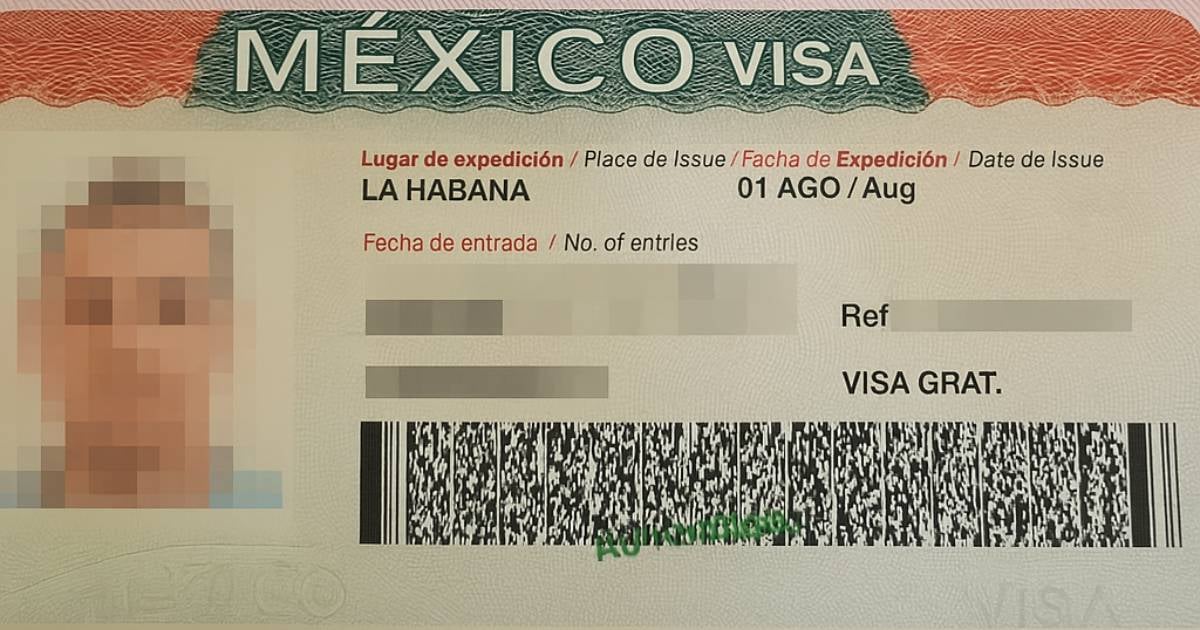
Mexico has become an increasingly frequent stop for Cubans seeking to escape the crisis affecting the island. Amid an ongoing exodus, the governments of Andrés Manuel López Obrador (2018-2024) and Claudia Sheinbaum, known as the Fourth Transformation (4T) and allies of the regime of Miguel Díaz-Canel, have doubled the number of visas granted to Cuban citizens, as revealed by the newspaper El Sol de México.
According to official figures from the Ministry of Foreign Affairs cited by that outlet, during López Obrador's administration, 244,896 visas were issued to Cubans, more than double the 122,000 granted during Enrique Peña Nieto's administration (2012-2018), and so far in Claudia Sheinbaum's term, over 43,000 have already been added.
However, behind those numbers lies a more complex reality. Part of the Cuban flow to Mexico occurs through state agreements that have brought to the Aztec country more than 3,600 Cuban doctors, as well as sports, academic, and scientific delegations.
In these cases, when travelers hold an official passport and their stay is less than 90 days, they do not require a visa; however, when the agreements involve extended stays or paid work, specific immigration documents are necessary.
This means that the total number of visas issued does not necessarily reflect an equivalent increase in Cuban migrants arriving independently, but also the expansion of a network of political and institutional cooperation between both governments.
The affinity between Havana and the 4T has manifested not only in million-dollar medical contracts, but also in the shipment of oil, educational collaboration, and a consistent diplomatic support in the face of the U.S. embargo.
According to analyst Eduardo Bueno, cited by El Sol de México, this proximity has influenced the perception that “Mexico is more open and less restrictive towards Cubans,” which in turn fuels migration expectations.
Restrictions and allowances that coexist
Alongside the increase in visas, Mexico has implemented stricter measures to control migratory flows. Since October 22, 2023, the Mexican government requires travelers in airport transit to present a "visitor visa without permission to engage in remunerated activities," even if they are only making a stopover in the country.
According to the Mexican Consulate in Havana, the rule applies to all foreigners who need a visa to enter the country, with the exception of permanent residents in countries such as the United States, Canada, or the Schengen Area countries.
At the same time, until 2024, Mexico had granted nearly 50,000 humanitarian visas to Cubans since 2022, according to data from the Ministry of the Interior. These cards allow holders to work and stay for one year in Mexican territory and serve as a temporary alternative for those who cannot return to the island.
Of the more than 65,000 Cuban migrants detained in Mexico between 2022 and 2023, only about 6,000 were sent back to Cuba, while the majority received “exit documents” or humanitarian permits to continue their journey northward. This situation is compounded by the immigration restrictions imposed by the current administration of Donald Trump in the United States.
According to data from the Mexican Commission for Refugee Assistance (Comar), the number of asylum applications from Cubans increased by 115% between 2021 and 2024, rising from 8,248 to 17,487 requests. Meanwhile, irregular crossings at the southern border rose by 52%. Many Cubans arrive exhausted, without documents, and with the dream of continuing north.
"Mexico has become somewhat of a temporary refuge," Bueno comments. "For thousands of Cubans, it represents the possibility of working or waiting with dignity while they search for a definitive escape from the crisis that expelled them."
In the streets of Tapachula, Cancún, or Mexico City, the Cuban accent is now part of the landscape. Some open small food businesses or barbershops; others survive by selling products at traffic lights or waiting for a response to their asylum applications. They all share the same starting point: an island that pushed them to seek a future elsewhere.
Filed under: