
Related videos:
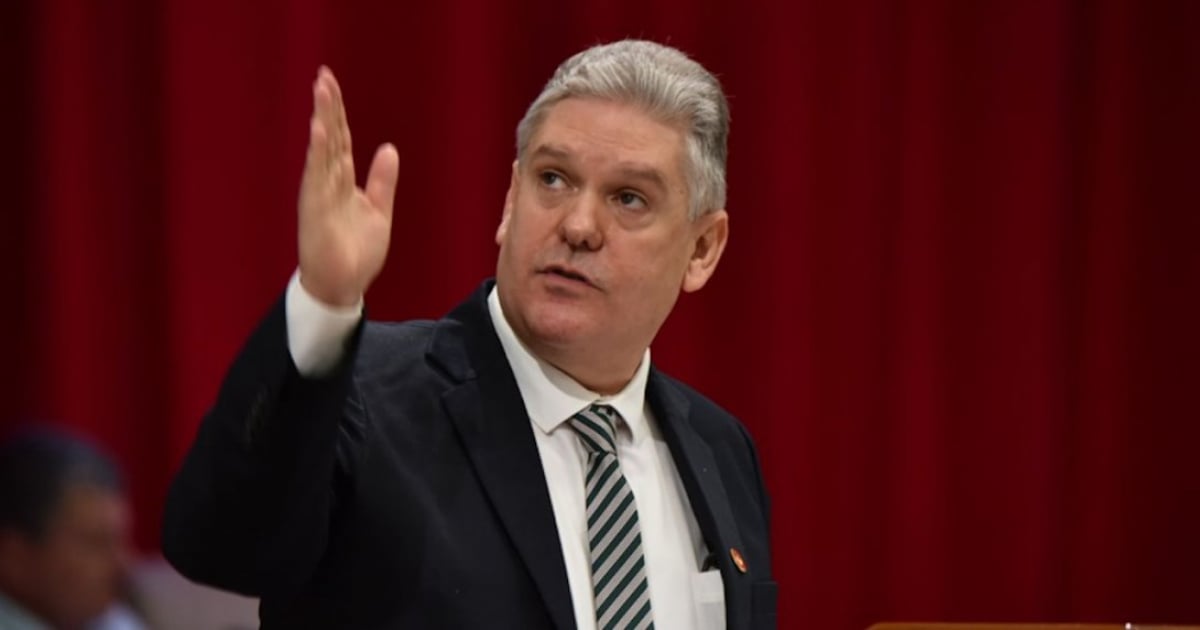
Alejandro Gil, former Minister of Economy and Planning of Cuba and one of the closest officials to Miguel Díaz-Canel, has been charged by the Attorney General's Office with a number of serious crimes, including espionage, embezzlement, tax evasion, bribery, money laundering, influence peddling, and forgery of public documents. Gil has been under arrest since March 2024, in an undisclosed location, amidst an economic crisis characterized by shortages and blackouts
Charges filed
The Prosecutor's Office claims that the investigation was conducted by the Ministry of the Interior and presents an extensive list of charges: espionage, embezzlement, bribery, forgery of documents, tax evasion, influence peddling, money laundering, violation of regulations regarding classified information, as well as theft and damage of official documents or objects. The criminal proceedings also involve other collaborators, although their names and the exact number of those involved have not been disclosed
What specific acts are described as espionage?
So far, there is no detailed public description of the specific acts that the Cuban Prosecutor's Office considers espionage in the case of Alejandro Gil: official statements only mention the crime of espionage alongside other charges, but do not specifically explain what actions are attributed to him under that concept. Formal notes generally refer to the improper handling of classified information, the removal and damage of official documents, and the violation of regulations for the protection of reserved data—without clarifying whether there was a transfer of information to third parties or indicating mechanisms or recipients.
Origin and context of the case
Gil was dismissed in February 2024, coinciding with the official announcement of a fuel price increase and the worsening of the economic crisis. The official statement referred to "serious errors" in management, without detailing the exact nature of those events. Shortly thereafter, it was confirmed that he was being investigated and subsequently arrested
Consequences and judicial process
The Prosecutor's Office is seeking long prison sentences for the accused, in accordance with the type and number of crimes attributed to them. The official statement emphasizes that due process was ensured, although there is skepticism within civil society regarding the transparency and true scope of the Cuban regime's fight against corruption
Impact and repercussions
The case highlights both the economic crises and the limitations in judicial transparency in Cuba. Gil was one of the main architects of economic policy during a time of deep scarcity and the failure of the so-called "Tarea Ordenamiento," intensifying doubts and criticisms regarding state management
In summary, the Alejandro Gil case is one of the largest scandals of corruption, espionage, and economic crimes documented in contemporary Cuba, with a significant impact on public perception of the ruling elite and the practices of justice
Complete chronology
- February 2, 2024: Gil is removed from his position amid the context of an economic crisis and fuel price adjustments
- March 7, 2024: An official note announces that Gil is being investigated for "serious errors" in his management. The public is informed, and he resigns from all his political positions, acknowledging the accusations
- March 2024: The competent authorities of the Ministry of the Interior initiate actions to clarify Gil's conduct, with the approval of the Prosecutor's Office, the Political Bureau, and the Council of State
- During 2024: The case remains officially sealed, but rumors and reports are emerging that Gil is in preventive detention at an undisclosed location
- October 2025: The Attorney General issues a statement officially outlining the criminal charges brought: espionage, embezzlement, bribery, tax evasion, document forgery, money laundering, influence peddling, and other offenses related to the improper handling of classified information and state assets
- October 31 and November 1, 2025: Prison is being sought for Gil and other involved collaborators, although their names and the number of individuals have not been made public. The beneficiary of the alleged acts of espionage has not been publicly identified.
The Public Prosecutor's Office initiated criminal proceedings before the court for the following specific offenses:
- Espionage
- Acts detrimental to economic activity or contracting
- Embezzlement
- Bribery
- Forgery of public documents
- Tax evasion
- Traffic of influences
- Money laundering
- Violation of classified document protection regulations
- Theft and damage of documents or other items in official custody
Textual excerpt from the official statement of the Prosecutor's Office (October 31, 2025):
The Attorney General of the Republic, in accordance with Article 156 of the Constitution of the Republic, oversaw the criminal investigation conducted by the Ministry of the Interior against Alejandro Miguel Gil Fernández, who served as Deputy Prime Minister and Minister of Economy and Planning, along with other defendants. (…) Charges were sought for crimes including espionage, actions detrimental to economic activity or contracting, embezzlement, bribery, forgery of public documents, tax evasion, influence peddling, money laundering, violations of classified document protection regulations, and the unlawful removal and damage of documents or other items in official custody. In all cases, the prosecution sought custodial sentences for the defendants, commensurate with the offenses committed
The police reports and the request for specific sentences have not been fully disclosed; only that the request is for "deprivations of liberty." The document highlights the completion of the investigation, supervised by the Prosecutor's Office, and its submission to the judicial authorities.
The timing chosen to make the formal accusation against Alejandro Gil public does not seem accidental. With the country still struggling to recover from Hurricane Melissa, the announcement comes amid confusion and dissatisfaction over the government's slow response. The indictment of the former Minister of Economy, accused of irregularities, occurs just as public discontent is growing, leading some to see it as an attempt to shift the media spotlight. While Cubans deal with the damage and the shortages worsened by the cyclone, the regime opens a new political chapter that also reveals tensions within the power structure.
Filed under: