
Related videos:
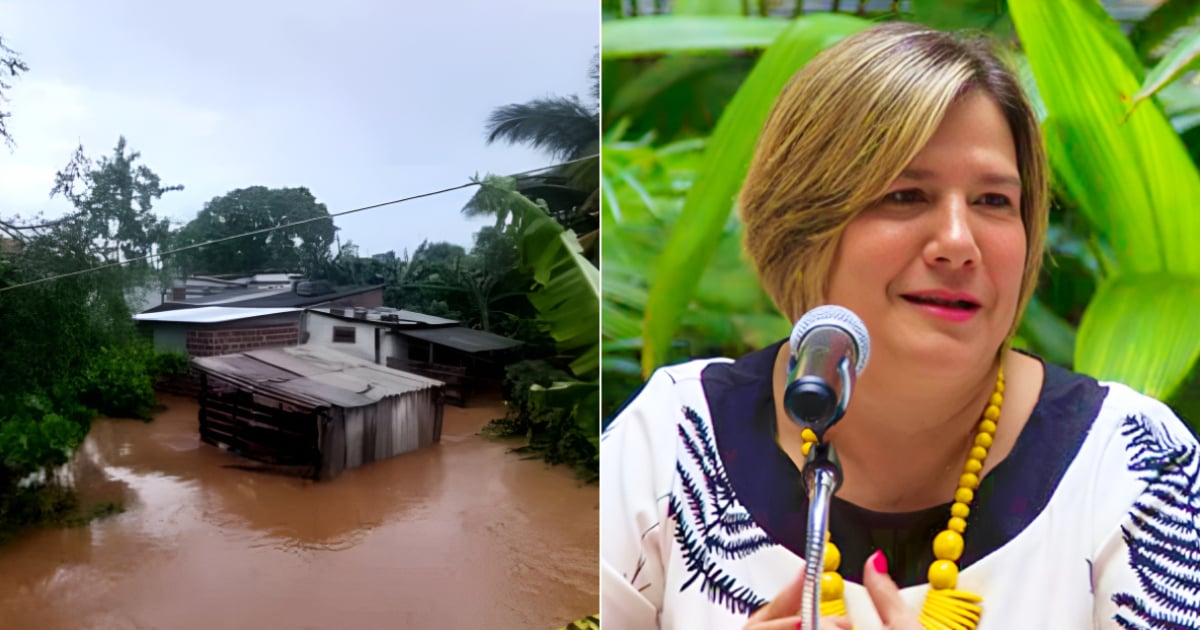
While eastern Cuba attempts to recover from the devastation caused by Hurricane Melissa, which has left thousands of families homeless, without food, and in neglect, Lis Cuesta Peraza, wife of the ruling Miguel Díaz-Canel, remains silent.
The so-called "not first lady" of the Cuban regime has shown no signs of empathy towards the victims, limiting herself to sharing messages of political propaganda about the U.S. embargo.
In his recent posts on the social media platform X (formerly Twitter), Cuesta Peraza reshared messages from Díaz-Canel regarding the alleged "defeat of the genocidal blockade" and the "dignity of the Cuban people in the face of the Yankee empire."
Only an indirect mention of the hurricane on October 28 served to blame the “criminal blockade of the United States” for the material limitations facing the island, insisting that “the State unifies an entire country and its resources in service of the East.”
The contrast between that speech and the reality faced by those affected has sparked criticism both inside and outside of Cuba. Users on social media are asking “where is Lis Cuesta from Holguín?”, recalling that, despite being born in that province, she has not appeared publicly nor expressed concrete solidarity with her people.
“She only appears to pose at international events, luxury hotels, or cultural missions; when the people suffer, she disappears,” wrote the alternative media outlet ‘La Tijera’, reflecting a widely shared sentiment.
This is not the first time Cuesta Peraza has caused outrage with his apparent disconnection from the suffering of the citizens.
In 2022, amidst prolonged blackouts, he wrote that he had “his heart in sponge mode,” a phrase that became the subject of mockery and memes due to its lack of empathy. Since then, his image has been associated with the frivolity of power and the contrast between privilege and the misery that plagues the country.
In Holguín, the devastation is evident: collapsed houses, destroyed crops, and entire communities cut off from communication. Meanwhile, the "first lady without an office" prefers to repeat the regime's slogans about the embargo rather than confront the tragedy affecting her own homeland.
The "not first lady" of silence and privilege
Díaz-Canel's wife has been rehearsing the role of "woman of power" for years in a dictatorship that does not even officially recognize the position of first lady.
She insists that the title is "bourgeois and patriarchal," yet she acts accordingly every time she accompanies her husband on red carpets, at international banquets, or at Communist Party events, with escorts, designer dresses, jewelry, and luxury accessories.
When tragedy knocks on the door of the town, Cuesta Peraza disappears. There are no tears, no comfort, no human gesture. Her activism on social media is limited to applauding slogans about the "genocidal blockade," while ignoring blackouts, collapses, and children without medication.
Instead of showing empathy, he dispenses empty speeches about "resistance" and phrases that border on the ridiculous, like the one in 2022 where he claimed to have "his heart in sponge mode" while millions of Cubans were cooking with firewood and sleeping under a stifling heat due to the lack of electricity.
That episode set the tone for her relationship with the public: a woman who victimizes herself in the face of criticism, declares herself a feminist within a patriarchal system, and justifies herself as a "teacher and cultural worker," even though her true profession is that of a regime propagandist.
Since her position as Events Director at the Ministry of Culture, she has devoted her energy to promoting failed festivals such as the 'San Remo Music Awards', organizing banquets, and maintaining the cultural facade of a state that censors artists, imprisons dissenters, and starves its people.
Her empathy is mere stagecraft. She speaks of "female resilience" from an air-conditioned office, while ordinary Cuban women carry buckets of water, stand in endless lines, and survive on salaries that barely cover a liter of oil.
She calls herself a "feminist," but has never raised her voice for political prisoners, the mothers of the demonstrators from July 11, or the women who emigrate on rafts fleeing the misery perpetuated by their government.
In March, during an interview on state television, Cuesta stated that "even from the enemy one learns," referencing those who criticize her. However, her idea of "learning" reflects a power that never listens: a monologue cloaked in moral superiority. It is the pedagogy of cynicism. She speaks of "forgiveness and harmony" in a country where the political police persecute those who think differently.
Cuesta Peraza, the woman who once called her husband "dictator of my heart," represents the vast gap between the elite and the real nation. While Holguín is drowning in mud and neglect, she remains on her pedestal, looking northward to blame the embargo, but unable to look down and see the suffering of her own people.
She is not the First Lady, nor does she even need to be. She is the perfect portrait of Cuban power: deaf to suffering, blind to misery, and mute in the face of tragedy.
Filed under: