
Related videos:
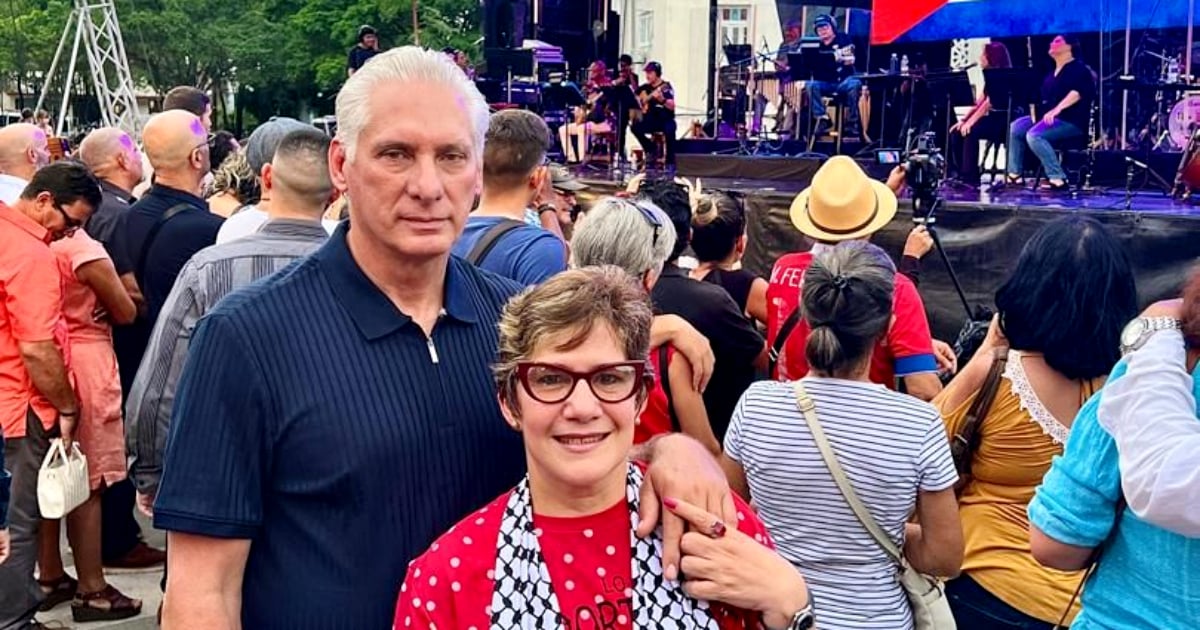
The ruling Miguel Díaz-Canel attended the steps of the University of Havana this Friday to be present at Silvio Rodríguez's concert, which was confusingly dedicated to the University Student Federation (FEU) due to its involvement during the protests by young people against ETECSA's rates.
In a tweet posted after the event, he celebrated the evening as a “poetic pause before resuming the challenging everyday life”, words that sparked immediate outrage in a country plunged into an unprecedented crisis.
While the leader appointed by the "finger point" of General Raúl Castro was seen at the cultural event with his wife, the "not first lady" Lis Cuesta Peraza, millions of Cubans were facing power outages of more than 20 hours, a collapse in water supply, and widespread shortages.
On the same day that Díaz-Canel was sharing his enthusiasm for Silvio's songs, he requested the Electric Union to distribute the power outages "better", instead of providing real solutions to the collapse of the national electroenergetic system (SEN).
Without money to pay for the Turkish barges hired to support the electrical system or for the construction of new thermal power plants, the Cuban regime squanders resources on a concert filled with bodyguards and security measures so that the one most responsible for the water shortages in Central Havana (just a short distance from the stage) and other municipalities in the country can “refresh” himself from his “hard work” with a moment of “poetic pause.”
The contradiction is even more evident when considering that just hours earlier, Díaz-Canel and Prime Minister Manuel Marrero Cruz were leading an emergency meeting with provincial leaders to discuss the energy and water crisis.
There, it was acknowledged that the electricity supply is experiencing a "critical moment," with outages exceeding 24 hours in several provinces, and that 50% of the water supply issues stem from a lack of electricity.
However, instead of announcing concrete measures, the leader insisted once again on the need for "revolutionary vigilance" and "resistance," repeating an empty discourse for a weary population.
The ruler's "poetic pause" comes amidst a growing social discontent, with protests in Santiago de Cuba, Gibara, and neighborhoods of Havana, where citizens are demanding electricity, water, and food.
Repression and fear have not prevented discontent from becoming visible in a country where the official promise of "moving forward" lacks support in everyday life.
The contrast is further exacerbated by images of Raúl Castro's grandson enjoying a luxury party on a tourist cay, released just this week. While the people struggle to survive, symbols of power are displayed at concerts, hotels, and exclusive beaches, disconnected from the national reality.
Ultimately, Díaz-Canel's message on X (formerly Twitter) was perceived as a mockery to those enduring darkness and thirst. Cuba, far from being “love and Revolution,” as the leader proclaimed, is experiencing one of the darkest moments in its recent history, where “poetic pauses” seem to be privileges reserved for the elite.
Filed under: