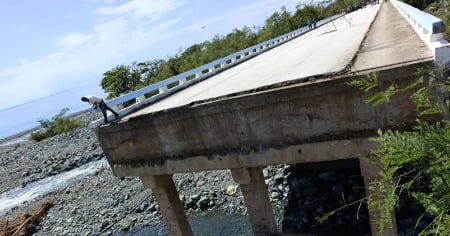
A total of 135 people were evacuated on Saturday from the community of Guamo in Granma, but there are still individuals at risk in the area due to flooding from the Cauto River.
This Sunday, Minister of Transportation Eduardo Rodríguez Dávila announced that "the evacuation operation for the population of Guamo in the municipality of Río Cauto in Granma is ongoing towards Jobabo in the province of Las Tunas."
Upon their arrival in Jobabo by train, they are transferred by bus to an evacuation center in the city of Las Tunas, official sources specified.
Rodríguez Dávila stated that, according to the report from local officials, 135 residents were evacuated on Saturday from the area of Guamo to Jobabo, those who were located between the railway station and the community polyclinic.
“They were transported by rail to Jobabo and then to Las Tunas on six buses, an operation that concluded at 12:24 AM. Today we continue the efforts to safely relocate the residents,” the information adds.
Before, “a train was able to transport more than a thousand people under very difficult conditions due to the flooding in the area, with water over the tracks, and the disconnection between the fourth and fifth cars due to soil erosion.”
This Sunday, starting early in the morning, a carahata and a motorized vehicle will be in Guamo to transport residents from the drop-off point of the boats to the train, which is located near the Guillén bridge, the minister announced.
Evacuations in the Cauto Basin
Dozens of communities in eastern Cuba, mainly in Río Cauto and Guamo, have been evacuated in recent hours due to the overflow of the Cauto River basin, the longest river in the country.
According to reports from local media and official sources, hundreds of people have been evacuated, including pregnant women, mothers with newborns, and girls, who were sheltered this Saturday in the 1st of January Multipurpose Hall in Bayamo.
The Civil Defense, the Revolutionary Armed Forces (FAR), and the Ministry of the Interior (MININT) are involved in rescue efforts, while medical brigades, firefighters, and community volunteers remain mobilized to protect human lives in the face of rising river levels.
One of the most tense episodes occurred in the town of Guamo, where a train with 13 carriages managed to transport more than 2,600 people to safe areas, in a complex and risky operation.
During the journey, the locomotive 52554 was affected by the undermining of the track due to the water's force, which caused several cars to become detached. However, thanks to the skill of the crew and the solidarity of the passengers, there were no injuries.
The railway authorities, with support from the Cuban Union of Railroads and the Provincial Defense Council of Las Tunas, coordinated the rescue of the stranded train cars and the complete evacuation of the passengers, some assisted with private boats due to the water level, which reached the train's steps.
The Transport delegate in Las Tunas, Reinaldo Reyes, confirmed that the evacuees were subsequently transported by bus to Colombia, where they receive medical attention and food.
It was also reported that the cochemotores of Jobabo returned to Guamo to pick up the individuals who remained in the cars and transfer them to safe areas.
Very close to Guamo, in Los Cayos de Río Cauto, the Ministry of the Armed Forces rescued six people with the help of a helicopter in a complex operation, as the affected individuals did not have access to the rooftop of the flooded building where they were located.
The National Defense Council assured that it remains vigilant to new evacuation needs and that efforts are underway to restore the railway and recover the equipment affected by the floods caused by the passage of Hurricane Melissa.
On social media, official outlets such as CMKX Radio Bayamo and CNC TV Granma shared images of the operations, while users posted messages of support for the affected families and the personnel involved in the rescue efforts.
Heavy rains continue to affect several areas in eastern Cuba, and authorities have maintained the alert due to potential additional overflow of the Cauto River.
Filed under: