
Related videos:
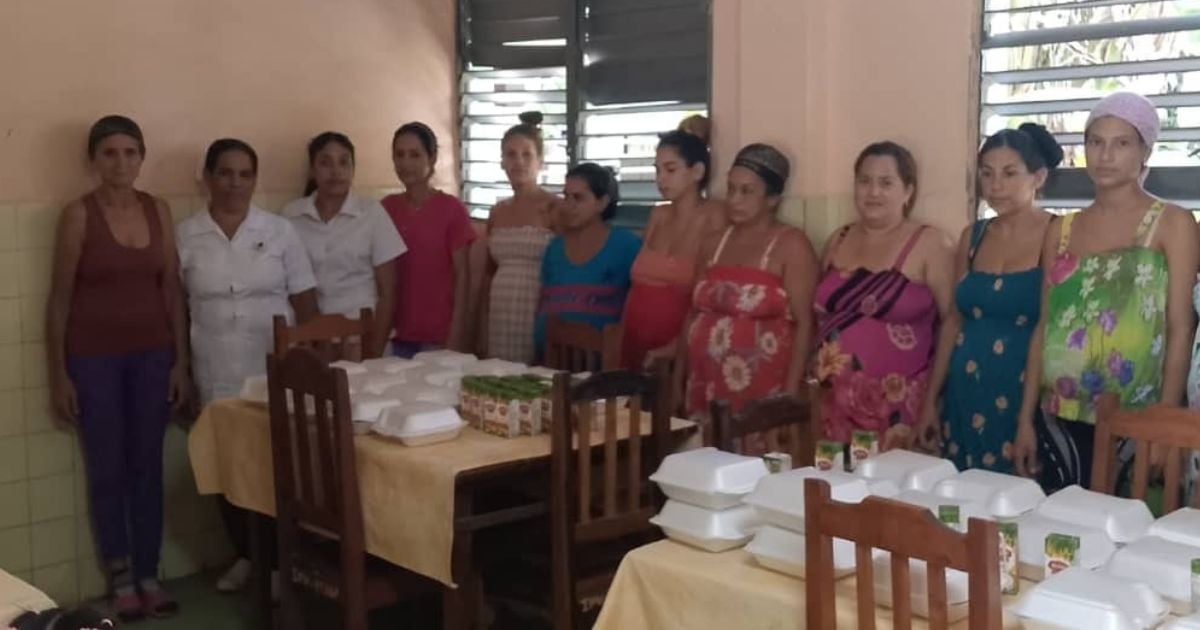
The Rikan-Vega family made a generous gesture in the municipality of Yara, in the province of Granma, by donating over 90 meals to pregnant women, the elderly, and individuals assisted by local social services.
According to the report from the Municipal Directorate of Public Health of Yara on its official Facebook account, the action included 32 lunches intended for the Maternal Home of the municipality, 20 for the residents of the Grandparents' Home, and 45 for vulnerable individuals assisted by the MINSAPITO support program.
The statement emphasized that “each dish was received with emotion, like a silent hug saying: ‘you are not alone,’” and expressed gratitude to the donating family for “nourishing hope, tenderness, and dignity” amid the challenging circumstances many households in the region are facing.
Municipal authorities publicly acknowledged the gesture and emphasized that these types of actions strengthen the social fabric and support the most vulnerable sectors, when in reality it should be the Cuban government setting a solidarity example.
In reality, this kind of gesture seeks to address the institutional shortcomings that the regime is unable to fulfill.
"Yara does not forget the gestures that come from the soul. Today, you are part of our history," the institutional message concludes.
The donation comes against a backdrop of increasing social vulnerability in the province of Granma, where high food prices and a lack of public resources have intensified the needs of the elderly, pregnant mothers, and low-income families.
That situation, which occurs at every point in the Cuban landscape, has intensified in the eastern region following the passage of Hurricane Melissa.
After Hurricane Melissa passed through eastern Cuba, various expressions of civic solidarity have gained momentum, forming a vital support network for those affected.
One of the most visible initiatives came from the Cuban community abroad when a church in Spain organized a campaign to collect food, medicine, and clothing to send to the affected areas.
In the island itself, the community spirit has also manifested strongly. In the municipality of Guisa, Granma, a resident made their generator available to the neighborhood, allowing dozens of families to charge cell phones and keep food refrigerated.
This gesture is repeated in other provinces, where Cubans, often with limited resources, offer what they have to alleviate the hardships of their neighbors.
Spontaneous aid has also reached mothers in critical situations. In Holguín, dozens of people mobilized to support a mother and her children who lost everything, sending everything from hygiene products to cash.
This wave of support, organized on social media, reflects the growing connection between Cubans inside and outside the country.
Additionally, fundraising campaigns led by ordinary citizens have managed to gather food and resources to distribute them in isolated rural communities.
These actions not only fill the void left by state inefficiency but also reaffirm the role of civil society in times of crisis.
Filed under: