
Related videos:
Cuban culture lost one of its most recognized figures in the seventh art this Thursday.
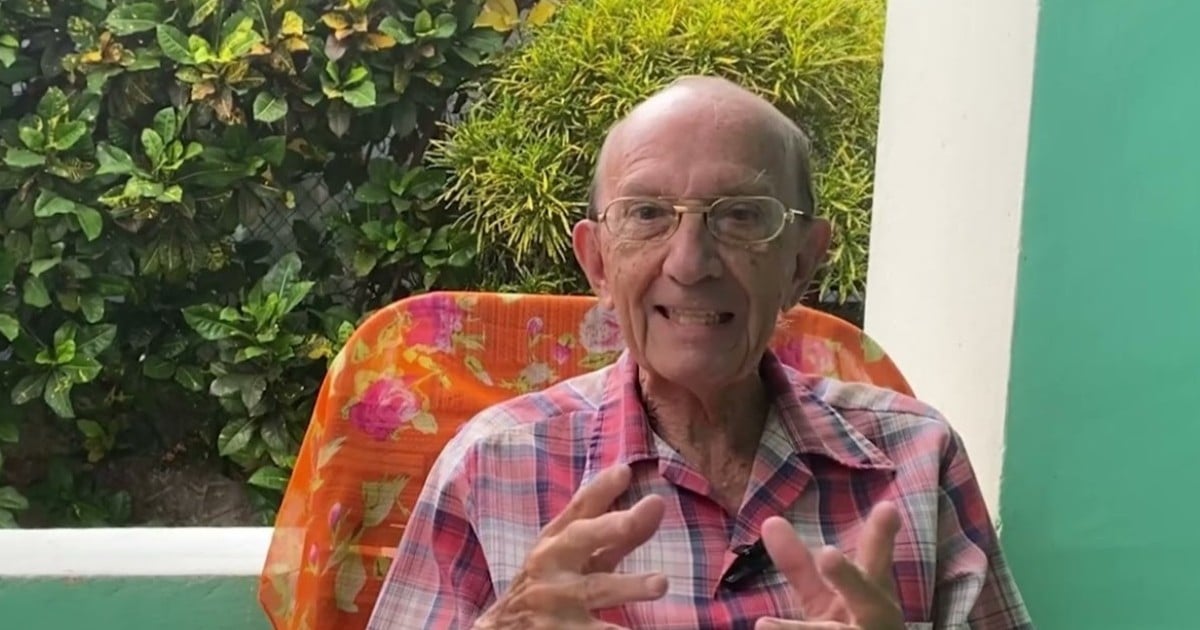
The prominent filmmaker Manuel Pérez Paredes, known for classics such as "El hombre de Maisinicú," passed away in Havana at the age of 85, as confirmed by sources from the Cuban Institute of Art and Cinematographic Industry (ICAIC) and the Foundation of New Latin American Cinema.
"The cinema that ran so deeply in his veins has experienced a sudden stop, edited by life for an open ending. Thank you, Manolo," wrote the Foundation on its Facebook wall.
Pérez Paredes was the last of the filmmakers who founded the ICAIC in 1959.
Born on November 19, 1939, in Havana, he was a member of the Cultural Society Cine Club Visión, a breeding ground for many future filmmakers of the organization.
He began his career as an assistant director alongside Tomás Gutiérrez Alea, participating in foundational works such as "The Battle of Santa Clara" and "Stories of the Revolution," the first feature film produced by ICAIC.
In the 1960s, he collaborated on several documentaries that served as propaganda for the emerging Revolution, including the first one directed by him, "Cinco picos," from 1961.
Subsequently, he participated in 34 editions of the ICAIC Latin American Newsreel.
His leap into fictional cinema was solidified with "El hombre de Maisinicú" (1973), which is considered by critics to be a work of aesthetic maturity and political commitment.
He then directed titles such as "Río Negro" (1977), "La segunda hora de Esteban Zayas" (1984), "Páginas del diario de Mauricio" (2006), and "La vida que ha quedado atrás" (2021), as well as co-writing "Operación Fangio" (1998) and the documentaries "Golpe por golpe," "Del otro lado del cristal," and "La mafia en La Habana."
He was one of the founders of the Committee of Filmmakers of Latin America, established in Caracas in 1974, and he chaired the cinema, radio, and television section of the Union of Writers and Artists of Cuba (UNEAC) from 1975 to 1978.
Between 1988 and 1992, he directed one of the Creation Groups at ICAIC, where he promoted works from new generations such as "Madagascar," "Hello Hemingway," "Adorables mentiras," and "La Bella del Alhambra," which are regarded as milestones in the renewal of Cuban cinema in the 1990s.
Throughout his career, he conducted seminars, advised documentary projects, participated in international festivals, and collaborated with the magazine Cine Cubano.
In 2013, he was awarded the National Film Prize.
He also received the title of Doctor Honoris Causa from the Universidad de las Artes de Cuba (ISA) for his extensive contribution to national cinematography (2018) and the Lucía Honor Award, granted by the Gibara Poor Film Festival (2024).
Filed under: