A series of videos circulated on social media expose the severity of the health crisis facing Havana, where piles of garbage accumulate in the streets for days, even in front of religious buildings, as residents call for solutions.
The recordings, filmed and shared by the opposition figure and former political prisoner Silverio Portal on his Facebook account, depict various locations in the capital and show large piles of organic waste, plastics, and boxes scattered across the streets.
In discussing them, the author expresses his despair and denounces the "immorality" and "total abandonment" of the authorities.
“Living amidst waste, surrounded by all things harmful, we are inhaling diseases,” laments the whistleblower in one of the videos, highlighting the government's inaction and the lack of management amid a significant outbreak of dengue and chikungunya.
The citizen expresses indignation over the constant presence of garbage in front of the San Judas Tadeo church in Centro Habana, where —he claims— neither the religious authorities nor the civil authorities have intervened.
"If the inside of the temple is clean, it cannot be dirty on the outside," he claims, as he points to the pile of waste surrounding the building.
The most harrowing scenes from the recordings show people rummaging through piles of garbage, including an elderly woman searching for food or reusable materials.
The speaker uses these images to denounce the impoverishment and desperation of countless Cubans, especially elderly individuals.
“Mira cómo las madres cubanas tienen que rebajarse para poder comer. Es la única manera que tiene para alimentarse”, expresa con evidente rabia y tristeza.
The complaint also directly targets the political leadership of the island. The speaker mentions President Miguel Díaz-Canel and other representatives of the so-called "historic generation," whom he accuses of ineptitude and indifference in the face of the crisis.
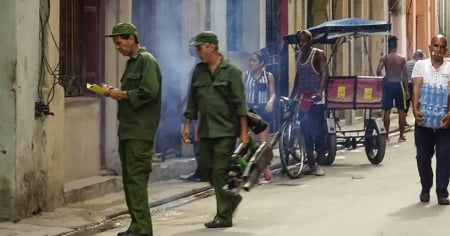
"They have put the army and the Communist Party militants to collect garbage, but the problem remains the same," he states.
The message, filled with frustration and pain, describes a picture of social degradation that goes beyond unsanitary conditions.
"I'm mentally exhausted," the whistleblower admits, attributing the catastrophe to a system that, in his view, persists "at the expense of the people's suffering."
Meanwhile, the capital remains plunged in trash, pests, and diseases, showing no signs of a structural response. Amid the neglect and hygienic collapse, the last plea of the citizen before the camera rings out: “Health for the people of Cuba.”
Specialists from the Ministry of Public Health (Minsap) acknowledge that Havana is facing a “critical situation” due to arboviral diseases, although there are no precise figures on infections in municipalities like Marianao, one of the most affected by dengue and chikungunya.
Soldiers, officers, and civilian workers of the Revolutionary Armed Forces (FAR) have been leading the so-called "Cleaning Operation" for weeks, an initiative aimed at improving the sanitary conditions of the capital.
The military deployment coincides with the launch of the “Operación Campana,” a pilot program for nighttime garbage collection in areas with underground electrical service, as specified by the Municipal Assembly of the People's Power of Centro Habana in a post on Facebook.
Authorities hope to expand the model if it manages to alleviate the most critical issues, although they acknowledge that the shortage of equipment and fuel remains the main obstacles to stabilizing the system.
The health situation in Havana has become one of the most sensitive issues in the country. President Miguel Díaz-Canel himself has led several emergency meetings since early October, demanding "control and discipline" in response to urban deterioration.
In one of those sessions, broadcast by state media, the leader criticized that many state agencies have not participated in the cleanup efforts and condemned the lack of timely response.
However, reports from local media and testimonies like those of Silverio reveal that improvised dump sites and overflowing containers continue to dominate the everyday landscape in numerous municipalities.
Filed under: