
Related videos:
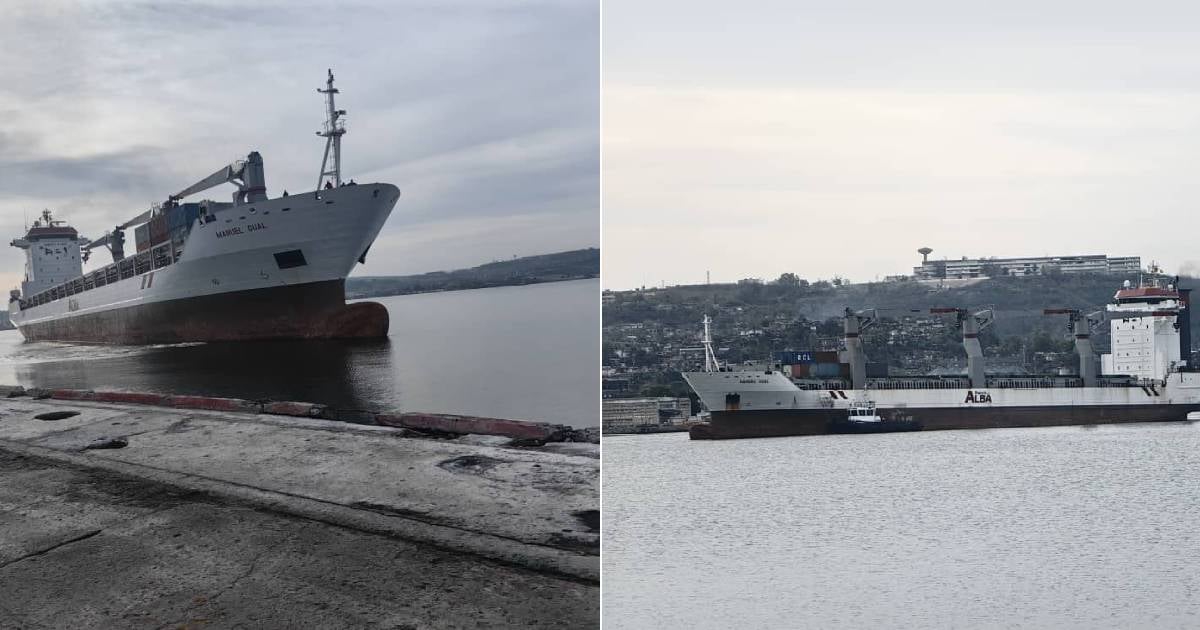
The Venezuelan ship "Manuel Gual" arrived this Tuesday at the Guillermón Moncada port in Santiago de Cuba with over 5,000 tons of humanitarian aid, aimed at supporting the recovery of eastern Cuba following the severe damage caused by Hurricane Melissa.
According to Transport Minister Eduardo Rodríguez Dávila on the social network Facebook, the shipment includes medicines, dry food, and materials to repair the electrical system, one of the sectors most affected by the cyclone. Two weeks after the disaster, Santiago de Cuba has barely recovered 34% of the electrical service, leaving thousands of families without light, water, or refrigeration.
Solidarity or chronic dependency
The shipment is part of a series of coordinated actions by the Bolivarian Alliance for the Peoples of Our America (ALBA-TCP), which includes the relocation of a multidisciplinary team of 22 Venezuelan technicians specialized in electrical energy, transportation, and public works, sent on November 10 to participate in recovery efforts, according to a report from teleSUR.
The arrival of the ship "Manuel Gual" is presented as a gesture of solidarity from Caracas to Havana, within the framework of a political alliance that endures despite the severe economic crisis faced by both countries.
After the devastation caused by the hurricane in eastern Cuba on October 29, Venezuela sent 26 tons of aid by air, including food, medical supplies, and construction materials. On the same day, Foreign Minister Bruno Rodríguez quoted a phrase from José Martí—“To do is the best way to say”—in an apparent response to the offer from the United States to send assistance “directly to the Cuban people, without the regime as intermediaries.”
Although the Cuban government has expressed its gratitude for the donations, doubts persist among citizens regarding the distribution of resources, with claims on social media calling for transparency and stating that "the aid should reach the people, not the government."
However, for many Cubans, this aid represents more a sign of structural dependency than effective cooperation. While the regime exalts the "unbreakable friendship" with Venezuela, the population in eastern Cuba continues to face endless blackouts, food shortages, and a lack of basic medicines.
Apenas dos días antes, la Unión Eléctrica (UNE) confirmó que el déficit nacional de generación exceeds 1,500 MW, y que el colapso energético afecta a todo el país, con Santiago de Cuba como uno de los territorios más castigados.
A country that survives on foreign aid
The arrival of the "Manuel Gual" highlights once again the Cuban regime's dependence on international aid—particularly from its political allies—to address emergencies that its own economic system cannot manage.
While officials celebrate "Bolivarian solidarity," thousands of Cubans in the east are still without electricity, fresh food, and concrete answers about when they will regain basic living conditions.
The Venezuelan aid is a temporary relief, but it also serves as a reminder of the structural failure of state management, which has left Cuba without energy self-sufficiency or the logistical capacity to face increasingly frequent natural disasters.
Filed under: