
Related videos:
The Chinese ambassador to Cuba, Hua Xin, announced this Wednesday the connection of seven solar parks to the national electrical grid, which were built with technical assistance and financing from his country.
The new projects are part of the "Installation of 35 MW Solar Parks" program, which according to the diplomat will save about 18,000 tons of fuel per year.
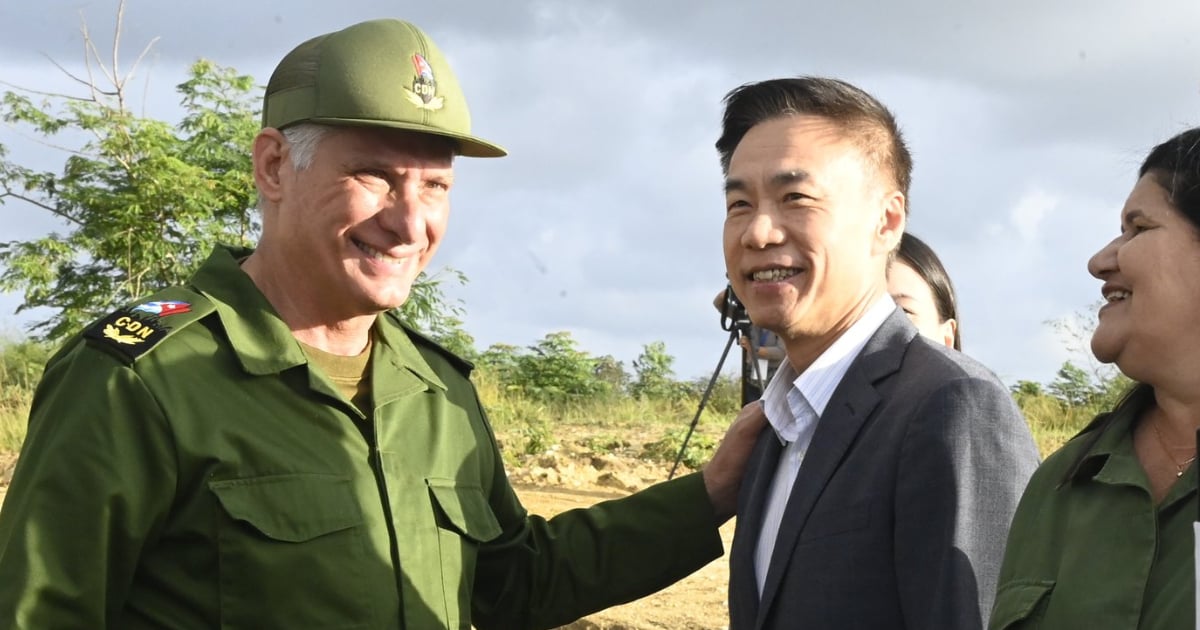
"The seven photovoltaic parks of the project have been fully connected to the grid," reported Hua Xin on the social network X, where he also thanked Cuban leader Miguel Díaz-Canel for attending the inaugural event.
The event took place at the solar park "Mártires de Barbados II" in Guanajay, Artemisa, where the Cuban communist leader presided over the opening ceremony, according to the official account of the Presidency of Cuba.
A symbolic project amid the energy collapse
With this inauguration, the first phase of the energy donation from the People's Republic of China concludes, which, in its two phases, will amount to 120 megawatts of installed power, according to Cuban authorities.
However, the announcement comes in a critical context: the country is facing widespread blackouts and an almost total collapse of the national electric system, with generation deficits exceeding 1,500 MW daily.
The Electric Union (UNE) acknowledged this week that the service remains affected 24 hours a day, while provinces like Santiago de Cuba have barely recovered 34% of their electricity supply following the passage of Hurricane Melissa.
Dependency and propaganda
Although solar parks represent a symbolic advancement, experts point out that their actual contribution is minimal compared to the magnitude of the energy deficit and that Cuba continues to rely almost entirely on imported oil and external aid to sustain its infrastructure.
The regime, however, uses these projects to reinforce its narrative of "resistance and solidarity cooperation," while the population continues to suffer from prolonged blackouts, lack of water, and food shortages.
Energy collaboration with Beijing is viewed by analysts as an extension of Cuba's economic dependence on its authoritarian allies, at a time when the national electrical system is on the brink of collapse and internal investment is virtually non-existent.
Filed under: