
Related videos:
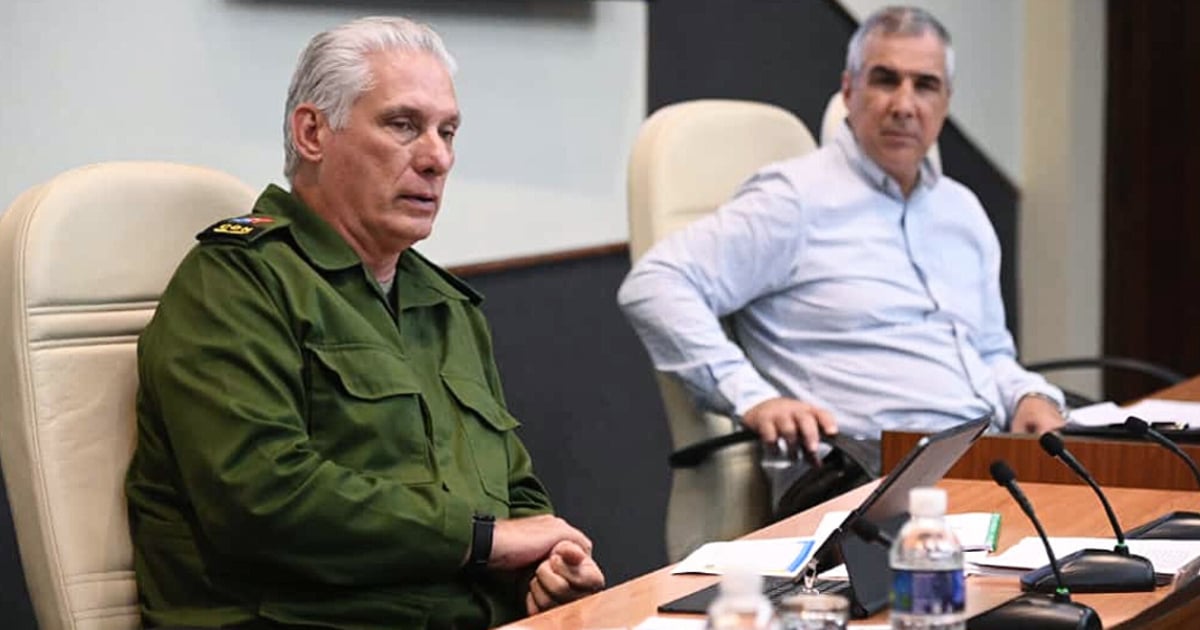
The recent statements by Miguel Díaz-Canel regarding the epidemiological crisis that Cuba is experiencing sparked a wave of criticism and mockery on social media, where hundreds of Cubans reacted with outrage to his promise that the Government will tackle the epidemic “just as it addressed COVID-19.”
The leader posted the message on his official profile: “We have called upon our scientists and experts from all fields of knowledge to tackle arboviral diseases just as we did with COVID-19: with a working system that allows, through science, for urgent analysis and solutions.”
His statements, also disseminated by official media such as Cubadebate, generated hundreds of comments reflecting the exhaustion, distrust, and frustration of a population worn out by the deterioration of healthcare services and the lack of an effective response from the State.
Many users agreed that the authorities reacted too late. “Very late... when Matanzas was crying out that the population was getting sick en masse, they ignored it and said everything was under control,” one of them wrote, while another summarized: “Now, after half the country is sick, it always catches them off guard.” Other comments pointed in the same direction: “It’s too late to prevent such a spread of viruses” or “For three years, dengue has been rampant, and now there’s chikungunya, and fumigation is nonexistent.”
The tone of the reactions fluctuated between anger, irony, and exhaustion. “It’s laughable. It’s infuriating. It’s disgusting. It’s terrifying. It’s sad. Poor us Cubans, we’re worth nothing,” wrote one person, while another sarcastically remarked, “If they’re going to handle it the same way as with COVID, we’re screwed.” Other messages, filled with sarcasm, stated: “Lockdown for the mosquitoes, then” or “Are we going to have to line up for fumigation?”
Among the most frequent criticisms, many directly blamed the State for the health situation. “The country is collapsing,” expressed one user. “What’s needed is to collect the garbage, fix the leaks, and fumigate. There are no medicines, no doctors, nothing,” pointed out another person. “The State is responsible for this uncontrolled epidemic,” commented someone else, recalling that “in the past, fumigation was done for just one case of dengue, and now not even that is done.”
The reactions also reflect a loss of trust in institutions. "They denied the epidemic until it was impossible to hide it," wrote one user, while another noted that "they said it was just mild fevers, and now it turns out it's an epidemic." Some messages expressed desperation: "Practically the entire country is infected"; "There is a sick person in every home"; "Entire families and whole blocks have fevers."
Other testimonies describe the severity of the symptoms and the lack of medication: “This illness leaves you disabled,” “I have been suffering from pain and cramps for a month, without any medication,” “The paracetamol costs 800 pesos and you have to be lucky to find it.”
The feeling of abandonment and lack of transparency dominates the comments. “They left us to fend for ourselves, just like during COVID,” wrote one person, while another lamented that “in the years of the revolution, such negligence was never seen.” Some users also denounced corruption in the sanitation campaigns: “There’s no environmental hygiene anywhere; Comunales doesn’t exist; it only serves to divert resources,” commented one.
Discontent is palpable, especially among those who remember that the warnings were ignored for weeks. "When Matanzas was crying out for help, they were not listened to and were told that everything was under control. If they had acted in time, the entire country wouldn't be in this situation today," lamented one message.
Reactions are occurring amidst a health crisis acknowledged even by the authorities themselves, who have admitted the spread of arboviruses with 38 municipalities experiencing active dengue transmission, over 21,000 cases of chikungunya, and fever outbreaks in 68 municipalities across the country. According to a recent analysis, the regime has responded with slogans and propaganda while hospitals are collapsing and the country is reliving the chaos of the pandemic.
From exile, the Cuban Medical Guild in Exile held the Government accountable for the lack of medications and institutional neglect, warning that the epidemic "cannot be justified by climatic or seasonal factors, but rather by the abandonment and opacity of the healthcare system." The exiled doctors demanded an urgent response from Díaz-Canel and the Minister of Public Health, José Ángel Portal Miranda, highlighting the risk to the population.
The activist Amelia Calzadilla also called for a “humanitarian intervention,” stating that “the country is suffering and the regime knows it,” denouncing that the government “hides the scale of the outbreak and has abandoned the people to their fate.” Her plea adds to the warnings of historian Yamilka Lafita Cancio, who noted that chikungunya “has led to an increase in hospitalizations, prolonged joint sequelae, and even deaths from systemic complications,” and that the State has not provided explanations or effective measures.
In the midst of this situation, voices like that of the doctor and activist Lucio Enríquez Nodarse have suggested that “Cuba needs a healthcare and military intervention” to ensure access to medication and prevent the collapse of the healthcare system, a stance that reflects the desperation and sense of helplessness experienced by a significant portion of the population.
"Every day there are more sick people," "This has gotten out of hand," and "Once again, the same: slogans instead of solutions" are phrases that are repeated in dozens of publications. Díaz-Canel's promise, rather than generating trust, has become a symbol of exasperation: "If they're going to handle the epidemic like they did with COVID, may God help us."
Filed under: