
Related videos:
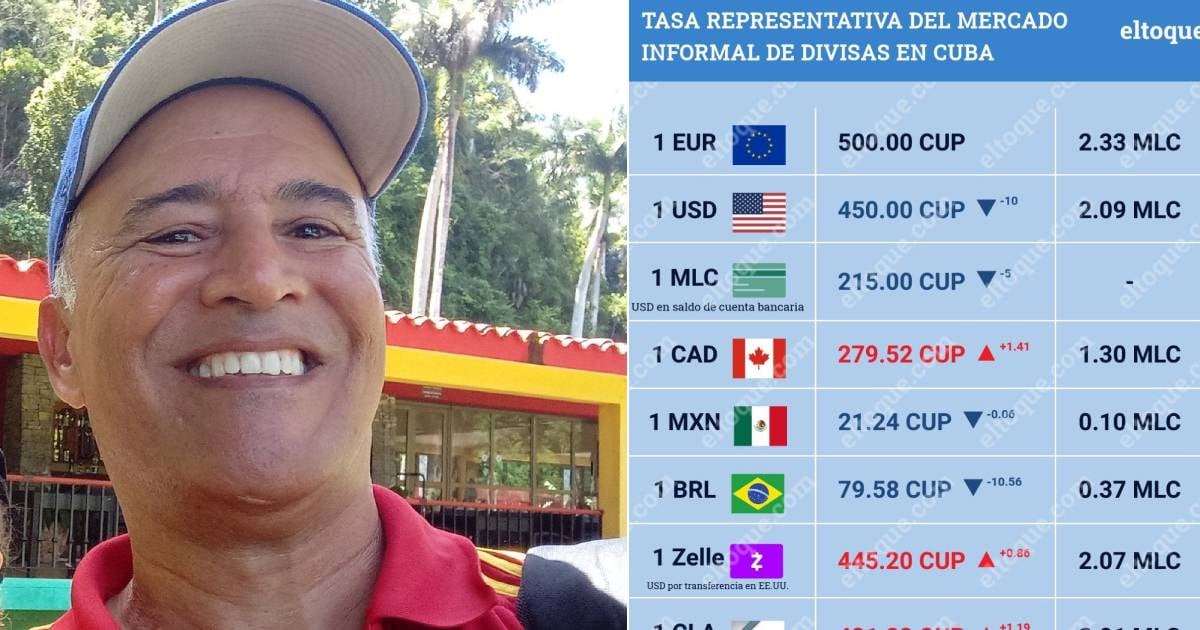
A new face has joined the official offensive against the independent media El Toque in recent hours. On the pages of the provincial weekly El Artemiseño, the government journalist Joel Mayor Lorán published a column echoing the script of State Security, claiming that “the number of those who choose to ignore it is growing,” referring to the platform that publishes the Representative Rate of the Informal Market (TRMI).
The text, significantly titled “Do Not Listen to El Toque,” aligns with the campaign that the regime has been conducting for days to blame the media for inflation, the devaluation of the peso, and the uncontrolled currency market, while it attempts to erase decades of poor economic management from the spotlight.
The mayor accuses El Toque of "interfering in the information war against Cuba" and operating through a "manipulation that disrespects us." According to his account, the site has "self-appointed" as an analyst of informal market behavior and is purportedly fueling speculation and driving up prices simply by publishing a currency reference based on data gathered from social media.
For the columnist, the TRMI of El Toque not only lacks legitimacy but is also designed to harm the finances of Cubans. He insists that "its reports only announce uncertainty" and that its work "feeds the informal market, financial stress, anxiety, and a sense of chaos."
In line with the official discourse, the journalist from El Artemiseño repeats the allegations of "alliance with the enemy," claims that El Toque "receives money from the U.S. government," and accuses it of violating Cuban legislation by allegedly engaging in a "media war" financed from Washington.
None of this is supported by verifiable evidence; it merely reproduces the script that has already been put forth by national television, the Central Bank of Cuba (BCC), and the most prominent figures of the propaganda apparatus.
Another brick in the offensive against El Toque
The column by Joel Mayor does not arrive in a vacuum. It is part of the coordinated offensive against El Toque that began on state television with the program Razones de Cuba, hosted by Humberto López, where the media was accused of “financial terrorism,” “currency trafficking,” and “tax evasion”, and even suggested the possibility of opening criminal proceedings against its members and including them on a national list of “entities linked to terrorism.”
In that broadcast, López claimed that El Toque uses “funds from the American taxpayer” to manipulate the informal exchange rate and “depress the income of the Cuban population,” although he also did not present documents or evidence to support those claims.
Nonetheless, the main state media replicated the speech verbatim with headlines such as “El Toque acts against the welfare of the Cuban people” or “From economic terrorism to currency trafficking.”
The Central Bank of Cuba joined the campaign. In a recent interview in Granma, Ian Pedro Carbonell, director of Macroeconomic Policies at the BCC, devoted a significant part of his remarks to discrediting the TRMI and accusing the independent media of “distorting” the economy, while claiming that the government had managed to “moderate inflation,” despite the reality in the streets of crushed salaries, empty markets, and an informal dollar that continues to rise.
In parallel, the official musician Arnaldo Rodríguez “El Talismán” reappeared on social media to attack those defending El Toque, accusing them of having lost “their shame, decorum, and ability to reason,” and reiterating that the media outlet is part of the “enemy narrative” against the Revolution.
However, economists like Mauricio de Miranda have publicly spoken out to dismantle the narrative of “financial terrorism”. In a widely shared message on social media, the academic referred to the idea that a digital publication could impoverish a country as a “tall tale,” and reminded everyone that the roots of the current crisis lie in decades of wrong decisions.
“Enough already of deceiving the Cuban people. Enough already of searching for scapegoats to hide the negligence, the incompetence, and the ineptitude of a bureaucracy that only cares about its own survival,” wrote De Miranda, in a statement that stands in stark contrast to the complacent tone of texts like that of El Artemiseño.
Filed under: