
Related videos:
Latinos now make up 20% of the population of the United States, a record figure that redefines the identity of the country.
According to data from the U.S. Census Bureau, cited by CNN, over 68 million people belong to the Latino community as of the end of 2024.
The change is not only quantitative but also cultural, economic, and political: Latinos have become a force that shapes the face of the country, influencing the economy, gastronomy, music, politics, and the media, emphasized the cited source.
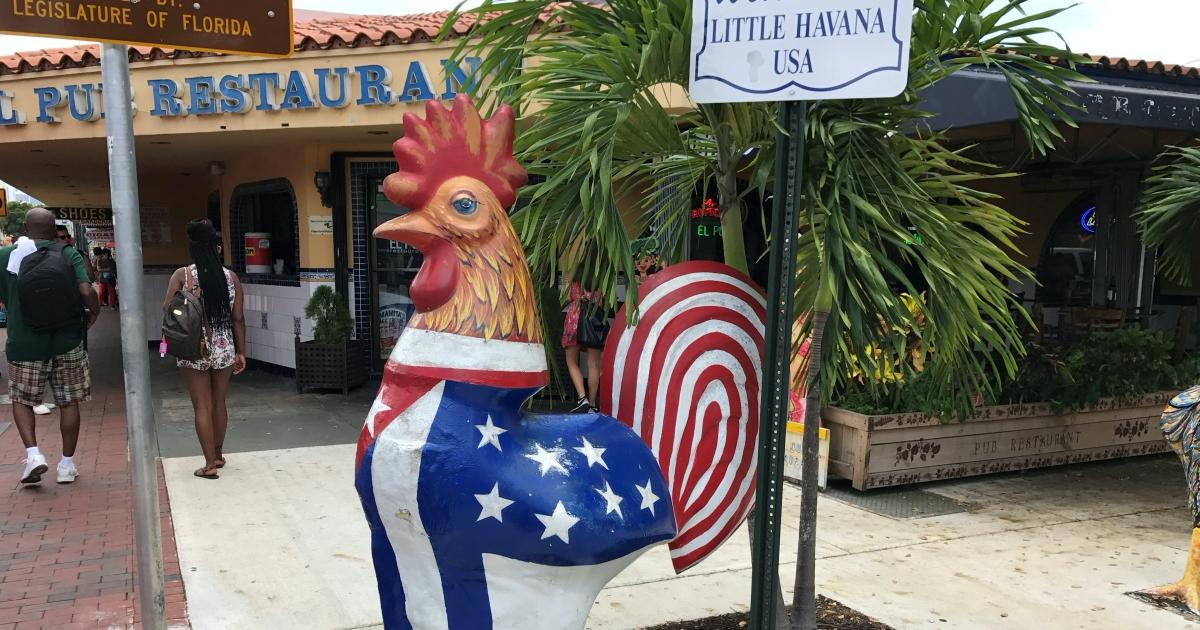
Among the most prominent groups, Cubans stand out in Florida, where they total 1.8 million residents, according to a chart published by CNN based on Census data.
That figure places the Cuban community as the largest within the Sunshine State and one of the most influential in the country, with a strong presence in South Florida, where the Cuban-American identity is an inseparable part of everyday life.
Florida, along with California and Texas, is home to the largest Hispanic population in the country.
In the case of Florida, Latinos make up 28.7% of the residents, a figure that has been increasing over the last two decades driven by the migration of Cubans, Venezuelans, Colombians, and Puerto Ricans.
Across the United States, the largest Hispanic group remains those of Mexican origin, with 38.9 million people, followed by Puerto Ricans (6.1 million), Cubans (2.9 million), Salvadorans (2.7 million), and Dominicans (2.5 million), according to the latest Census report.
The study cited by CNN emphasizes that the Latino community can no longer be viewed as a homogeneous block, but rather as a mosaic of traditions, accents, and generations.
Although many feel fully integrated into American society, most maintain strong cultural ties to their country of origin: food, language, and celebrations continue to be part of their identity.
In Florida, this duality is clearly expressed. Cuban coffee, salsa music, the bakeries of Hialeah, and the celebrations of May 20th—Cuba's Independence Day—are symbols of a community that, despite exile and transformations, maintains a deep connection with the island.
Beyond their cultural significance, Latinos are also an economic powerhouse. An analysis by Arizona State University and the organization Latino Donor Collaborative estimates that the Latino Gross Domestic Product reached 4 trillion dollars in 2023, which, if it were an independent nation, would rank as the fifth largest economy in the world.
In this context, the Cuban-American community holds a prominent position due to its business influence, pivotal political participation in every presidential election, and its presence in sectors such as health, services, and commerce.
Demographic trends, specialists point out, will continue to rise over the coming decades.
The current growth of the Latino population is no longer primarily due to immigration, but to births within the country.
Between 2022 and 2023 alone, there were 722,000 births of individuals of Latino origin, compared to 437,000 new migrants.
“Latinos are the youthful energy that sustains the future of the United States,” stated Frankie Miranda, president of Hispanic Federation, who was also quoted by CNN.
"Our community not only contributes labor and talent, but also a vision for the country that blends effort, diversity, and optimism."
The demographic growth and cultural consolidation of the Hispanic world in the United States reflect an undeniable reality: the history of the country in the 21st century is increasingly being written in Spanish.
Filed under: