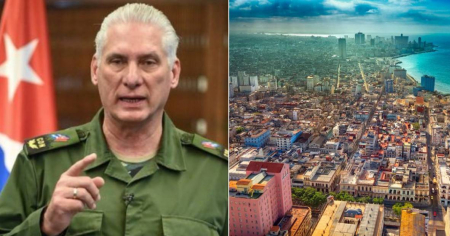
The tragedy that occurred last Sunday in Compostela and Sol, in Old Havana, did not end with the death of a 38-year-old man and his 64-year-old mother beneath the ruins of their home.
The collapse that crushed them that morning left more than just rubble: it revealed the extreme poverty that forces Cubans to rummage through deadly ruins to survive.
While discussions about the victims continue, neighbors were filmed searching through the rubble of the collapsed building, in the midst of a street littered with debris and waste, desperate to find something useful.
They weren't doing it out of curiosity or voyeurism. They were doing it "because someone is always in need of something, due to the urgent necessity that exists at this moment on the Island," denounced the opposition member Silverio Portal on Facebook.
The activist pointed out that this scene of misery did not emerge from nowhere, but from a system unable to build or repair decent housing after decades of neglect.
"Two people died here, and they keep dying as the months and days go by. This is what is normal," she stated, pointing at the debris while neighbors dug through it.
The street, blocked by debris from the building, reflects - like so many others in Cuba - a reality that Portal condemned with a powerful phrase: "the necessity of the system."
The shared video describes what has become routine in the country: people rummaging through garbage, collecting whatever they can find, as the only way to meet material needs that the State does not cover.
According to Portal, this is neither an isolated nor an exceptional occurrence. "It's what we see every day," he emphasized.
Collapse in Old Havana: Neither the first nor the last
The housing crisis has been ignored by the regime, which neither repairs nor builds any. Meanwhile, homes are falling apart and families continue to live amidst rubble, risks, and abandonment.
The deaths of Carlos Fidel Sánchez Díaz, 38 years old, and his mother, Sara Paula Díaz, 64 years old, are not exceptions, and the figures confirm it.
Each year, around a thousand buildings collapse in Havana, leaving injuries, fatalities, and families without shelter. Residents of Compostela reported that the property showed clear structural deterioration, which had been ignored for years.
This neglect stands in stark contrast to the speed with which the government builds hotels and tourism projects, while thousands of Cubans remain in fragile structures that turn into tombs.
State negligence, lack of maintenance, insufficient investment in housing, and institutional sluggishness are forcing families to return to buildings at risk of collapse because they have no other choice.
In Compostela and Sol, the collapse killed two people, but poverty had already been claiming lives before.
What can be seen among the debris of the building is not just destruction; it is a portrait of a country where survival depends on digging through ruins that the State has let fall.
Filed under: