
Related videos:
The parents of Mía Rey Jiménez, a two-year-old Cuban girl with aggressive stage four cancer are requesting emergency humanitarian visas from U.S. immigration authorities so that their daughter can receive treatment at Nicklaus Children’s Hospital in Miami, where doctors offer a higher chance of survival than in Costa Rica, the country where the family is currently located.
According to a report by Univisión, the family left Cárdenas, Matanzas, in May 2025, shortly after receiving the devastating diagnosis of metastatic neuroblastoma, a very aggressive type of childhood cancer.
Although they gathered the documentation and applied for the visa to the United States, it was denied and they are in the process of appeal.
First, they flew to Nicaragua and from there continued on to Costa Rica in search of treatment options that were not available in Cuba.
“It was a difficult decision because we knew what it was like to go to another place, for the Cuban,” confessed the mother, Liudmila Jiménez Matos.
In Costa Rica, Mía received chemotherapy and underwent a high-risk surgery.
According to her mother, the doctors warned them that there was more than a 90% chance that the girl would not survive the surgery, as the tumor was affecting the aorta and the vena cava.
"Thank God it went well, because she is a warrior, she has a desire to live," said Liudmila.
Mía has already had two tumors removed, but she still has a mass in a lung that has metastasized to the bone marrow, which prevents her body from producing stem cells properly.
In the midst of seeking alternatives, the family reached out to the Nicklaus Children’s Hospital in Miami, which, according to the mother, accepted the case and offers the little girl an 80% chance of survival, compared to the 45% that specialists in Costa Rica provide.
To seize that opportunity, however, they need to legally arrive in the United States with a humanitarian visa, the approval of which depends on the U.S. Citizenship and Immigration Services (USCIS).
The request was, however, denied at first instance, so the legal team is now in the process of appealing, providing new medical evidence and financial support.
Mía's father is a legal resident in the United States and, according to legal assistant Lissette Herrera, he has no criminal record.
Additionally, the family has a family petition submitted since 2023, which strengthens the migratory connection to the country. Upon learning about the case, a law firm decided to take it on immediately.
"The father has no criminal record in the United States, he is a citizen who has always paid his taxes, and they even have a family petition since 2023," Herrera explained to Univisión.
Lissette traveled personally to Costa Rica to meet the girl, assess her medical situation, and gather the necessary documentation to apply for the humanitarian visa.
"There’s insurance, there are foundations, there’s a GoFundMe, the father works. He called María Elvira's office (Congresswoman María Elvira Salazar) every day; I know there comes a point where one can feel overwhelmed," Herrera commented on the father's persistence in seeking a positive response.
Lawyers argue before USCIS that Mía will not be a public charge, as four foundations, in addition to Nicklaus Children’s Hospital, have guaranteed that they will cover all necessary expenses to save her life.
In parallel, the family has launched a campaign on GoFundMe to strengthen financial support and show that they have sufficient backing to cover the accommodation and additional needs of the girl and her parents.
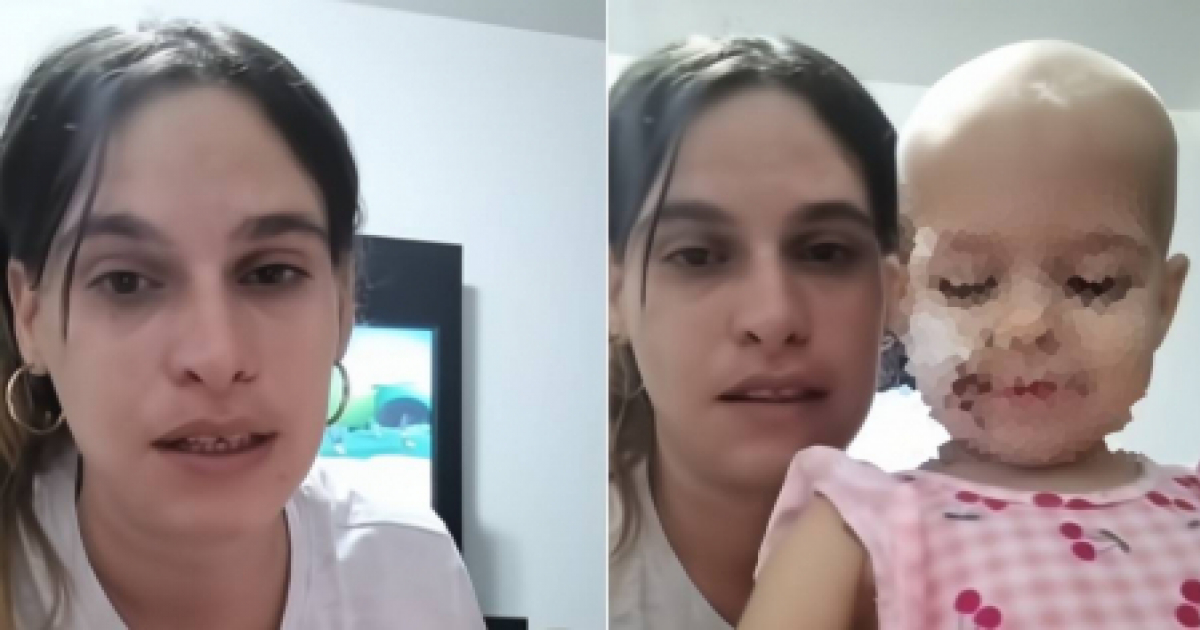
In a video shared on social media —through the TikTok profile @team_guampy—, Liudmila offered her heartfelt testimony, in tears, from Costa Rica.
"My girl is named Mía, she is two years old. She has cancer, stage four, aggressive. She has neuroblastoma with metastasis. We are in Costa Rica. We crossed borders so that the girl could be saved," she explained.
Liudmila insists that the case be made public to avoid another denial of the visa application and appeals for the support of the Cuban community in exile to press for help in covering the costs of the trip and stay.
"We are asking, myself, the girl, my family... for the case to be made public, because we need a visa and help to achieve this," she stated. Her message includes a plea to U.S. immigration authorities to "put their hand on their heart, to appeal to humanity."
While the final decision rests with USCIS, the family navigates between hospitals, paperwork, and waiting, fully aware that time is not on their side and convinced that, on the other side of the Florida Straits, there is a real treatment option that could give Mía the chance to continue living.
Filed under: