
Related videos:
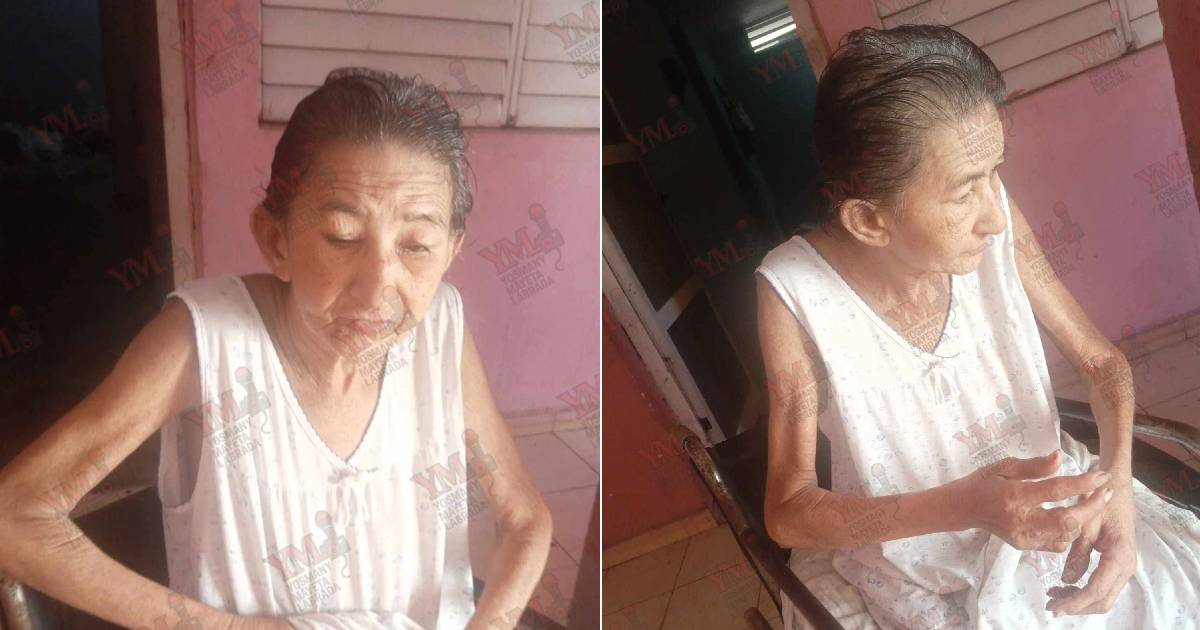
The story of Teresa Ramis Lora, a 70-year-old elderly woman residing in the José Martí District, Micro 9, has become a heartbreaking reflection of the institutional neglect that thousands of Cubans suffer.
From her apartment—the FOCSA 8, next to the Abejita Children's Circle—Teresa was waging a silent battle for survival… until social media did what the authorities refused to do. Or, more accurately, what the independent journalist Yosmany Mayeta Labrada accomplished with his timely report on the social network Facebook.
Teresa lives alone, sick and without care, with two absent children: one with serious psychiatric disorders, wandering the streets; and the other who has spent much of his life in prison.
One of her relatives, who reported the situation to the activist, cannot fully take care of the elderly woman, although they have tried their best: to bathe her, feed her, visit her, accompany her. But it's no longer enough.
When the State doesn't come, an elderly woman can only wait..
This Tuesday, the family requested urgent medical assistance for Teresa. The ambulance never arrived. Nor did doctors, nurses, or social workers. Nothing. Teresa remained in her deteriorating home, without medication and without care.
It wasn't until Mayeta's report started circulating on social media that authorities suddenly showed up. Doctors, nurses, and health personnel arrived—finally—at the home. The ambulance is still pending, but the state apparatus was activated… only after the case became public.
The question is inevitable: Why does the State only act when it fears noise on social media and not when a citizen's life is in danger?
Santiago de Cuba, between neglect and misgovernance
Teresa's case is not isolated; it is part of a pattern. In a country where the government presents itself as "humanist," but where institutions are glaringly absent, those who need protection the most are living a ruthless reality.
At times, Teresa goes out in a wheelchair to seek food or company. Sometimes she returns exhausted. Sometimes she comes back empty-handed. In a state that prides itself on social sensitivity, a solitary and ill elderly woman finds no support until the scandal becomes unavoidable.
This reveals a harsh truth: social media has become the only tool Cubans have to compel the government to act, in an ecosystem marked by an inept state apparatus, indifferent and more concerned with controlling opinions than with saving lives.
What Teresa needs is not charity: it is humanity
Today, Teresa continues to wait for an ambulance and a real response from Social Assistance, Public Health, social workers, and local authorities. This is not about politics. This is not about paperwork. It is about a life that cannot wait any longer. Teresa's time is running out. Her health is deteriorating. And what is lost in silence… hurts more.
Filed under: