
Related videos:
The Cuban Foreign Minister Bruno Rodríguez Parrilla reiterated one of the most enduring reflexes of the regime's propaganda: using the suffering of others to exalt the supposed humanitarian and moral greatness of the so-called "revolution."
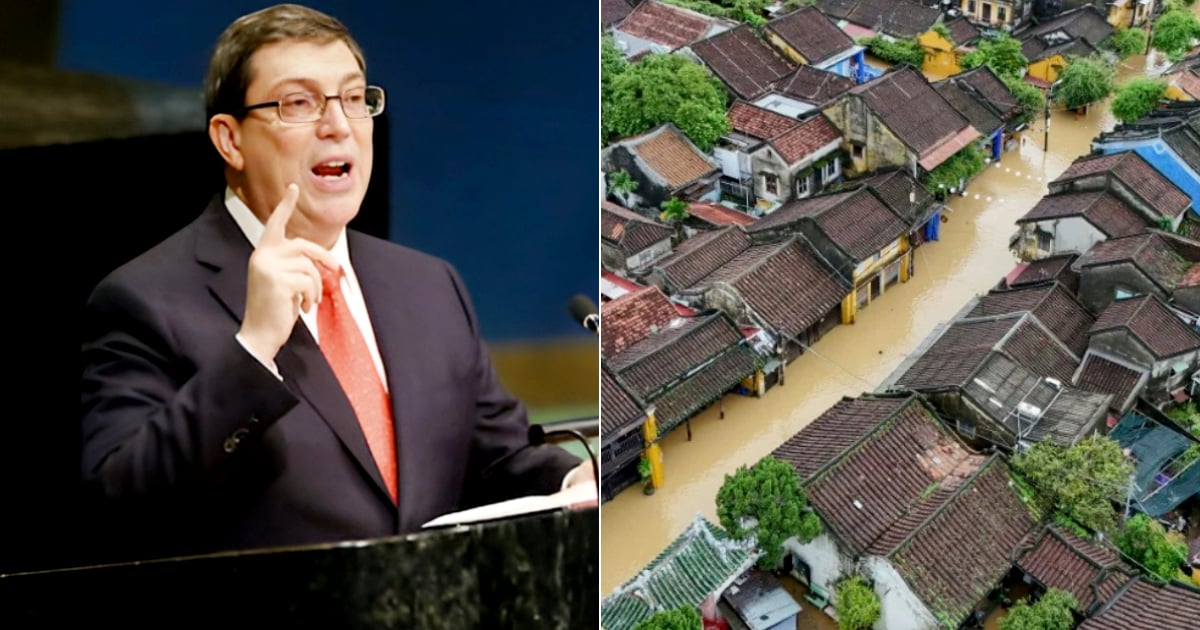
In a message posted on X (formerly Twitter), Rodríguez Parrilla expressed his "solidarity and support" for the government and the people of Vietnam following the recent floods that have resulted in dozens of deaths and missing persons.
The gesture, seemingly diplomatic, comes just as Cuba is trying to recover from the aftermath of Hurricane Melissa, which caused severe damage to homes, crops, and electrical networks.
Although the government claims there were no deaths, two people are reported missing after being swept away by rising river waters, and online there are reports of communities cut off from communication and lacking state assistance.
At first glance, Rodríguez Parrilla's words of condolence could be understood as a typical diplomatic gesture. However, in the context of the Cuban regime's discourse during times of recovery from natural disasters, such messages are part of a much more calculated strategy.
For decades, those in power in Havana have turned the tragedies of other countries into mirrors that reflect their claimed ethical and organizational superiority.
Every time a hurricane strikes the Caribbean or Southeast Asia, the official media dust off the narrative that “nobody dies in Cuba” thanks to its civil defense model, collective discipline, and the leadership of the Communist Party (PCC).
That argument, repeated for generations, serves to reaffirm the moral legitimacy of the system in a country that is immersed in collapse. Instead of taking responsibility for the structural precariousness, the government presents its survival as a moral achievement, and its misery as a virtue.
Rodríguez Parrilla, one of the most disciplined spokespeople for the power structure, reproduces that rhetoric with the precision of a bureaucrat shaped by the indoctrination and propaganda of the "good times" of the Ideological Department of the PCC, which is now – in an era of decaying "continuity" – directed by someone named Yuniasky Crespo Baquero.
His message of condolences to the "people of Vietnam," more than a gesture of humanity, seeks to reaffirm the idea that Cuba continues to be an example for the world, even while facing prolonged blackouts, hospitals without medication, skyrocketing inflation, and one of the largest migration crises in its recent history.
In practice, the regime projects compassion outward to legitimize its internal insensitivity. It speaks of the pain of other nations but ignores the daily suffering of Cubans who survive amidst scarcity, neglect, and desperation.
While the regime boasts of its humanity abroad, inside Cuba the true emergency—social, economic, and humanitarian—continues without condolences or official accountability.
Filed under: