
Related videos:
The water service remains in a critical situation in the seven municipalities served by the Aqueduct and Sewage Company Aguas Turquino, in the province of Santiago de Cuba, where distribution cycles in some areas exceed 100 days without supply through the networks.
Although the drought initially worsened the situation, the main current issues arise from the damage caused by Hurricane Melissa and the energy deficit that prevents the stabilization of pumping, confirmed the Provincial Delegation of Hydraulic Resources.
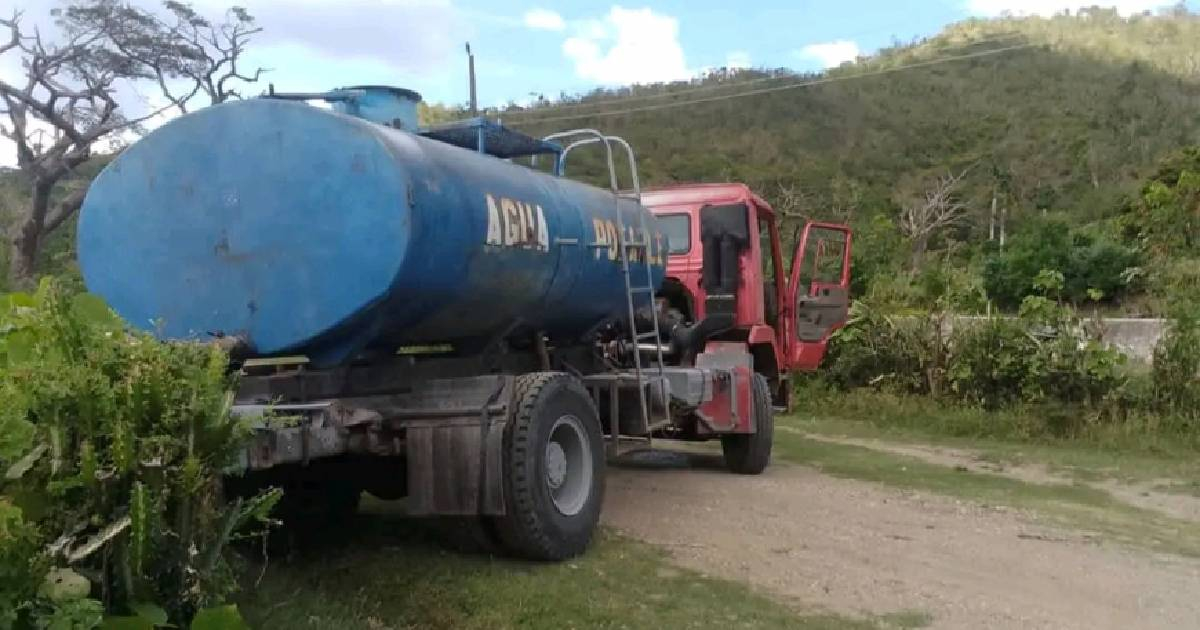
The president of the Provincial Defense Council (CDP), Beatriz Johnson Urrutia, acknowledged the seriousness of the situation and indicated the need to prioritize service through more effective planning and the use of tanker trucks per home, Council, and Defense Zone.
Most of the affected municipalities rely on systems that require pumping, but electrical instability and the incomplete restoration of damaged lines have hindered the normalization of service, even with the reservoirs full, according to a report from the official newspaper Sierra Maestra.
The stations with photovoltaic solar panels are still not operating at full capacity, as their structures had been dismantled as a precautionary measure before the hurricane struck.
The ongoing installation further slows the recovery of supply to communities and hydrometric sectors, the media outlet indicated.
The municipality of San Luis has partially resumed service through the Guaninicum system, but problems persist in the Río Grande Urbano, which supplies water to about 5,000 people.
In Chile and La Caoba, power outages continue, and in Dos Caminos and the head area, there are sectors that have had no water for over 100 days due to network issues.
In Songo-La Maya, difficulties are piling up due to electrical failures and equipment issues in Jutinicú, Jarahueca, and La Sultana.
In the Tercer Frente municipality, there are ongoing issues with the pumps in Vega de Limones and La Tabla due to erosion caused by the rains.
Cruce de los Baños is now supplied by the El Saltón-Filé system, which operates by gravity.
In Contramaestre, electrical failures have been reported in El Molino, and in Limoncito, five tank trucks from the entity, along with others from organizations and private owners, were attempting to meet the demand.
Palma Soriano is facing a similar situation, while the Hatillo reservoir has started to overflow. In Jaguar, the installation of 500 meters of piping is progressing, and in Caney del Sitio, the cycles continue to be extended.
The Gilbert dam now has a new pump to supply the population of Dos Palmas.
Mella and Segundo Frente present a less critical outlook, following the installation of the raft at the Palmarito de Cauto pumping station by the electromechanical brigade of the company, the source reported.
The provincial priority, according to the CDP, is to ensure supply through networks or water tanks to communities with longer cycles, as well as to support vital centers and families in vulnerable situations.
At the end of November, the United Nations Children's Fund (Unicef) warned about the serious water crisis that continues in the province of Santiago de Cuba, where 50 out of 164 supply systems remain out of service following the passage of Melissa.
Filed under: