
Related videos:
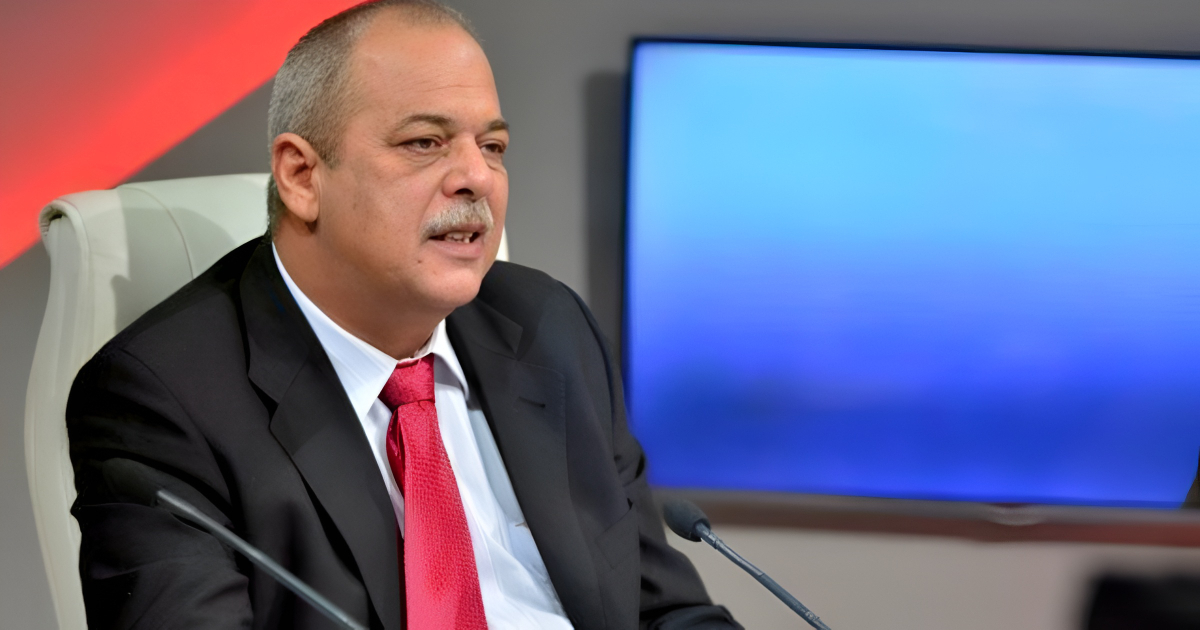
In the midst of the informational and literal blackout that Cuba is experiencing, the Electric Union (UNE) sparked a small flame on its social media this Monday to refute what many Cubans already considered to be true: the dismissal of the Minister of Energy and Mines, Vicente de la O Levy, the most visible —and criticized— face of the national energy collapse.
“#FALSE || It is false that Vicente de la O Levy has been dismissed from his position. He continues to perform his duties as usual and is working to improve the situation in the electrical sector. Our minister is #StandingAndFighting,” the state-owned company wrote in a post that, instead of clarifying, sparked a wave of memes, jokes, and suspicions.
The denial appeared almost simultaneously as rumors of his departure circulated on social media, accompanied by humorous montages, parodies, and fake screenshots of alleged official notes.
But the reaction of the communication apparatus was as dramatic as the crisis it seeks to quell: the UNE had to publicly reaffirm that its minister is still "combating," a verb which, when coming from an electric company, sounds like a poetic short circuit... and contradictory.
This is not the first time the Cuban regime has appeared nervous about the speed of social media. In recent months, rumors and fake news about blackouts, resignations, and "changes in leadership" have spread faster than the electricity itself.
In a country where the power goes out, but the Wi-Fi endures, memes have become a popular form of catharsis and digital resistance.
The ruling party is also experiencing a moment of notable anxiety in the face of a wave of fake news. Just a few days ago, the National Television News dedicated valuable minutes to debunking the rumor of supposed $1,100 assistance in hotels, a rumor attributed to Ignacio Giménez that resulted in crowds of people desperate to collect a non-existent compensation.
There have also been circulated fabrications regarding the "death" of Raúl Castro and the "resignation" of several ministers, forcing the propaganda machinery to act defensively, caught between panic and clumsiness.
The rumors about De la O Levy do not come from nowhere: in recent months, several ministers have been dismissed or forced to resign amid the general crisis.
Among them are the former Minister of Labor Marta Elena Feitó, the former Minister of Economy Alejandro Gil, and the former Deputy Prime Minister Jorge Luis Perdomo Di-Lella, all of whom have been removed in a sequence that has made it clear that even in "continuity," the personnel is being sidelined.
Meanwhile, Vicente de la O Levy continues to be the most scrutinized minister in Miguel Díaz-Canel's cabinet.
Since his appointment in 2022, Cuba has seen five nationwide blackouts, record electrical shortages, and a deluge of unfulfilled promises. His continued presence, rather than a gesture of technical confidence, seems to reflect the value that power places on obedience.
Ultimately, the UNE's denial confirms two things: that power outages are not the only breakdowns in Cuba, and that even in the darkness, Cuban humor remains vibrant.
Because while the minister "fights," the people survive through memes, sarcasm, and flashlights.
Filed under: