
Related videos:
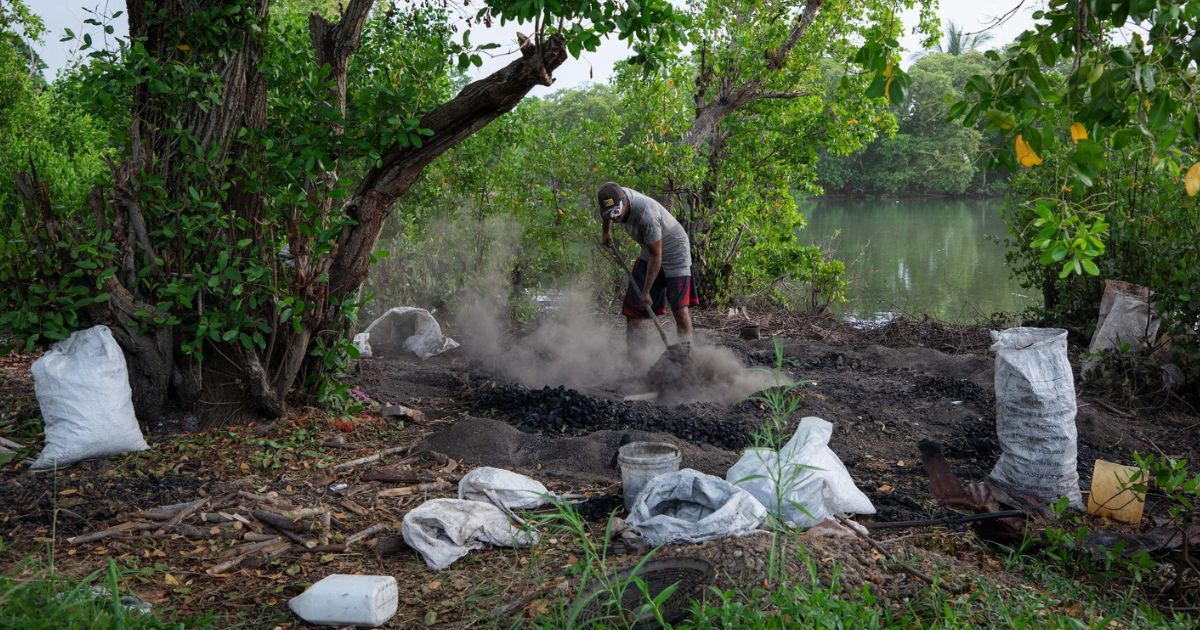
In the Yumurí Valley, smoke has become part of the landscape: among makeshift ovens and the sound of machetes, dozens of men transform wood into charcoal, the most sought-after product in present-day Cuba.
The journalist and photographer Raúl Navarro González, from the state-run newspaper Girón, portrayed the harsh realities of this profession in a text titled "The Business of Today" on .
What it describes is not a tradition or a rural legacy, but a desperate escape in a country paralyzed by blackouts and a lack of formal jobs.
“Agriculture can no longer sustain us, and the country is paralyzed by endless blackouts, so coal has become the only job that pays quickly in an economy where almost nothing is moving,” the reporter wrote, depicting a scenario where survival has replaced economic planning.
In the countryside, men live covered in soot, tending to lit ovens throughout the night and breathing in smoke in exchange for a few pesos.
In the city, families spend up to 3,000 pesos a month just to boil milk or make coffee, while gas is notably absent and electricity is available only for a few hours.
What was once a rural resource has turned into a national business: intermediaries speculating, prices skyrocketing, and an informal market supplying urban households, where no one can choose between cooking with electricity or charcoal anymore.
In every bag sold on the street, there is a story of hardship: the farmer who cuts down trees because he can no longer plant, the mother who looks for embers to warm the food, the smoke that connects the misery of the countryside with the desperation of the city.
"Coal —that regression nobody chose— has become the only means of sustaining life in the midst of darkness," concludes Navarro, in a description that, beyond official journalism, honestly portrays the energy and economic crisis that is consuming the country.
Coal, a symbol of a rustic and precarious past, has once again become the engine of Cuba in 2025: a business born from darkness, sustained by sweat, smoke, and necessity.
The rise of charcoal in Cuba is not only due to domestic needs but also to commercial interests of the regime. In recent months, charcoal exports have increased, raising questions among Cubans about how the State can sell a resource that is scarce for the local population.
The contradiction between internal shortages and international commercialization has exacerbated citizen discontent amid blackouts and energy shortages.
This market distortion became even more apparent when authorities from Las Tunas offered coal and fans as "incentives" to baseball players, in an event that many perceived as a parody of the current economic collapse.
The fact reflects not only the precariousness of the state award system but also how coal has shifted from a rural symbol to a practical currency valued across all social strata.
Filed under: