
Related videos:
The Revolutionary National Police (PNR) conducted operations in various provinces of the country in recent days to combat the illegal sale of medications and the clandestine slaughter of animals, reported the state media Cubadebate, citing reports from the institutional profile Heroes of Blue on Facebook.
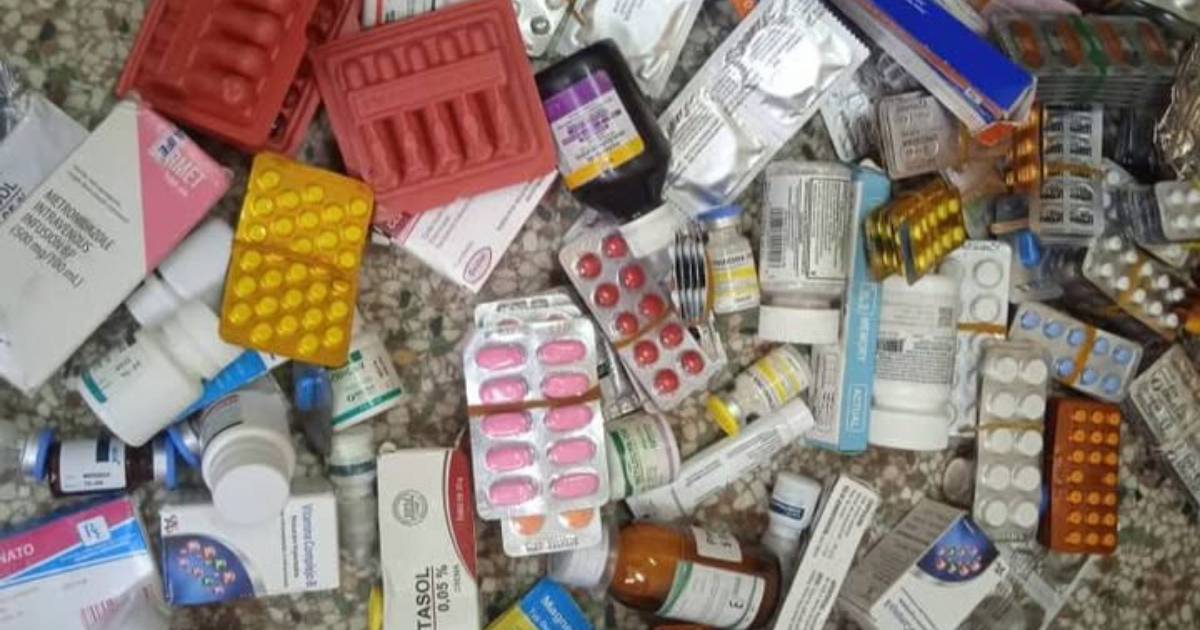
According to these sources, in Camagüey drugs intended for illegal trade were seized, a practice that, according to the official statement, “endangers public health and violates current health regulations.” During the searches, medical equipment, oxygen tanks, blood glucose meters, and cash were confiscated, and the alleged offenders were handed over to the appropriate authorities “for the corresponding judicial process.”
The actions expanded to other areas of the country and included the detection of illegal slaughterhouses in Guanabacoa, Havana, as well as the obtained through unauthorized slaughter. According to Héroes de Azul, citizen participation was "essential" in uncovering these incidents, thanks to reports that enabled quicker and more effective action.
The Ministry of the Interior (Minint) indicated that these measures are part of the national strategy to combat crime and protect the most vulnerable sectors, in coordination with economic and health regulatory agencies.
In the note from Cubadebate, several users expressed diverse opinions about the operations and the shortage of medications in the country.
A reader identified as Carlos wondered how to act towards those who offer medicines without displaying them, while Manuelv opined that a "good fine would be enough to send them back on the streets."
Other users expressed concern about the impact of these actions on those with chronic illnesses. Ariel remarked that "if they crack down on the people selling medications, what can we do who suffer from chronic diseases," and explained that in his case, "thanks to those sellers, I have been able to maintain my treatment and control my seizures."
In a similar tone, Manuel argued that, given the government's inability to guarantee supply, "more than raids, urgent measures are needed to legalize this activity under the FGNE (Non-State Management Forms)," because "the solution cannot be to throw the sofa out the window."
Osmanydesdeijv also expressed that those who import medicines for sale should not be pursued, but rather “included in the solution,” by granting them import licenses or allowing them to establish private pharmacies under health regulations.
Luis agreed on the need for a legal channel to sell imported medications and proposed setting up stores or pharmacies where these individuals could sell them "under the supervision of health inspectors." Finally, Jorgess summarized his position by stating, "if we want to put an end to the illegal sale of medications, we need to legalize them and regulate their sale."
These operations occurred just days after seven people were arrested in Havana for the illegal sale of medications, during a raid conducted by plainclothes police in the El Curita park and its surroundings, in Centro Habana. In that case, the officers seized bags filled with boxes, blisters, bottles, and tubes containing various drugs, including controlled substances and domestically produced medications.
The operations of the PNR and the reactions surrounding them reflect the complex health and economic situation of the country, characterized by the ongoing shortage of pharmaceuticals, the production limitations of the state system, and the increasing presence of the informal market, all within a context where official solutions focus more on repression than on regulation or stable supply of medications.
Filed under: