
Related videos:
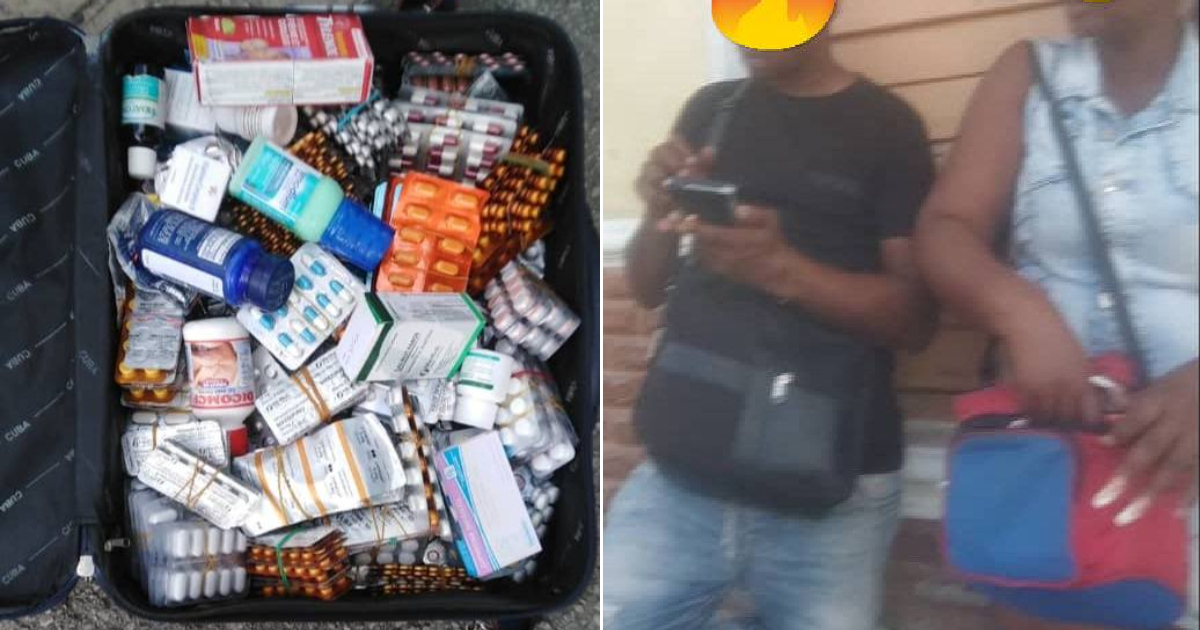
A police operation in Centro Habana concluded with the arrest of seven individuals who were allegedly engaged in the illegal sale of medications in a busy area of the Cuban capital, reported a source connected to the Ministry of Interior (Minint).
The profile “El Cubano Fiel” on Facebook reported on Tuesday the raid carried out by plainclothes police at El Curita park and its surroundings, where six women and one man were arrested, who were carrying bags filled with boxes, blisters, bottles, and tubes containing various medications.
Citing unidentified sources, the profile pointed out that the group was engaged in selling controlled medicines -including some with effects similar to drugs-, mostly of national production.
According to the report, witnesses "saw several plainclothes police officers arrive who apparently already had the sellers well identified and went directly to them."
The agents seized the medications from them, including carbamazepine (which is used in the treatment of mental illnesses and disorders), and detained them.
The post concluded with a controversial reflection that sparked strong opinions among users.
"At times we wonder, why are they being detained if it's the only option we have to acquire the medications we need?" stated El Cubano Fiel. "But we don't realize that most of the medications being resold by those individuals are domestically produced and are taken from the few medications that make it into the pharmacy and sold illegally."
Several people asserted that the informal market has become the only option due to the persistent lack of medications in state pharmacies, while also criticizing the ineffectiveness of the government to ensure the supply of basic medicines, which forces patients and their families to rely on resellers to obtain them, often at exorbitant prices that are prohibitive for most.
They also questioned the authorities for failing to control the state sale of medications, ignoring - and even being complicit in - their "diversion" and illicit commercialization by pharmacy managers and employees to resellers, who hoard them before the general public can purchase them.
“Here in Puerto Padre, we hardly see medications in pharmacies that are produced nationally, except for a few from time to time, so we need to investigate where these come from, the root of the problem,” warned a resident in Las Tunas.
“When they do things right on a government level, resellers will become extinct,” assured another woman, acknowledging: “Perhaps it’s the only way we have to find medication for our relatives.”
"Exactly, those domestically produced medications are sold out in pharmacies, which is why when I go to buy them, I never manage to get them, just like everyone else," lamented a third person.
“Now where the hell do I buy my blood pressure pills, if they're never available at the pharmacy,” protested another woman from Havana.
The day before, the police reported a similar operation in Morón, Ciego de Ávila, which also sparked numerous reactions of anger and indignation on social media. Users criticized that actions are only taken against the consequences of a problem that has become recurrent in the country, and nothing is done to address its causes: the chronic shortage of medications.
In the middle of the year, the Minister of Public Health, José Ángel Portal Miranda, acknowledged the unprecedented structural crisis facing the Cuban healthcare system, characterized by a coverage of only 30% of the basic medication list and a widespread deterioration of medical services.
The Minint and the Police carry out frequent operations against the illegal sale of pharmaceuticals, including those with psychotropic effects or that affect mental functions; as well as against the possession and sale of illicit drugs, such as synthetic cannabinoids or "chemical," whose trafficking and consumption have skyrocketed to unprecedented levels in recent years.
According to data released in September by the Minint, more than 1,500 people had been arrested for drug-related offenses since the beginning of the year. Additionally, 81 kg of narcotics, 11,000 plants, 23,000 seeds, five firearms, and the assets of traffickers were seized, and five criminal networks operating from José Martí International Airport in Havana were dismantled.
In its attempt to curb the rising crime associated with drugs, the regime has launched a nationwide judicial offensive, featuring exemplary trials and the , which includes for those who commit drug-related offenses.
Filed under: