
Related videos:
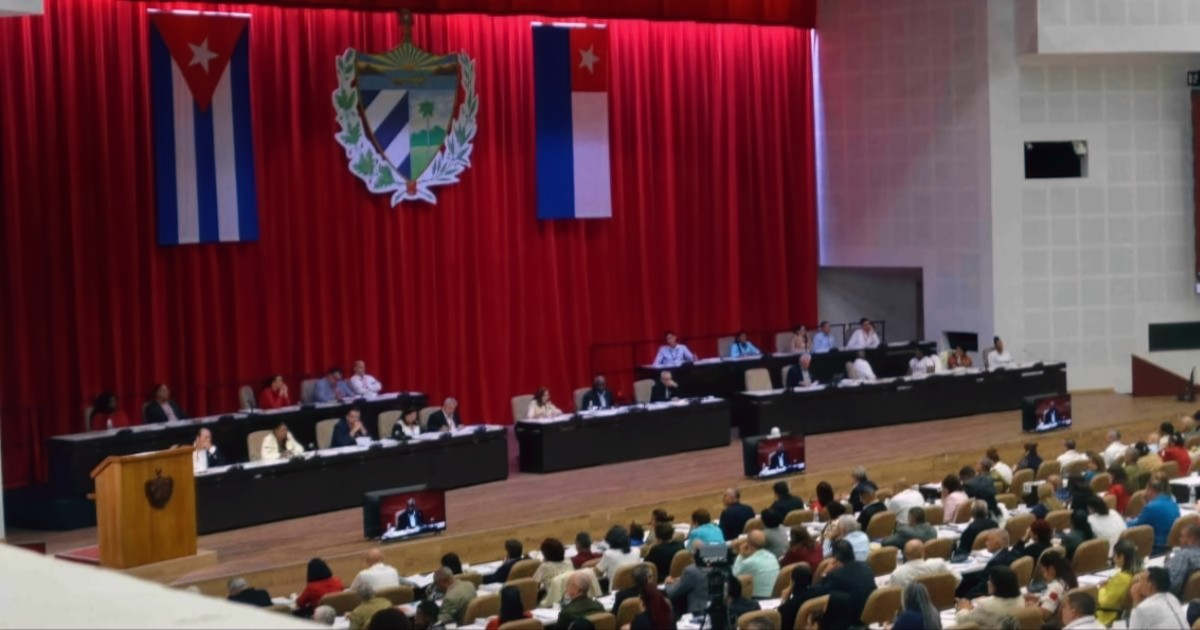
Just hours after the Communist Party of Cuba (PCC) announced that its XI Plenary will be shortened to a single virtual day due to the "complex situation" in the country, the Council of State decided that the National Assembly will also convene for just one day and via videoconference on December 18th.
The Parliament had planned a broader program, but the adjustment confirms that even the highest structures of the State are operating in a reduced mode.
The decision, made during the regular session of the Council of State led by Esteban Lazo, comes in a context marked by power outages, a shortage of fuel, uncontrolled inflation, and growing social discontent. The Government justified the cuts by highlighting the severity of the current situation in the country.
The announcement adds to the cuts from the XI Plenary of the PCC, initially scheduled for two days but will now only take place on December 13, also via videoconference.
The Political Bureau stated that the change aims to keep the main leaders "on the ground," managing issues while also reducing financial and material expenses. However, on social media, many Cubans questioned the real usefulness of these meetings and demanded "work and solutions," not more meetings without results.
While the political and legislative bodies reduce their agendas, the State Council also reviewed the progress of the so-called "Government Program to Correct Distortions and Revitalize the Economy," a process that the ruling party presents as a mechanism for popular participation and that has accumulated over 6,300 meetings and nearly 13,000 proposals. Although the government insists on the "significance" of the process, the population continues to await concrete measures that will ease daily life.
The deputies must approve several decrees-law and projects during their virtual session, including the new Law on Science, Technology, and Innovation and the legislative schedule for 2026.
However, what weighs most heavily for many Cubans is not the announced laws, but rather the message conveyed by this new institutional cutback, in a country where even the Parliament cannot convene normally, while the population faces unexpected blackouts, a lack of cooking gas, and a widespread deterioration of living conditions.
Filed under: