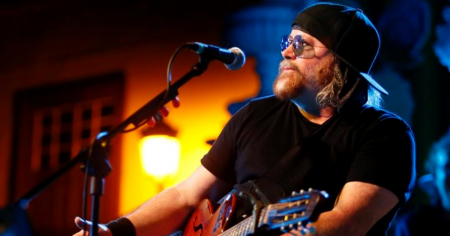
For decades, his bongó resonated on stages in Cuba, the United States, Europe, and Latin America. He shared the spotlight with Celia Cruz, Óscar D’León, Cachao, and key figures from the Fania All Stars. Today, at 59 years old, Jorge “Bongo” Echevarría faces a very different reality, living on the streets of Miami, one of the cities that was once the epicenter of his musical career.
The story of the Cuban musician has come to light thanks to several videos published on TikTok by the account Conducta Dade, a community project dedicated to helping individuals of Cuban origin who are facing extremely vulnerable situations in South Florida.
In the testimonies, Echevarría reflects on a career that many musicians can only dream of. He left Cuba while still young, having trained since the age of seven at institutions like the National School of Art and performing on iconic stages such as Tropicana. Then came the international tours, recordings, and encounters with legends of Latin music.
"I worked with Celia, with Óscar de León, with Cachao," he recalls proudly. In Miami, he established himself professionally and went on to found his own orchestra in the early 2000s, achieving radio recognition and collaborating with arrangers and producers who are now key figures in the genre, including musicians linked to Marc Anthony and Isaac Delgado.
In addition to being an interpreter, Jorge “Bongo” Echevarría was a composer, orchestra conductor, and music producer. He also served as a professor of Cuban percussion, teaching at European universities, including one of the most prestigious in London. His training was shaped by top-level teachers, such as Changuito and musicians from the Cuban national folk tradition.
However, the passage of time, economic difficulties, and a series of personal circumstances led him to an abrupt downfall. In the videos, there are no accusations or victim narratives, but rather a blend of memory, dignity, and suppressed pain. He speaks of music as a discipline, a sacrifice, and a dream—values that he says he learned at home and that have shaped his entire life.
The story of Jorge “Bongo” Echevarría is not an isolated case. For many Cubans in exile, especially artists who arrived decades ago, old age and the lack of support networks become a silent battle. The contrast between yesterday's applause and today's abandonment is striking.
Conducta Dade has drawn attention to his situation with the aim of generating support and bringing to light a reality that often goes unnoticed. Behind the homeless musician is a man who was an integral part of the history of Cuban and Latin music, and whose life today depends on solidarity.
For a community marked by migration, separation, and the daily struggle for survival, the case of Jorge “Bongo” Echevarría also serves as a reminder that talent and fame do not always guarantee a dignified outcome, and that no one is safe from falling when the safety net is broken.
Filed under: