
Related videos:
The first secretary of the Central Committee of the Communist Party of Cuba (PCC) Miguel Díaz-Canel, stated today that “every day of the Revolution is a victory,” because Cuba faces “the most powerful enemy” with “tremendous dignity,”
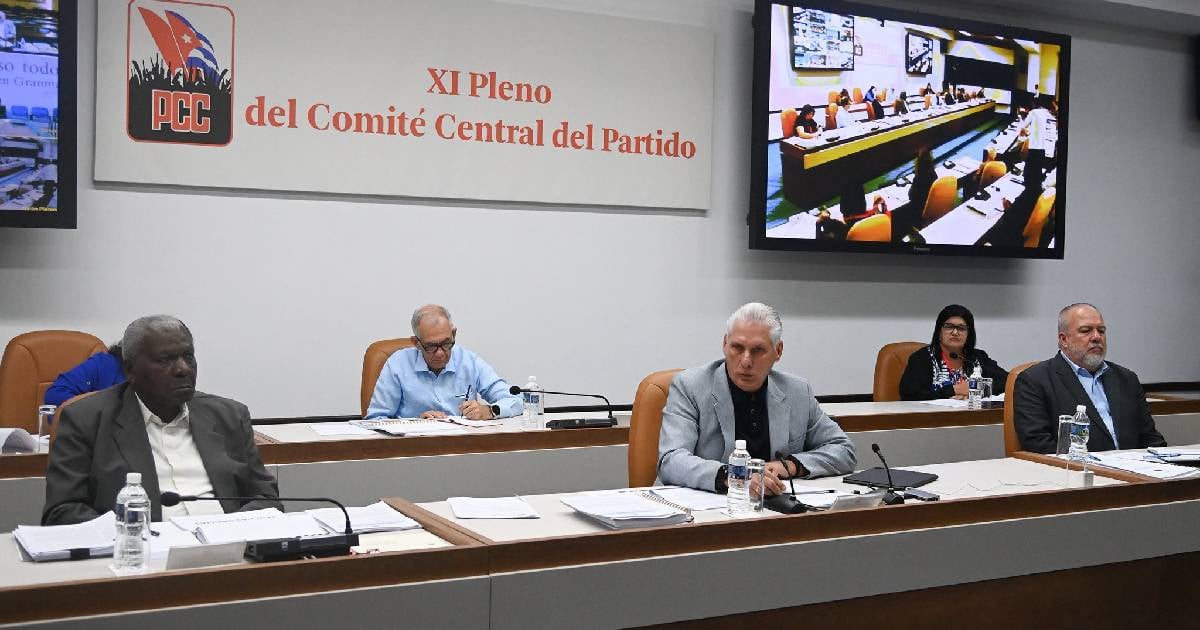
The message, published on the X account of the Presidency, is part of an excerpt from the leader's statements during the XI Plenary of the Central Committee of the PCC, held this Saturday in Havana and via videoconference.
But the assertion generated an immediate response from dozens of users who questioned the official narrative and cast doubt on the concept of dignity in a country marked by prolonged blackouts, food shortages, a health crisis, and the deterioration of living conditions.
Several comments pointed out that this supposed dignity does not translate into food, electricity, water, or medicine for the majority of Cubans.
Some users rejected the thesis of the "external enemy" and asserted that the United States is not directly responsible for the crisis, citing food imports, medical supplies, and other products from that country.
Others demanded free and plural elections, describing the Cuban political system as a dictatorship with no allowed opposition.
Critics also highlighted the privileges of the ruling elite, contrasting the rhetoric of sacrifice with images of well-fed, obese leaders who have stable access to basic services and comforts denied to the majority of the population.
“Dignity cannot be eaten nor can it light the way,” wrote one user, while another summarized the official message as “a victory of hunger.”
In several comments, the idea was repeated that the Revolution "is no longer for everyone," but rather for a minority, and that the true enemies facing the country are poverty, destitution, and the lack of freedoms.
Others described the speech as a repeated lie for more than six decades, disconnected from the daily reality of Cubans.
The publication once again highlighted the gap between the triumphant narrative of the authorities and the discontent openly expressed on social media, where the notion of dignity championed by the government is increasingly questioned by citizens who associate their daily lives with shortages, repression, and a lack of political options.
During the session, the leader also urged for the political organization to transform, and that the bureaucratism and inertia inherent in its operations do not “continue to be obstacles” to the country's development.
But his words contrasted with a wave of citizen criticism that questioned the repeated promises of change since 1959 without visible results, the lack of austerity and altruism among the leaders, and the gap between power and the real living conditions of the population.
The XI Plenary of the Central Committee of the PCC met only this Saturday via videoconference, following a decision by the Political Bureau prompted by the severe health crisis and fuel shortages facing the country.
During the day, the party leadership promoted Army Corps General Roberto Legrá Sotolongo, first vice minister and head of the General Staff of the Revolutionary Armed Forces (FAR) since 2021, as a member of the Political Bureau of the PCC.
Filed under: