
Related videos:
On the eve of December 17, the date when Cubans pay tribute to San Lázaro —Babalú Ayé in the Yoruba religion— the country is facing a complex health situation marked by an increase in cases of dengue and chikungunya.
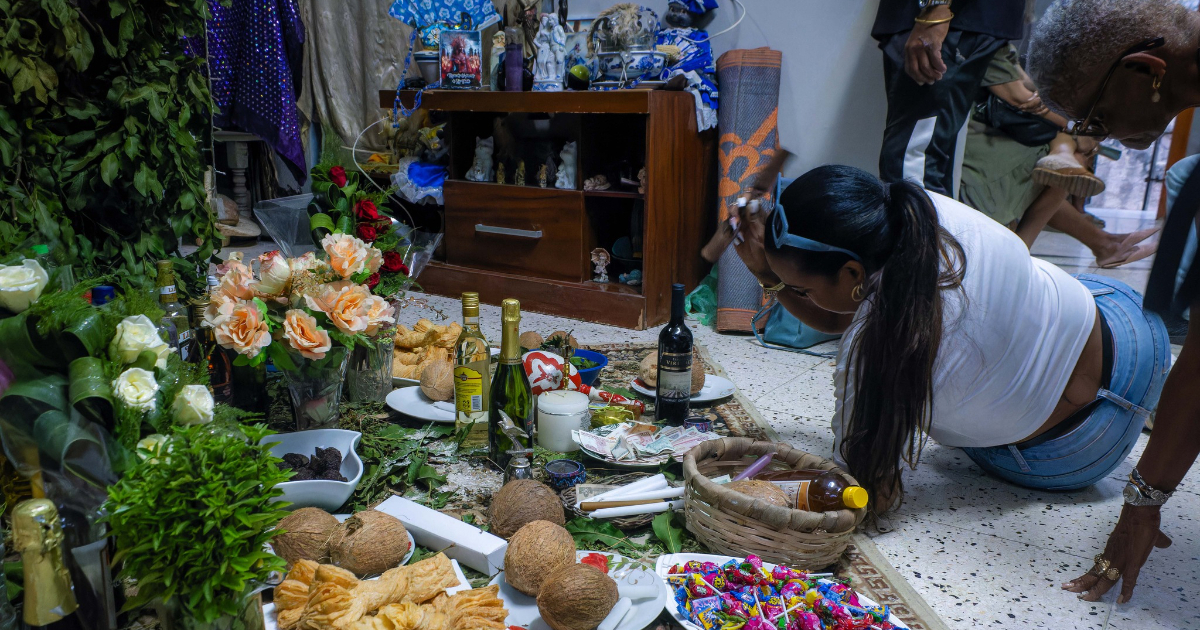
In Matanzas, the images by photographer Raúl Navarro reflect the devotion of those who set up altars with flowers, candles, sweets, and bottles of liquor to give thanks or request health from the "miraculous old man." In this representation, Santería and Catholicism come together in a shared practice of popular faith.
Every December 17th, San Lázaro becomes a reason for promises and pilgrimages. In Yoruba tradition, Babalú Ayé is associated with epidemics and healing. His devotees venerate him for the miracles related to the healing of viral diseases, such as measles or smallpox, according to cultural references of Afro-Cuban religion.
The social media post about the celebration on the local newspaper's profile generated numerous messages of support and gratitude towards San Lázaro, with expressions of "blessings" and "ashé," as well as comments requesting more coverage of Christian celebrations. The exchange reflected both the religious fervor and the dialogue among different beliefs present in Cuba.
The religious context coincides with an epidemiological crisis acknowledged by the authorities. In its latest report, the Ministry of Public Health reported 47 deaths due to arbovirus infections —dengue and chikungunya— and 1,417 new cases of chikungunya, according to official reports. Deputy Minister Carilda Peña García urged people to visit health centers early to avoid complications, especially in minors.
In Matanzas, officials from the José Ramón López Tabrane Teaching Gyneco-Obstetric Hospital acknowledged an increase in premature births and cases of low birth weight during the epidemic, according to provincial authorities.
Miguel Díaz-Canel, the ruling leader, stated that the government "acted quickly" in response to the spread of mosquito-borne illnesses, although he acknowledged initial shortcomings in the health response and resource limitations. These statements were made during the XI Full Session of the Central Committee of the Communist Party, held via videoconference from the Palace of the Revolution.
However, the population is reporting delays in fumigation, shortages of medications, and a lack of state control over outbreaks, reflecting the regime's inability to contain a crisis that worsens each week.
The intersection of the health situation and religious celebrations highlights the role of the worship of San Lázaro in the daily lives of Cubans. In many households, candles are lit and prayers are offered for the health of family members and neighbors, following a tradition that combines faith, hope, and gratitude.
Filed under: