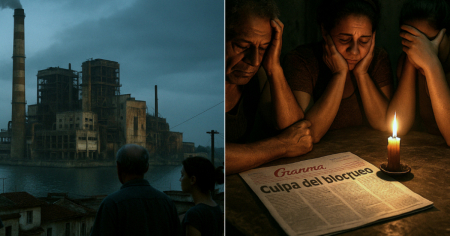
An animated video that parodies the blackouts in Cuba, created and shared by the user of Instagram who identifies as tortilla cubana, has gone viral in just a few hours.
The audiovisual piece, with its humorous and satirical tone, reflects the exhaustion and frustration of thousands of Cubans over the prolonged power outages affecting the country.
The video shows a young man who, visibly exhausted after several days without electricity, rises into the air above the city of Havana and causes the explosion of the building where the Electric Union (UNE) is supposedly located.
The sequence is accompanied by a voice-over from the character himself, with an epic and menacing tone that dramatizes the frustration caused by the power outages.
"I, after 72 hours of blackout. Get to know the blackout, feel the blackout; those who have never experienced a blackout do not understand the true meaning of pain. If I don't have light, no one else will have it. I will never forget the last chicken that went bad. And now the world will know the blackout. (Divine blackout)," says the character.
The video is clearly inspired by a scene from the anime Naruto, a popular Japanese series based on the manga written and illustrated by Masashi Kishimoto.
Naruto tells the story of Naruto Uzumaki, a young ninja who aspires to become the leader of his village, after a childhood marked by rejection and tragedy.
The aesthetic and narrative reference to anime is evident both in the animation and in the dramatic tone of the monologue.
The post has accumulated over 39,000 likes, with reactions and comments from users who identify with the message and humor of the video.
The parody connects with a reality experienced in every corner of the Island: prolonged and frequent blackouts, which affect the daily lives of the population and have become a recurring topic in public debate, reaching the realm of digital creative expression.
The use of popular cultural references, such as Japanese anime, has helped to amplify the reach of the video, which blends humor, social criticism, and pop culture to portray a shared experience among Cubans.
Filed under: