
Related videos:
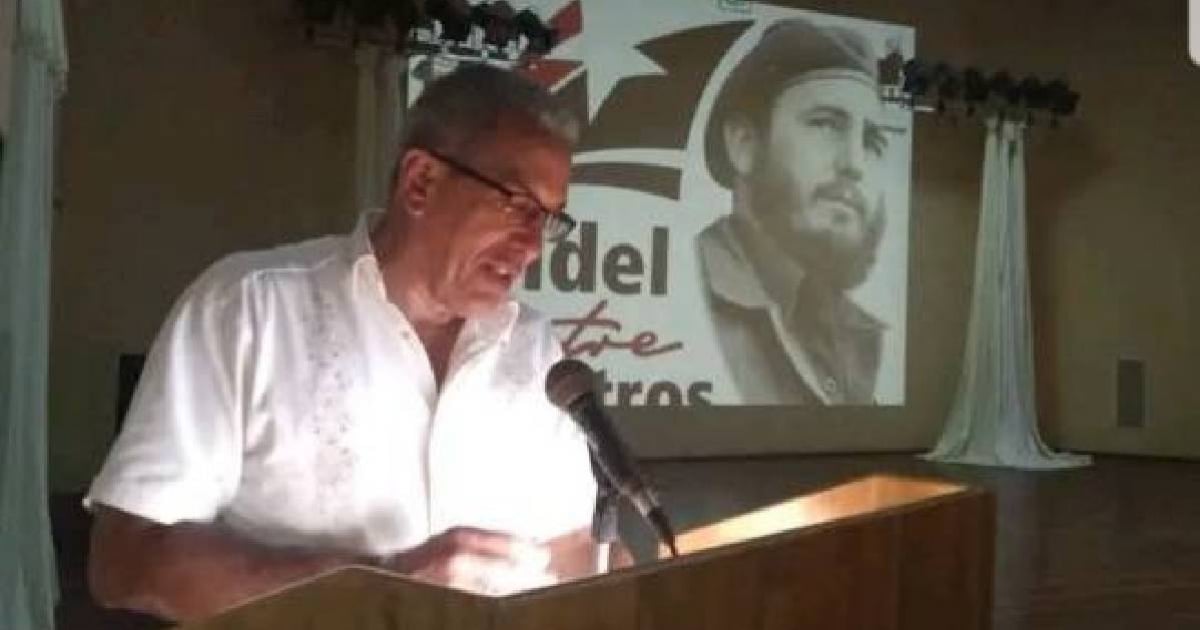
Mario Pérez Márquez, former director of the "Eduardo García Delgado" School of Art Instructors in Havana and a key figure in the cultural training program initiated by Fidel Castro, currently lives in Las Vegas after entering the United States through the southern border in 2022 and obtaining permanent residency under the Cuban Adjustment Act, according to complaints from former students and activists.
An article from Martí Noticias reveals that after decades serving the regime, Pérez Márquez left Cuba and crossed the southern border of the United States in 2022.
Currently, he/she resides in Las Vegas, Nevada, where he/she lives with permanent residency obtained under the Cuban Adjustment Act.
According to Martí Noticias, upon arriving in U.S. territory, the former official deleted posts and photographs from his social media that linked him to Castroism, in an apparent attempt to erase his past as a servant of the regime's ideological apparatus.
Pérez Márquez, born in 1963, was for more than a decade one of the most prominent faces of the cultural and ideological apparatus of Castroism.
His position, according to the official media, was "entrusted" directly by Fidel Castro with the goal of "training art instructors committed to the Revolution."
For years, he was celebrated by the regime and received the Honorary Member distinction from the José Martí Brigade of Art Instructors. He participated in numerous official events alongside leaders of the Communist Party, the Ministry of Education, and the Young Communists Union (UJC).
His administration, however, left a bitter memory among many of the young people who attended his school. Former students and activists describe him as "despotic and indoctrinating", responsible for imposing military discipline and ideological punishments in an institution that combined artistic education with political propaganda.
“He was a fervent anti-imperialist, critical of the United States in every regard. Loyal to Fidel Castro, of whom he claimed to be a friend. And look where he is today,” declared independent journalist Adelth Bonne Gamboa from Havana, who was a student at the center.
Good reports on social media indicated that Pérez Márquez imposed collective punishments for not attending official parades and penalized students who questioned the political content of the classes.
"I will never forget when he made us sing the national anthem in less than three degrees of temperature. We grumbled about the cold, and as punishment, he kept us from going out that weekend," he recalled.
The case of Pérez Márquez adds to a growing list of former leaders, judges, and officials of the Cuban regime who have emigrated to the United States taking advantage of the humanitarian pathways or the migration benefits that U.S. legislation offers to Cubans.
Among the most recent are the judge from Villa Clara, Melody González Pedraza, accused of sentencing young protesters from the 11J, and Arelys Casañola Quintana, a former government leader in Isla de la Juventud, both identified on U.S. soil in 2025.
Filed under: